Aug 12, 2026
A factory paying $0.18/kWh during off-peak hours and $0.35/kWh during on-peak hours is not paying for electricity — it is paying for the time of day. A commercial and industrial energy storage cabinet changes that equation by charging from the grid when electricity is cheap and discharging when it is expensive, shifting the effective cost per kilowatt-hour from the peak rate toward the off-peak rate. For industrial sites with solar generation, the cabinet stores midday solar surplus for late-afternoon consumption — converting free sunshine into usable power that displaces peak-rate grid electricity. This guide covers the 261kWh and 417kWh all-in-one C&I energy storage systems that make this possible.
| Application | How the Cabinet Works | Financial Benefit |
|---|---|---|
| Peak Shaving | Cabinet discharges battery power during periods of high site electricity demand, reducing the maximum power drawn from the grid | Reduces demand charges — the fee based on the highest 15-minute or 30-minute power draw in a billing cycle. Demand charges can represent 30-70% of a commercial electricity bill. |
| Load Shifting / Time-of-Use Arbitrage | Cabinet charges from the grid during off-peak low-rate hours and discharges during on-peak high-rate hours | Captures the price spread between off-peak and on-peak rates. With a $0.17/kWh spread and two daily cycles, a 261kWh cabinet shifts approximately 500 kWh/day, saving tens of thousands annually. |
| Solar Self-Consumption | Cabinet stores excess solar generation during midday when panel output exceeds site consumption, then discharges in the evening when solar output drops | Maximizes the value of on-site solar by consuming self-generated power rather than exporting it to the grid at lower feed-in tariff rates |
| Backup Power | Cabinet provides emergency power to critical loads during grid outages — seamless transition for UPS-grade applications | Avoids production downtime costs; protects sensitive equipment from power interruption damage; eliminates diesel generator fuel and maintenance costs for short outages |
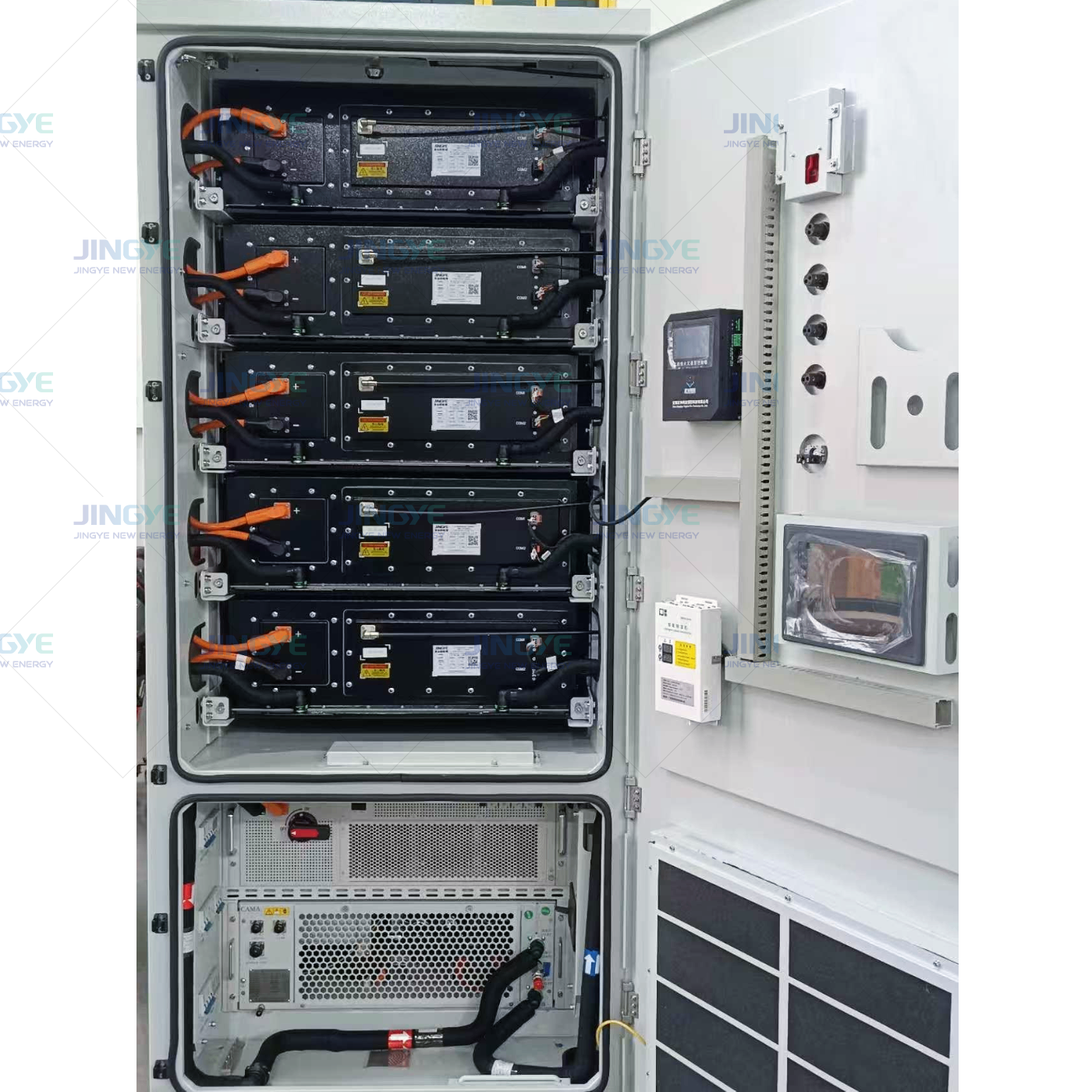
Traditional C&I energy storage systems require separate components: a battery cabinet, a PCS (Power Conversion System — the inverter that converts DC battery power to AC grid power), a transformer, a fire suppression system, and a control system — all installed and commissioned on-site by different contractors. An all-in-one C&I energy storage cabinet integrates the battery modules and PCS into a single factory-built, factory-tested unit. The LFP-261kWh from Jingye New Energy delivers 261kWh of LFP battery storage with a built-in 125kW PCS — one cabinet, one delivery, one commissioning process. The LFP-261kWh all-in-one energy storage cabinet eliminates the site integration risk that separate-component systems introduce: the battery-to-PCS communication, DC cabling, thermal management, and fire protection are all validated at the factory before the cabinet ships.
For larger sites, the LFP-417kWh energy storage cabinet provides 417kWh in a single cabinet on a 1331.2V high-voltage platform — higher energy density per square meter of floor space and series-scalable with an external PCS for multi-cabinet installations. Both cabinets use 314Ah LFP cells with liquid cooling — the liquid cooling advantage over air cooling becomes decisive at these energy densities, where consistent cell temperature across all modules (±2°C uniformity) directly determines cycle life and system efficiency.
| Parameter | LFP-261kWh | LFP-417kWh |
|---|---|---|
| Rated Energy Capacity | 261 kWh | 417 kWh |
| PCS Integration | Built-in 125kW (all-in-one) | External PCS (series-scalable) |
| Cell Type | 314Ah LFP | 314Ah LFP |
| Cooling | Liquid-cooled | Liquid-cooled |
| Cycle Life | >6,000 cycles | >8,000 cycles |
| Ingress Protection | IP54 | IP55 |
| Best For | Small-to-medium C&I sites; single-cabinet peak shaving and solar self-consumption | Large C&I sites; multi-cabinet installations; maximum energy per footprint |
The sizing decision between 261kWh and 417kWh is driven by the site's peak load profile and the available floor space. A medium-sized factory with a 200kW peak demand that needs 2 hours of peak shaving per day is well served by a single LFP-261kWh cabinet with its integrated 125kW PCS. A larger industrial site with a 500kW peak load requiring 3 hours of coverage needs multiple LFP-417kWh cabinets in a series-scalable configuration.
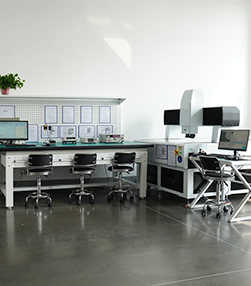
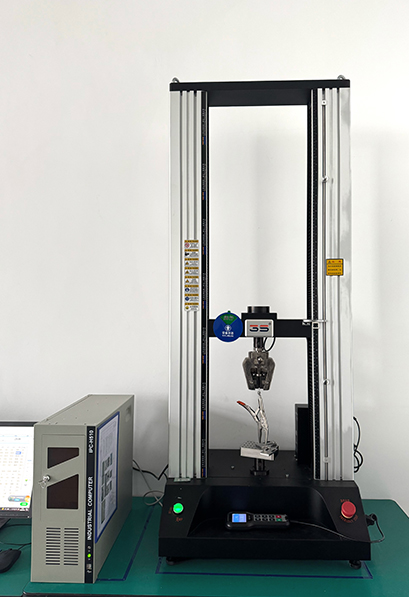
Hebei Jingye New Energy Technology Co., Ltd. — the energy storage arm of Fortune Global 500 Jingye Group — operates a 15 GWh module PACK integrated production line, 2.4 million pieces annual CCS production capacity, and a CNAS-accredited testing laboratory. The IEC/CE certified product range covers the full C&I and utility energy storage chain: C&I energy storage cabinets (261kWh/417kWh), 5.015MWh liquid-cooled BESS containers, commercial vehicle LFP batteries, DC fast EV chargers, and CCS cell contact systems.
Jingye's unique position as both an energy storage manufacturer and an energy storage operator — through projects including the Jingye Iron and Steel 50MW/100.32MWh energy storage power station and the Huaxi Special Steel 15MW/30.09MWh station — means the same engineering team that designs C&I cabinets also operates them in real-world industrial environments. This operational feedback loops directly into product design, producing cabinets that address the practical challenges of industrial deployment: electrical noise immunity, thermal management in hot factory environments, and interoperability with existing site electrical infrastructure.
Contact Jingye New Energy with your peak load profile, electricity tariff structure, and site constraints for a C&I cabinet sizing recommendation and quotation.
allen.meng@jyrenewables.com jyxny@jyrenewables.com
Sep. 28, 2026
C&I Battery Storage Capacity vs Power Rating: What Is the Difference?
Energy Storage Cabinets are increasingly used by commercial and industrial buyers to reduce peak demand, support critical loads, improve solar self-consumption, and provide backup power. However, many purchasing teams compare systems by price or cabinet size before understanding the two specifications that determine performance: battery storage capacity, measured in kilowatt-hours (kWh), and
Sep. 28, 2026
How Commercial Energy Storage Helps Reduce Demand Charges
If your electricity bill is rising because of short, high-power peaks, we can solve the problem in a simple sequence: review 12 months of interval data, identify the tariff’s demand-charge window, size Energy Storage Cabinets for the target peak, and configure an automated energy management system to discharge before the peak is billed. This step-by-step approach helps businesses reduce
Sep. 25, 2026
400V vs 800V EV Charging: Key Differences for Modern Electric Vehicles
Choosing between a 400 V and an 800 V electric vehicle is no longer only an engineering decision. It affects charging time, highway convenience, battery design, purchase price, charging site requirements, operating cost, and long-term reliability. For drivers, fleet managers, charging operators, and vehicle manufacturers comparing a DC Fast EV Charger Manufacturer, the most useful answer is not
Related Products
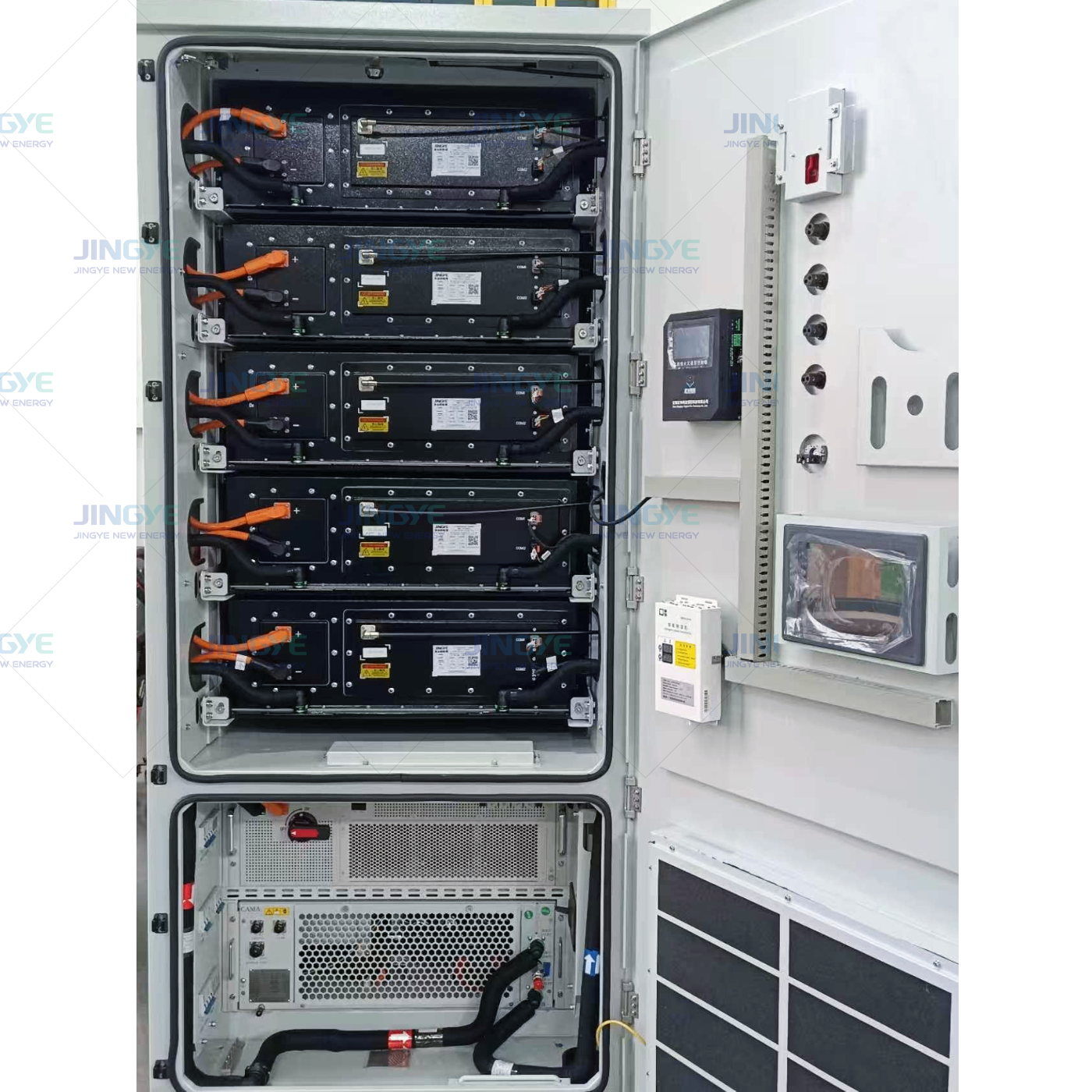
LFP-261kWh All-in-One Energy Storage Cabinet
The LFP-261kWh is an all-in-one commercial & industrial energy storage cabinet from Jingye New Energy, with a built-in 125kW inverter (PCS) — battery and inverter in one unit, no separate PCS needed. It delivers 261kWh using 314Ah LFP cells, liquid-cooled, >6,000 cycles, IP54, for peak shaving, load shifting, solar self-consumption, and backup power at small-to-medium sites. OEM/ODM available.
LFP-261kWh All-in-One Energy Storage Cabinet
The LFP-261kWh is an all-in-one commercial & industrial energy storage cabinet from Jingye New Energy, with a built-in 125kW inverter (PCS) — battery and inverter in one unit, no separate PCS needed. It delivers 261kWh using 314Ah LFP cells, liquid-cooled, >6,000 cycles, IP54, for peak shaving, load shifting, solar self-consumption, and backup power at small-to-medium sites. OEM/ODM available.
LFP-261kWh All-in-One Energy Storage Cabinet
The LFP-261kWh is an all-in-one commercial & industrial energy storage cabinet from Jingye New Energy, with a built-in 125kW inverter (PCS) — battery and inverter in one unit, no separate PCS needed. It delivers 261kWh using 314Ah LFP cells, liquid-cooled, >6,000 cycles, IP54, for peak shaving, load shifting, solar self-consumption, and backup power at small-to-medium sites. OEM/ODM available.
LFP-261kWh All-in-One Energy Storage Cabinet
The LFP-261kWh is an all-in-one commercial & industrial energy storage cabinet from Jingye New Energy, with a built-in 125kW inverter (PCS) — battery and inverter in one unit, no separate PCS needed. It delivers 261kWh using 314Ah LFP cells, liquid-cooled, >6,000 cycles, IP54, for peak shaving, load shifting, solar self-consumption, and backup power at small-to-medium sites. OEM/ODM available.
LFP-261kWh All-in-One Energy Storage Cabinet
The LFP-261kWh is an all-in-one commercial & industrial energy storage cabinet from Jingye New Energy, with a built-in 125kW inverter (PCS) — battery and inverter in one unit, no separate PCS needed. It delivers 261kWh using 314Ah LFP cells, liquid-cooled, >6,000 cycles, IP54, for peak shaving, load shifting, solar self-consumption, and backup power at small-to-medium sites. OEM/ODM available.
LFP-261kWh All-in-One Energy Storage Cabinet
The LFP-261kWh is an all-in-one commercial & industrial energy storage cabinet from Jingye New Energy, with a built-in 125kW inverter (PCS) — battery and inverter in one unit, no separate PCS needed. It delivers 261kWh using 314Ah LFP cells, liquid-cooled, >6,000 cycles, IP54, for peak shaving, load shifting, solar self-consumption, and backup power at small-to-medium sites. OEM/ODM available.
LFP-261kWh All-in-One Energy Storage Cabinet
The LFP-261kWh is an all-in-one commercial & industrial energy storage cabinet from Jingye New Energy, with a built-in 125kW inverter (PCS) — battery and inverter in one unit, no separate PCS needed. It delivers 261kWh using 314Ah LFP cells, liquid-cooled, >6,000 cycles, IP54, for peak shaving, load shifting, solar self-consumption, and backup power at small-to-medium sites. OEM/ODM available.
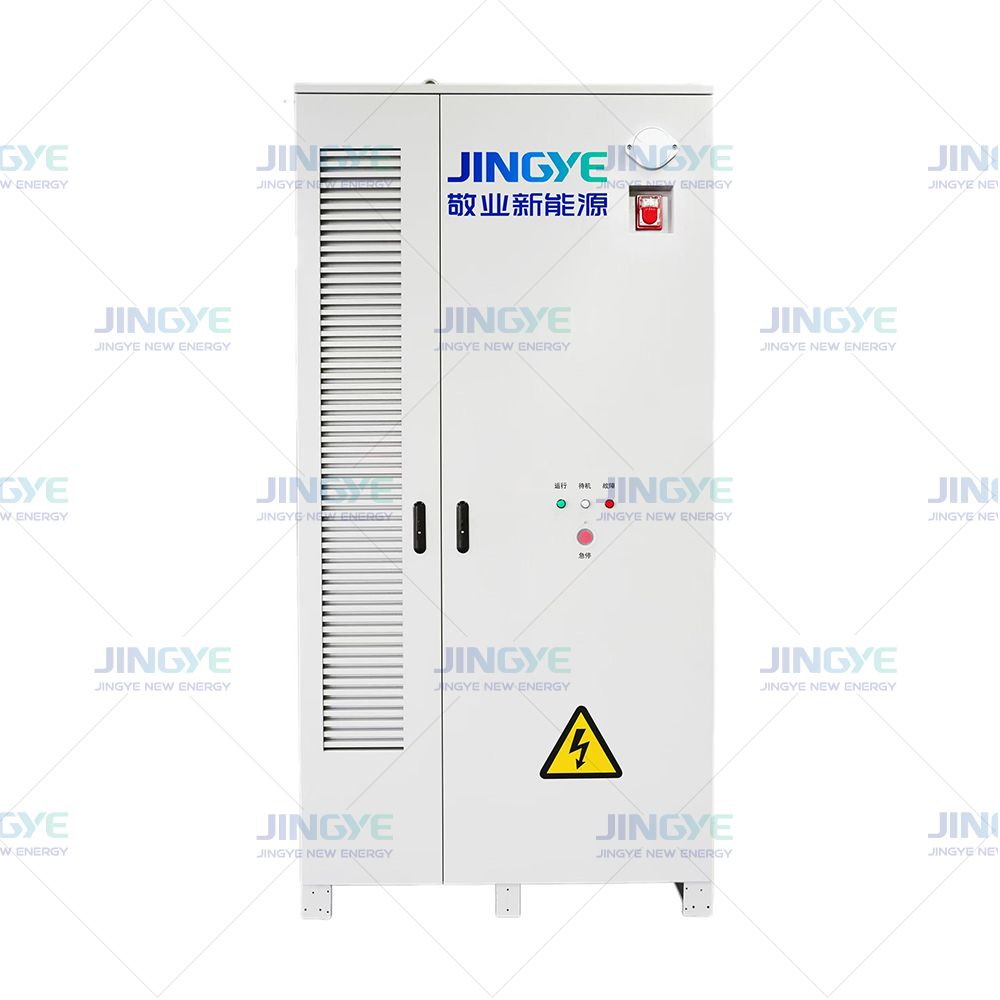
LFP-417kWh Energy Storage Cabinet
The LFP-417kWh is a high-capacity commercial & industrial energy storage cabinet from Jingye New Energy, built for large C&I sites that need maximum energy per footprint. It delivers 417kWh using 314Ah LFP cells on a 1331.2V platform, liquid-cooled, >8,000 cycles, IP55, and is series-scalable with an external PCS — for peak shaving, load management, and solar integration. OEM/ODM available.
LFP-417kWh Energy Storage Cabinet
The LFP-417kWh is a high-capacity commercial & industrial energy storage cabinet from Jingye New Energy, built for large C&I sites that need maximum energy per footprint. It delivers 417kWh using 314Ah LFP cells on a 1331.2V platform, liquid-cooled, >8,000 cycles, IP55, and is series-scalable with an external PCS — for peak shaving, load management, and solar integration. OEM/ODM available.
LFP-417kWh Energy Storage Cabinet
The LFP-417kWh is a high-capacity commercial & industrial energy storage cabinet from Jingye New Energy, built for large C&I sites that need maximum energy per footprint. It delivers 417kWh using 314Ah LFP cells on a 1331.2V platform, liquid-cooled, >8,000 cycles, IP55, and is series-scalable with an external PCS — for peak shaving, load management, and solar integration. OEM/ODM available.
LFP-417kWh Energy Storage Cabinet
The LFP-417kWh is a high-capacity commercial & industrial energy storage cabinet from Jingye New Energy, built for large C&I sites that need maximum energy per footprint. It delivers 417kWh using 314Ah LFP cells on a 1331.2V platform, liquid-cooled, >8,000 cycles, IP55, and is series-scalable with an external PCS — for peak shaving, load management, and solar integration. OEM/ODM available.
LFP-417kWh Energy Storage Cabinet
The LFP-417kWh is a high-capacity commercial & industrial energy storage cabinet from Jingye New Energy, built for large C&I sites that need maximum energy per footprint. It delivers 417kWh using 314Ah LFP cells on a 1331.2V platform, liquid-cooled, >8,000 cycles, IP55, and is series-scalable with an external PCS — for peak shaving, load management, and solar integration. OEM/ODM available.
LFP-417kWh Energy Storage Cabinet
The LFP-417kWh is a high-capacity commercial & industrial energy storage cabinet from Jingye New Energy, built for large C&I sites that need maximum energy per footprint. It delivers 417kWh using 314Ah LFP cells on a 1331.2V platform, liquid-cooled, >8,000 cycles, IP55, and is series-scalable with an external PCS — for peak shaving, load management, and solar integration. OEM/ODM available.
LFP-417kWh Energy Storage Cabinet
The LFP-417kWh is a high-capacity commercial & industrial energy storage cabinet from Jingye New Energy, built for large C&I sites that need maximum energy per footprint. It delivers 417kWh using 314Ah LFP cells on a 1331.2V platform, liquid-cooled, >8,000 cycles, IP55, and is series-scalable with an external PCS — for peak shaving, load management, and solar integration. OEM/ODM available.
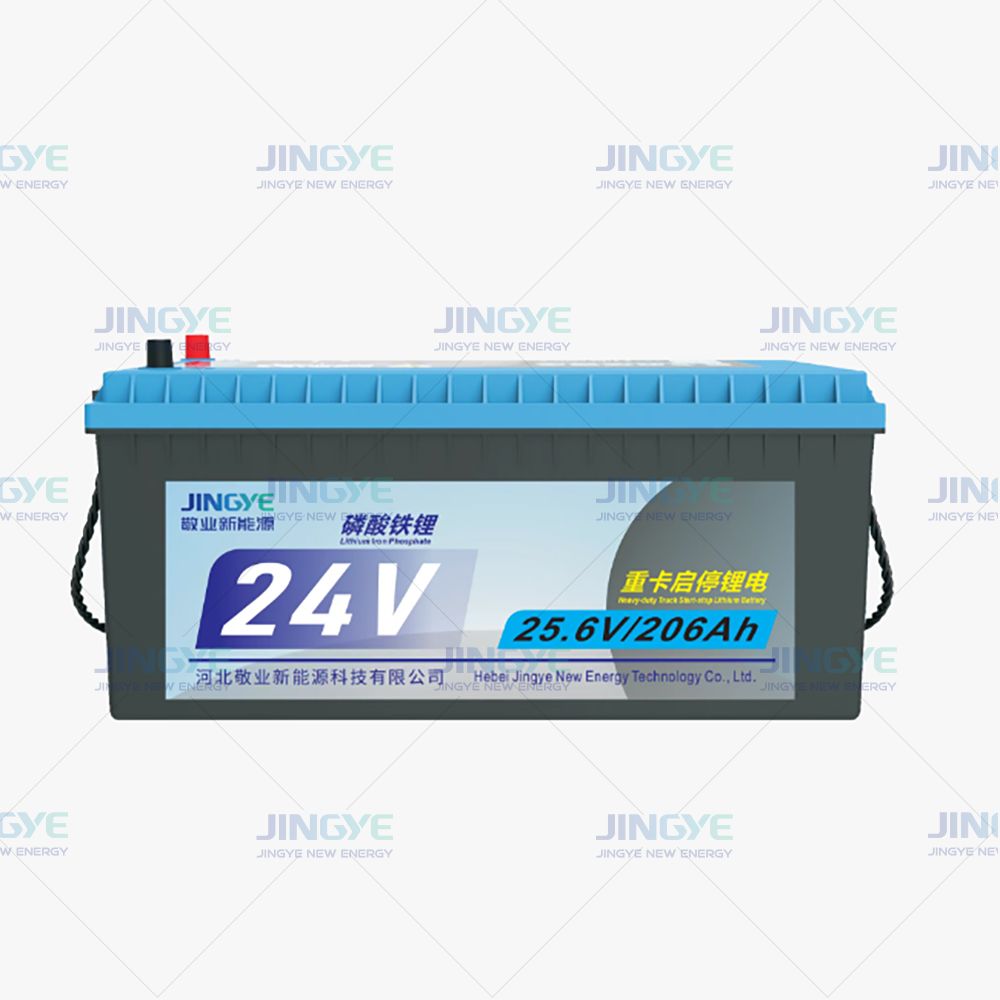
JY530 24V LiFePO4 Commercial Vehicle Battery
The JY530 is a 24V LiFePO4 (lithium) battery for heavy trucks and commercial vehicles, engineered for reliable engine starting and stable low-voltage power. From Jingye New Energy, a China commercial vehicle battery manufacturer, it delivers 25.6V/206Ah (5.3kWh), 1500A starting current, and operation down to -40°C — a direct lead-acid replacement with app, Bluetooth, and cloud monitoring. OEM/ODM available
JY530 24V LiFePO4 Commercial Vehicle Battery
The JY530 is a 24V LiFePO4 (lithium) battery for heavy trucks and commercial vehicles, engineered for reliable engine starting and stable low-voltage power. From Jingye New Energy, a China commercial vehicle battery manufacturer, it delivers 25.6V/206Ah (5.3kWh), 1500A starting current, and operation down to -40°C — a direct lead-acid replacement with app, Bluetooth, and cloud monitoring. OEM/ODM available
JY530 24V LiFePO4 Commercial Vehicle Battery
The JY530 is a 24V LiFePO4 (lithium) battery for heavy trucks and commercial vehicles, engineered for reliable engine starting and stable low-voltage power. From Jingye New Energy, a China commercial vehicle battery manufacturer, it delivers 25.6V/206Ah (5.3kWh), 1500A starting current, and operation down to -40°C — a direct lead-acid replacement with app, Bluetooth, and cloud monitoring. OEM/ODM available
JY530 24V LiFePO4 Commercial Vehicle Battery
The JY530 is a 24V LiFePO4 (lithium) battery for heavy trucks and commercial vehicles, engineered for reliable engine starting and stable low-voltage power. From Jingye New Energy, a China commercial vehicle battery manufacturer, it delivers 25.6V/206Ah (5.3kWh), 1500A starting current, and operation down to -40°C — a direct lead-acid replacement with app, Bluetooth, and cloud monitoring. OEM/ODM available
JY530 24V LiFePO4 Commercial Vehicle Battery
The JY530 is a 24V LiFePO4 (lithium) battery for heavy trucks and commercial vehicles, engineered for reliable engine starting and stable low-voltage power. From Jingye New Energy, a China commercial vehicle battery manufacturer, it delivers 25.6V/206Ah (5.3kWh), 1500A starting current, and operation down to -40°C — a direct lead-acid replacement with app, Bluetooth, and cloud monitoring. OEM/ODM available
JY530 24V LiFePO4 Commercial Vehicle Battery
The JY530 is a 24V LiFePO4 (lithium) battery for heavy trucks and commercial vehicles, engineered for reliable engine starting and stable low-voltage power. From Jingye New Energy, a China commercial vehicle battery manufacturer, it delivers 25.6V/206Ah (5.3kWh), 1500A starting current, and operation down to -40°C — a direct lead-acid replacement with app, Bluetooth, and cloud monitoring. OEM/ODM available
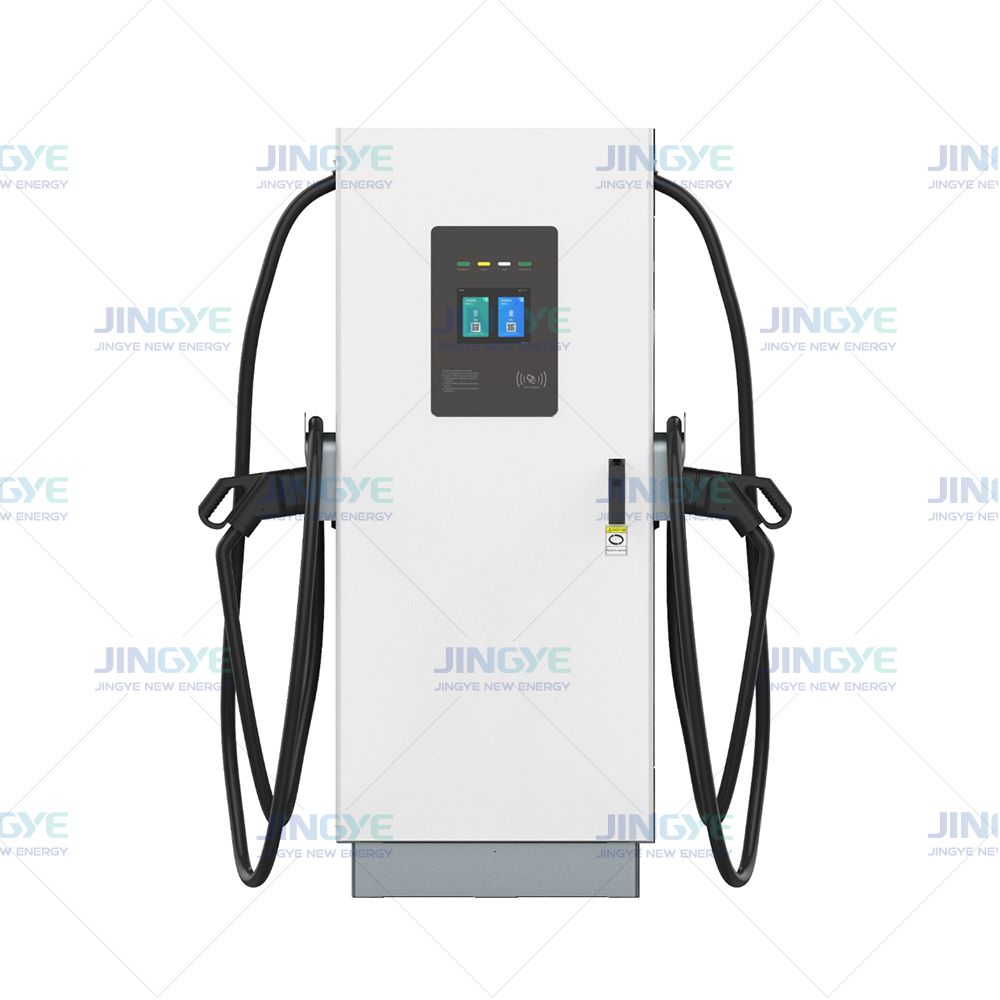
40kW–160kW Electric Vehicle DC Charger
The Jingye 40kW–160kW DC charger covers the mid-power range for destination charging, fleet depots, workplaces, and commercial parking. With a 200V–1000V output supporting both 400V and 800V platforms, ≥94% average efficiency, and an IP54 enclosure for outdoor installation, it delivers dependable everyday fast charging at a lower grid-connection cost than ultra-high-power stations. OEM/ODM available.
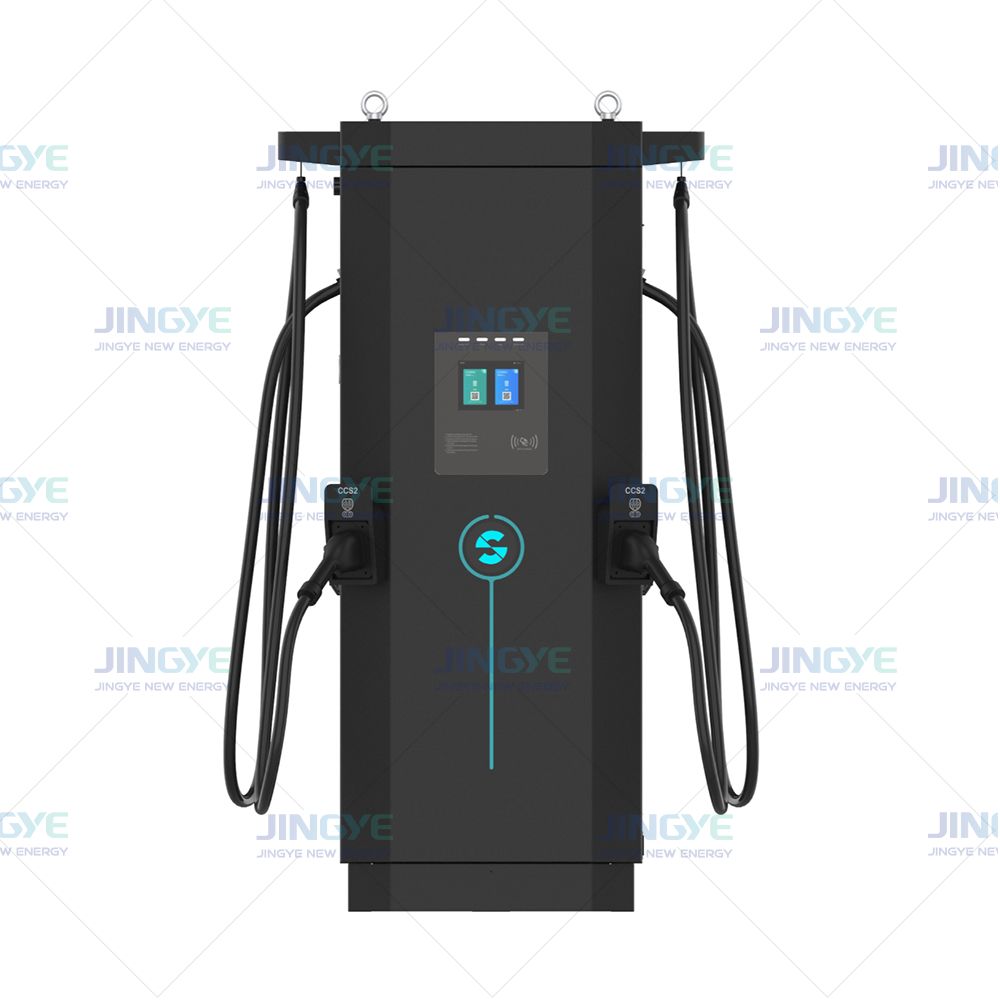
The Jingye 60kW–240kW DC fast EV charger is a high-power commercial charger for public charging stations, fleet depots, and high-traffic infrastructure. With a continuously adjustable 150V–1000V output supporting both 400V and 800V platforms — from passenger cars to electric buses and trucks — and ≥94% average efficiency, it's built for reliable, high-uptime commercial operation. Validated in our CNAS-accredited lab. OEM/ODM available.
Let’s Get Started on Your New Energy Journey.