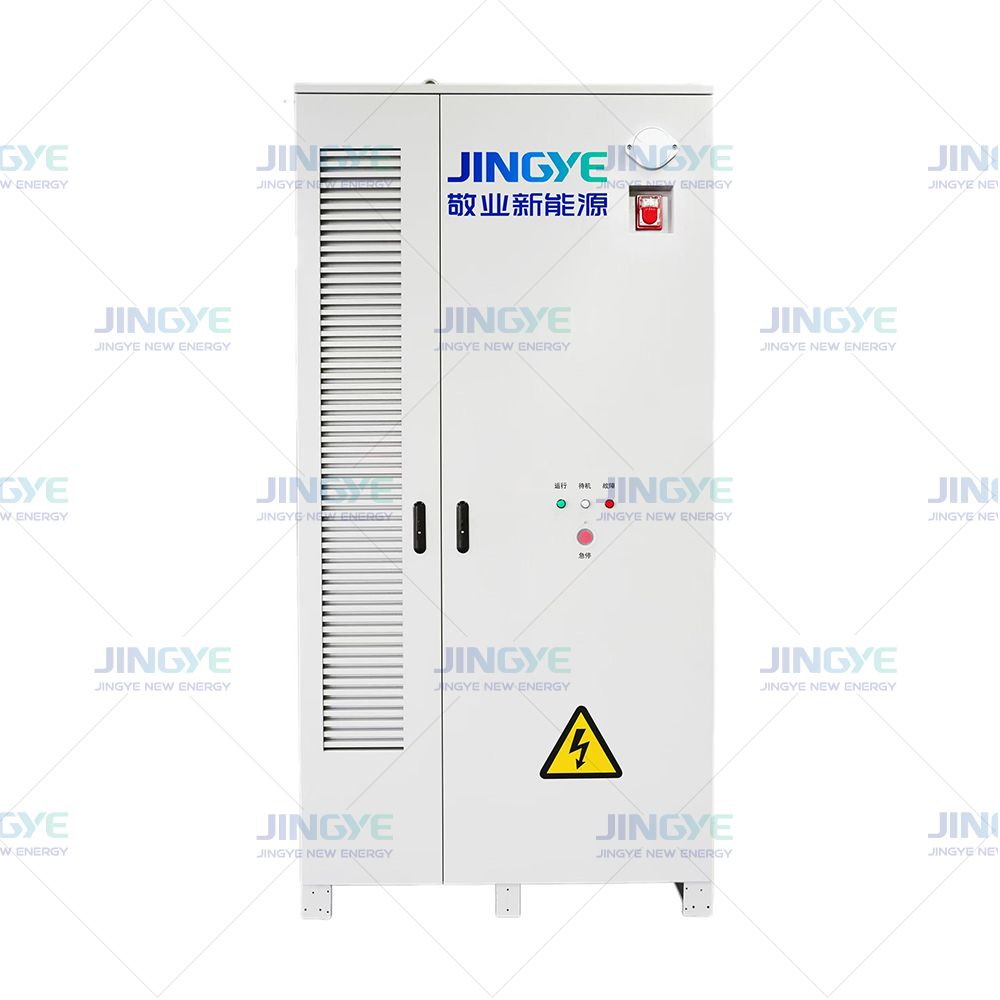
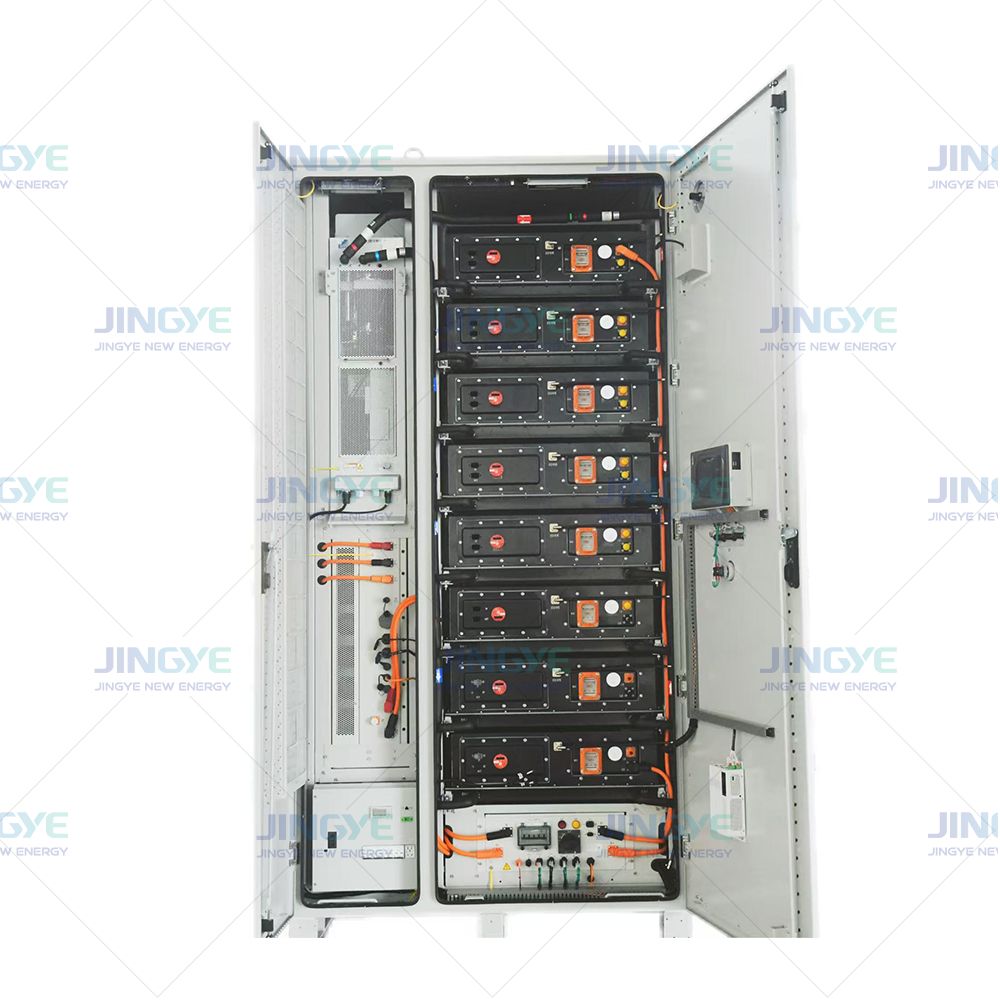
The LFP-417kWh energy storage cabinet from Jingye New Energy is a high-capacity commercial & industrial energy storage cabinet for large sites that need maximum energy per square meter. As a commercial energy storage cabinet manufacturer, we build it on a 1331.2V platform with 314Ah LFP cells, liquid cooling, and series-scalable deployment. OEM/ODM available.
High capacity: 417kWh per cabinet using 314Ah LFP cells in an 8×1P52S configuration on a DC 1331.2V platform.
Long life: More than 8,000 cycles (90% DoD).
Liquid cooling: Uniform cell temperature for >90% efficiency and extended service life.
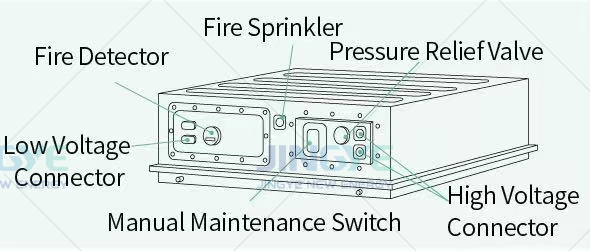
Multi-level safety: Full monitoring, automatic disconnection, aerosol fire suppression, and the Four-Dimensional Protection System.
Scalable: Cabinets deploy in series/parallel with an external PCS to build larger C&I systems.
As a direct energy storage cabinet manufacturer, we quote by configuration and volume, with OEM/ODM and wholesale options. Send us your site type, target capacity, and location for a 417kWh cabinet price and quotation.
It is a high-capacity commercial & industrial LFP energy storage cabinet — 417kWh on a 1331.2V platform — for large sites that want maximum storage per footprint, paired with an external PCS.
417kWh, 314Ah LFP cells (8×1P52S), DC 1331.2V (1164.8–1497.6V), more than 8,000 cycles, liquid cooling, >90% efficiency, and IP55 protection.
The 417kWh offers higher capacity on a 1331.2V platform for large sites and uses an external PCS, while the 261kWh is an all-in-one unit with a built-in 125kW inverter for small-to-medium sites.
Yes. Cabinets deploy in series/parallel to scale capacity, and configuration can be tailored through our OEM/ODM service.
Commercial and Industrial Energy Storage Cabinet Parameters
|
Energy Storage Parameters |
Storage Capacity |
LFP-417KWh |
|
|
Storage Configuration |
314Ah lithium iron phosphate battery system |
|
|
Combination Form |
8*1P52S |
|
|
Nominal Voltage |
DC1331.2V |
|
|
Cycle Times |
>8000 times (90%DOD, remaining 70%, 25℃) |
|
Environment |
Charging Temperature |
0℃~55℃ |
|
|
Discharging Temperature |
-20℃~55℃ |
|
|
Storage Temperature |
-20℃~60℃ |
|
|
Relative Humidity |
0%RH~95%RH, non-condensing |
|
|
Operating Altitude |
≤4000m (power derating above 3000m) |
|
|
Temperature Difference |
3℃ in PACK, 5℃ in cabinet |
|
Lifetime |
Equipment Full Lifecycle |
10 years (2 charges and discharges daily, considering 3% annual decay) |
|
Others |
Communication Method |
CAN/RS485/Ethernet |
|
|
Protection Level |
IP55, salt fog protection (battery compartment) |
|
|
Cooling Method |
Liquid cooling |
|
|
Fire Protection |
Perfluorocetone. |
Technical Parameters
|
Cell Parameters |
280Ah/314Ah |
|
Combination Method |
L173F314-1P52S |
|
Rated Voltage |
166.4V |
|
Rated Capacity |
314Ah |
|
Rated Energy |
52.249kWh |
|
Cooling Method |
Liquid cooling |
|
Rated Rate |
0.5P |
|
Dimensions |
1152.5*790*245mm |
|
Example |
|
1. Peak Shaving & Load Management: Shift energy use to flatten demand peaks and reduce electricity costs for commercial and industrial facilities.
2. Backup & Power Continuity: Provide stable backup power for production lines, critical equipment, and facilities during grid outages.
3. Hybrid Renewable Integration: Pair with solar or wind generation systems to balance intermittent output and enhance self‑consumption.
4. Grid Support Services: Support frequency regulation, demand response, and other utility‑grade operations.
Suitable Application Conditions
Daily energy consumption in the range of approximately 1–5 MWh, requiring stable daily cycling and energy shifting capability
Time-of-use electricity pricing scenarios, where peak shaving and valley filling can significantly reduce operating costs
Distributed Commercial & Industrial energy architecture, rather than centralized utility-scale deployment
Limited installation space in Industrial or Commercial sites, requiring compact and modular design
Phased energy expansion planning, where future capacity increase is expected through modular system integration
Frequent daily charge-discharge cycles, requiring high reliability and consistent performance
Utility-scale energy storage projects (>1 MWh per single system unit requirement)
Grid-side frequency regulation or transmission-level applications
Large renewable energy plants requiring containerized multi-MWh systems
High-voltage centralized energy dispatch scenarios
Let’s Get Started on Your New Energy Journey.