Aug 11, 2026
Answer first: Air-cooled energy storage uses fans and airflow to cool the cells; liquid-cooled systems circulate coolant through plates against the cells. Liquid cooling holds cells at a more uniform temperature, which improves efficiency, cycle life, and safety in dense, high-power systems — so it dominates modern commercial and utility storage. Air cooling is simpler and cheaper, and still fine for smaller, low-cycling installations.
Air cooling moves air across the modules with fans. It's simple, low-cost, and has fewer components, but air carries heat away less effectively and less evenly, so temperatures can vary across a large pack.
Liquid cooling pumps a coolant through cold plates in direct thermal contact with the cells. Liquid removes heat far more efficiently and keeps every cell within a tight temperature band, which matters most in dense, high-power, hard-working systems.
| Attribute | Air-cooled | Liquid-cooled |
|---|---|---|
| Cooling efficiency | Lower | Higher |
| Temperature uniformity | Less even | Very even |
| Energy density / footprint | Lower | Higher (more kWh per m²) |
| Cycle life impact | Good | Better (tighter temps) |
| Upfront cost / complexity | Lower, simpler | Higher, more components |
| Best for | Small, low-cycling systems | Dense, high-power, high-cycling systems |
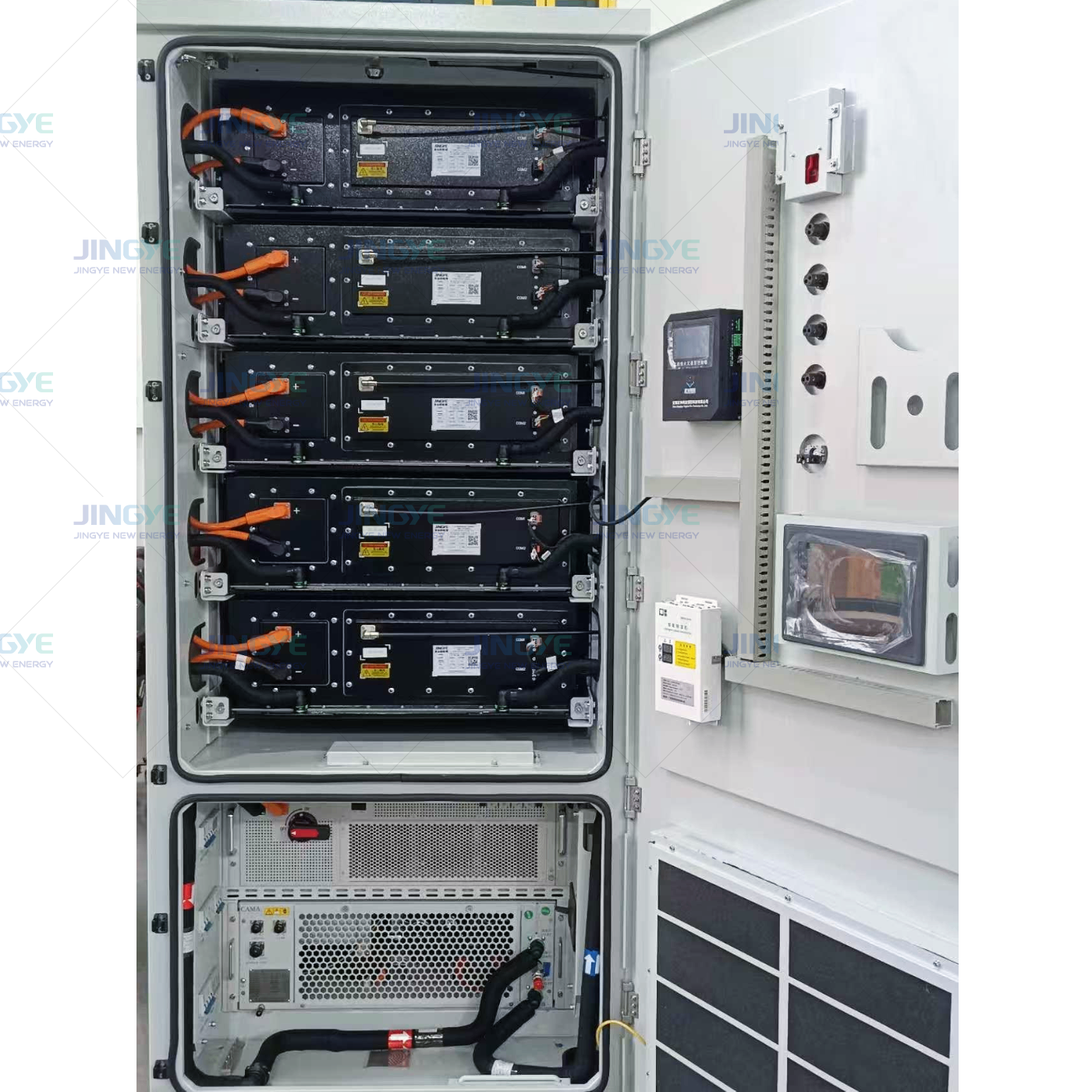
As systems get denser and cycle harder, keeping every cell at the same temperature becomes critical. Uneven temperatures age cells at different rates and can create hot spots. Liquid cooling's uniformity protects cycle life, supports higher power in a smaller footprint, and strengthens safety margins — which is why megawatt-scale containers and high-capacity commercial cabinets are typically liquid-cooled. Jingye's C&I cabinets and 5MWh container use liquid cooling for exactly these reasons.
For smaller systems that don't cycle hard, air cooling's lower cost and simplicity can be the better trade-off. If the pack is modest, the duty is light, and the ambient temperature is well controlled, air cooling keeps things simple and inexpensive without giving up much.
For dense, high-power, high-cycling systems, yes — liquid cooling keeps cells at a more uniform temperature, improving efficiency, cycle life, and safety. For small, light-duty systems, air cooling can be a fine, lower-cost choice.
Uneven temperatures age cells at different rates and can create hot spots, which shortens pack life and raises safety risk. Liquid cooling holds every cell in a tighter band.
It usually has a higher upfront cost and more components, but in demanding systems it can lower the cost per delivered kWh over life by protecting cycle life and efficiency.
Jingye's commercial & industrial cabinets and the 5MWh container are liquid-cooled, chosen for temperature uniformity, cycle life, and safety in dense, high-power operation.
Jingye New Energy builds liquid-cooled LFP storage — from 261kWh and 417kWh C&I cabinets to the 5.015MWh liquid-cooled container — with multi-level protection. Tell us your capacity, duty cycle, and site and we'll recommend the right thermal design. Contact daniyal@jyrenewables.com.
Related: What is a BESS? · LFP vs NMC batteries
Sep. 28, 2026
C&I Battery Storage Capacity vs Power Rating: What Is the Difference?
Energy Storage Cabinets are increasingly used by commercial and industrial buyers to reduce peak demand, support critical loads, improve solar self-consumption, and provide backup power. However, many purchasing teams compare systems by price or cabinet size before understanding the two specifications that determine performance: battery storage capacity, measured in kilowatt-hours (kWh), and
Sep. 28, 2026
How Commercial Energy Storage Helps Reduce Demand Charges
If your electricity bill is rising because of short, high-power peaks, we can solve the problem in a simple sequence: review 12 months of interval data, identify the tariff’s demand-charge window, size Energy Storage Cabinets for the target peak, and configure an automated energy management system to discharge before the peak is billed. This step-by-step approach helps businesses reduce
Sep. 25, 2026
400V vs 800V EV Charging: Key Differences for Modern Electric Vehicles
Choosing between a 400 V and an 800 V electric vehicle is no longer only an engineering decision. It affects charging time, highway convenience, battery design, purchase price, charging site requirements, operating cost, and long-term reliability. For drivers, fleet managers, charging operators, and vehicle manufacturers comparing a DC Fast EV Charger Manufacturer, the most useful answer is not
Let’s Get Started on Your New Energy Journey.