Aug 11, 2026
Answer first: LFP (lithium iron phosphate) and NMC (nickel manganese cobalt) are both lithium-ion chemistries. LFP wins on safety, cycle life, and cost per cycle, which is why it's the standard for stationary energy storage. NMC packs more energy into less weight and space, so it still leads where those matter most, such as many electric vehicles. For a fixed battery energy storage system (BESS), LFP is almost always the right call.
Both store energy by moving lithium ions between electrodes; the difference is the cathode material. LFP uses lithium iron phosphate — abundant, thermally stable, and cobalt-free. NMC uses a nickel-manganese-cobalt oxide that stores more energy per kilogram but is less thermally stable and depends on more expensive metals.
| Attribute | LFP | NMC |
|---|---|---|
| Energy density | Lower (bulkier, heavier) | Higher (compact, light) |
| Cycle life | Very high (thousands of cycles) | Good, typically fewer than LFP |
| Thermal stability / safety | Excellent | Lower; needs careful thermal management |
| Cost per kWh over life | Lower | Higher |
| Raw materials | Iron, phosphate (no cobalt) | Nickel, manganese, cobalt |
| Best for | Stationary storage, buses, trucks | Weight/space-constrained EVs |
A fixed BESS sits in a cabinet or container, so weight and footprint matter far less than they do in a car. What matters is how safely and how long it runs, and how much each delivered kWh costs over the system's life. LFP's thermal stability suits multi-hour discharge and dense installations, its long cycle life spreads the cost across more energy, and the absence of cobalt improves cost and supply stability. That combination is why commercial, industrial, and utility storage overwhelmingly use LFP.
When every kilogram and litre counts — passenger EVs chasing maximum range, or applications with tight weight limits — NMC's higher energy density is worth its trade-offs. For those uses, the compactness outweighs the cost and thermal considerations that make LFP preferable for stationary systems.
Generally yes. LFP is more thermally stable and more resistant to thermal runaway, which is a key reason it's favored for stationary energy storage where packs are large and densely installed.
Usually the opposite. LFP typically offers more charge-discharge cycles, so it tends to last longer in cycling applications like daily peak shaving.
Because stationary storage values safety, long cycle life, and low cost per kWh over the system's life more than the compactness that NMC provides.
LFP generally has a lower cost per kWh and avoids cobalt, and its longer cycle life lowers the effective cost per delivered kWh over time.
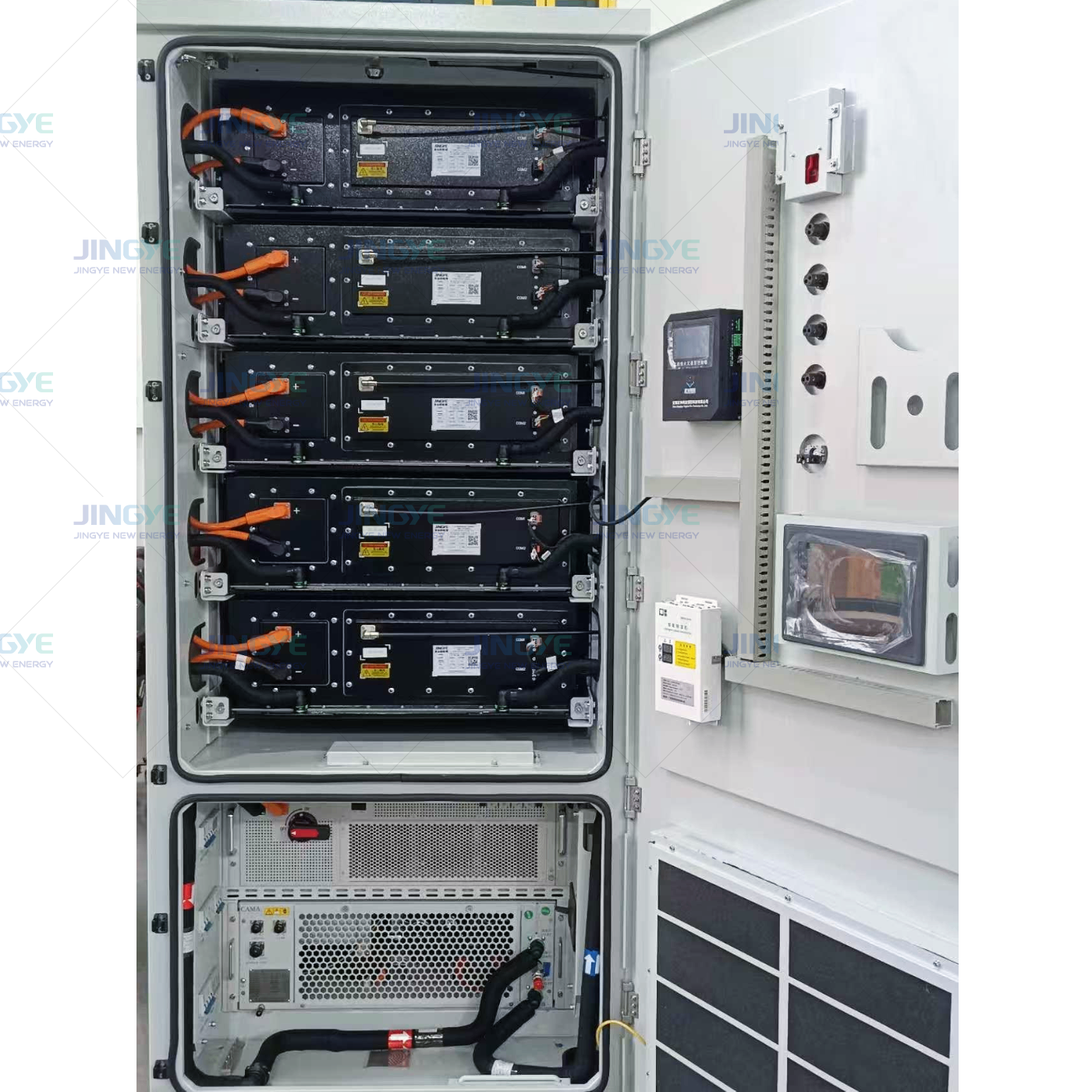
Jingye New Energy manufactures LFP-based energy storage — from 261kWh and 417kWh C&I cabinets to the 5MWh liquid-cooled container — chosen for safety, long cycle life, and low lifetime cost. Tell us your application and we'll recommend a configuration. Contact allen.meng@jyrenewables.com.
Related: What is a BESS? · Explore our energy storage products
Sep. 28, 2026
C&I Battery Storage Capacity vs Power Rating: What Is the Difference?
Energy Storage Cabinets are increasingly used by commercial and industrial buyers to reduce peak demand, support critical loads, improve solar self-consumption, and provide backup power. However, many purchasing teams compare systems by price or cabinet size before understanding the two specifications that determine performance: battery storage capacity, measured in kilowatt-hours (kWh), and
Sep. 28, 2026
How Commercial Energy Storage Helps Reduce Demand Charges
If your electricity bill is rising because of short, high-power peaks, we can solve the problem in a simple sequence: review 12 months of interval data, identify the tariff’s demand-charge window, size Energy Storage Cabinets for the target peak, and configure an automated energy management system to discharge before the peak is billed. This step-by-step approach helps businesses reduce
Sep. 25, 2026
400V vs 800V EV Charging: Key Differences for Modern Electric Vehicles
Choosing between a 400 V and an 800 V electric vehicle is no longer only an engineering decision. It affects charging time, highway convenience, battery design, purchase price, charging site requirements, operating cost, and long-term reliability. For drivers, fleet managers, charging operators, and vehicle manufacturers comparing a DC Fast EV Charger Manufacturer, the most useful answer is not
Let’s Get Started on Your New Energy Journey.