Sep 30, 2026
By Daniyal, Jingye New Energy. Published 30 September 2026.
Quick answer: In 2026, a turnkey commercial and industrial (C&I) battery system in Germany costs roughly €400–650 per kWh for 100–500 kWh sites. When it combines peak shaving with rooftop solar self-consumption, a payback of around 6–8 years is realistic. Peak shaving alone usually takes longer.
German businesses still pay a lot for power. The BDEW Strompreisanalyse (autumn 2026) puts the average supply-contract price for small and mid-sized industrial companies at 17.2 ct/kWh so far in 2026, before most grid charges and levies. On top of that, many sites pay a yearly demand charge set by a single 15-minute peak.
This guide explains where a battery saves money, what it costs and how to size it. It includes a worked payback example for our LFP-261kWh cabinet at a typical German factory.
Three things changed at once: batteries got cheaper, midday solar power lost value, and flexible tariffs became standard.
The result: storing your own solar power and using it later is usually worth far more than exporting it at noon.
A C&I battery earns from four sources, and the best projects combine at least two of them.
| Revenue source | How it works | Who benefits most |
|---|---|---|
| Peak shaving | The battery covers your highest 15-minute peaks, so the grid operator bills a lower annual peak (€/kW per year) | Sites with metered demand (over 100,000 kWh/year) and sharp load spikes |
| Solar self-consumption | Surplus rooftop solar is stored at midday and used in the afternoon, evening or next morning | Sites with 100 kWp+ rooftop PV that export a lot at noon |
| Price arbitrage | Charge in cheap or negative-price hours, discharge in expensive hours, using a dynamic tariff | Sites on dynamic or spot-linked tariffs |
| Backup power | Keeps critical loads running during a grid outage | Cold storage, food, IT and continuous production |
Peak shaving is often the biggest lever. Any German business using over 100,000 kWh a year is metered in 15-minute intervals, and the single highest quarter-hour of the year sets the demand charge. In 2026 price sheets, medium-voltage demand charges above 2,500 usage hours are €132.13/kW per year at SWM Munich and €114.12/kW at EAM Netz in Hesse (meine-speicher.de).
The maths is simple: annual saving = kW of peak removed × demand charge. Cutting 100 kW at €120/kW saves €12,000 every year.
Stacking matters. The same battery cannot be fully empty for arbitrage and fully charged for a peak at the same time. A good energy management system (EMS) keeps a reserve for peaks and uses the rest for solar and price shifting.
Price per kWh falls sharply as systems get bigger, because inverters, planning, grid connection and commissioning cost roughly the same regardless of capacity.
| System size | Typical turnkey price (€/kWh) | Typical format |
|---|---|---|
| 30–100 kWh | 600–800 | Small cabinet |
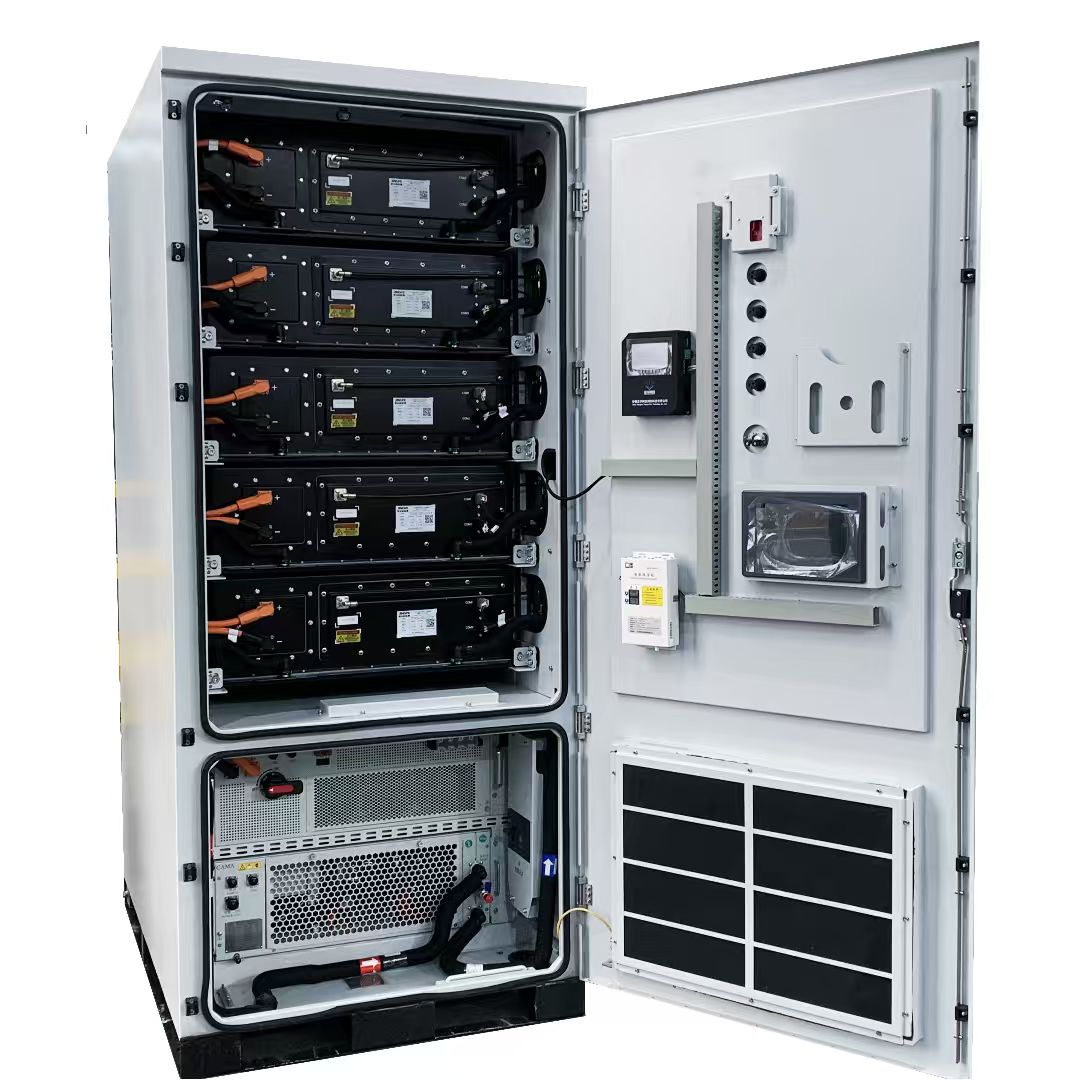
| 100–500 kWh | 400–650 | Cabinet, e.g. our 261 / 417 kWh models |
| 500 kWh and above | 250–450 | Container, e.g. our 5.015 MWh BESS |
Turnkey prices include battery, inverter, controls and installation. Source: Stromfee market overview, July 2026.
Watch what the quote leaves out. Common extras are the grid connection, transformer upgrades, foundation, fire protection, metering concept, EMS and annual maintenance. A low €/kWh quote without these can end up more expensive than a higher all-in quote.
Compare quotes on the right numbers. Ask every supplier for the same four things: total installed price, usable (not nominal) kWh, guaranteed full cycles with end-of-warranty capacity, and charge/discharge power in kW. Then compare cost per usable kWh and per guaranteed cycle.
In this example, our LFP-261kWh cabinet pays back in about 7 years when it stacks peak shaving, solar shifting and arbitrage. With peak shaving alone, payback stretches to about 11 years.
The site (assumed): a metalworking plant using 1.2 GWh a year, with a 450 kW annual peak, medium-voltage connection and over 2,500 usage hours. It has 400 kWp of rooftop solar that exports surplus power at midday.
Key assumptions:
| Savings line | Calculation | € per year |
|---|---|---|
| Peak shaving | 100 kW cut × €120/kW | 12,000 |
| Solar self-consumption | 40,000 kWh stored over ~200 sunny days × 13.5 ct net gain | 5,400 |
| Winter price arbitrage | ~120 days × 200 kWh × 6 ct spread | 1,400 |
| Maintenance | 1% of €120,000 | −1,200 |
| Net annual saving | 17,600 |
Simple payback: €120,000 ÷ €17,600 ≈ 6.8 years. With peak shaving alone, net savings are €10,800 and payback is about 11 years. Stacking is what makes the business case.
Tax effects such as the Investitionsabzugsbetrag (§ 7g EStG) are not included and can shorten payback further. Every site is different: the real number depends on your 15-minute load profile, your grid operator's demand charge and your tariff.
Size the battery from your load profile, not from a standard package. Two rules of thumb get you close:
| System | Typical annual use | Rooftop PV | Peak it can typically shave | Good fit for |
|---|---|---|---|---|
| LFP-261kWh cabinet (built-in 125 kW PCS) | 0.5–1.5 GWh | 250–500 kWp | Up to 125 kW | Metalworking, plastics, printing, cold storage, retail |
| LFP-417kWh cabinet (external PCS) | 1.5–3 GWh | 400–800 kWp | 150–200 kW | Larger plants, logistics hubs, e-truck depots |
| 5.015 MWh container | 5 GWh and above | 2 MWp and above | Up to 2.5 MW | Heavy industry, solar parks, grid-scale projects |
The ranges are indicative. Cabinets can be deployed in parallel to scale capacity. For an exact size, send us your 15-minute load profile, which your grid operator can provide.
There is no nationwide grant for commercial batteries in 2026, but low-interest loans, tax relief and a grid-fee exemption all help. Rules are changing, so check the current position before you sign.
The cheapest cabinet is rarely the cheapest system over 15 years. Check these six points before you buy.
Our storage systems are designed and built by Jingye New Energy in Hebei, China, on an automated 15 GWh module and pack line with full MES traceability. Quality is backed by ISO 9001, ISO 14001 and ISO 45001 management systems, IATF 16949 for our cell contact systems, SGS testing, IEC/CE-certified products and an in-house CNAS-accredited test laboratory (company profile). Our European-standard 5 MWh liquid-cooled cabinet is going through European certification.
We also run the same technology at scale, including a 15 MW / 30.09 MWh peak-shaving station for Huaxi Special Steel and a 50 MW / 100.32 MWh station for Jiangsu Jingye Iron and Steel.
For 100–500 kWh systems, expect about €400–650 per kWh turnkey. Containers of 500 kWh and above fall to about €250–450 per kWh.
Around 6–8 years is realistic when the battery combines peak shaving with solar self-consumption. Peak shaving alone often takes 9–11 years.
It works if you use more than 100,000 kWh a year, because then you pay a demand charge based on your highest 15-minute peak. Below that, you are billed on a standard load profile with no separate demand charge.
No. Peak shaving and price arbitrage work without PV. But rooftop solar usually shortens payback, because storing your own power is worth far more than exporting it.
There is no nationwide grant in 2026. Businesses can use the KfW 270 loan, the § 7g EStG tax deduction and some regional programmes.
Lithium iron phosphate (LFP). It offers long cycle life, strong thermal safety and lower cost than NMC.
Yes, if it is specified as backup-capable. Not every system can do this out of the box, so decide during design.
Send us your last electricity bill or your 15-minute load profile. Our engineers will suggest the right system, the peak you can shave and an estimated payback.
Request your sizing proposalHebei Jingye New Energy Technology Co., Ltd, part of Jingye Group, makes C&I energy storage cabinets (261 and 417 kWh), 5 MWh BESS containers and related storage hardware for installers, EPCs and distributors worldwide.
Oct. 01, 2026
Fleet Depot Charging: Electrical and Infrastructure Considerations
Fleet depot charging must match vehicle schedules, electrical capacity, and the right DC Fast EV Charger Manufacturer. A depot may need managed charging, load balancing, and a reliable charging network to keep buses, trucks, vans, or service vehicles ready each day. The main challenge is not only charger power. It also includes utility limits, cable routing, transformer size, parking patterns,
Oct. 01, 2026
Peak Shaving vs Load Shifting in Commercial Energy Storage
Energy Storage Cabinets help commercial facilities control when electricity is purchased, reduce exposure to demand charges, and improve power reliability. However, the best operating strategy depends on whether the facility needs to reduce short-duration power spikes, move energy from expensive periods to cheaper periods, or combine both approaches. This guide compares peak shaving and load
Sep. 30, 2026
C&I Battery Storage in Germany: Costs, Payback and Sizing Guide (2026)
What does commercial battery storage cost in Germany in 2026? Price ranges per kWh, a worked payback example for a 261 kWh cabinet, a sizing guide, and the grid rules and incentives German businesses need to know.
Let’s Get Started on Your New Energy Journey.