Aug 24, 2026
Published: August 24, 2026 | Jingye New Energy | Reading time: 8 minutes
The 24V starting battery is one of the most replaced components on a heavy-duty truck — and one of the most consequential for fleet uptime. A battery that fails on a cold morning stops a truck that earns money per kilometer, and the replacement decision is no longer a choice between lead-acid brands. Lithium iron phosphate (LiFePO4) commercial vehicle batteries have moved from premium option to mainstream alternative, with 8–10 year service lives, reliable starts at -40°C, and the ability to power parking air conditioning without idling the engine. This guide explains the difference between lithium and lead-acid starting batteries, the specifications that matter for heavy trucks, and how to specify the right battery for a fleet.
Traditional lead-acid and AGM truck batteries last 3–5 years under normal conditions, and their failure modes are familiar: sulfation from deep discharge, capacity loss in cold weather, and the weight penalty of carrying 60–100 kg of lead per battery. LiFePO4 starting batteries address every one of those weaknesses:
The dual-function point is the biggest operational change: one battery replaces both the starter battery and the auxiliary/parking battery, simplifying the electrical system and reducing total battery cost.
When specifying a 24V lithium starting battery for a commercial vehicle, five parameters decide whether it fits the application:
|
Specification |
What to look for |
Why it matters |
|
Nominal voltage |
24V platform (25.6V LiFePO4 nominal) |
Must match the vehicle's 24V electrical system |
|
Capacity (Ah) |
120–300Ah typical |
Determines cranking energy and parking AC runtime |
|
Cold cranking current |
1500A+ rated, 2000–2500A peak |
Must exceed the starter motor requirement of the engine |
|
Operating temperature |
-40°C to +60°C with built-in heating |
Cold-start reliability in winter climates |
|
Protection |
IP67, BMS with over-current/over-temp protection |
Safety and longevity in vibration, dust, and water |
The cold cranking current (CCA) figure deserves particular attention: heavy-duty diesel engines draw 1000–2500A at cranking peak, and the battery's BMS must support that current without shutting down. A battery that trips its protection during a start attempt is worse than no upgrade at all.
A lithium starting battery is only as reliable as its Battery Management System (BMS). The BMS balances cells, limits charge and discharge current, protects against over-voltage, under-voltage, over-temperature, and short circuits, and — in premium designs — communicates with a cloud platform for remote monitoring. For fleet managers, the smart features are the operational differentiator: mobile app and cloud monitoring of voltage, temperature, current, and remaining capacity across many vehicles; remote heating scheduling before winter starts; and online diagnostics that catch a failing battery before it stops a truck. When comparing batteries, ask what the BMS actually does — a "smart battery" claim without remote monitoring capability is just packaging.
Lithium starting batteries are designed as direct replacements for original lead-acid truck batteries. Most installations are true drop-in: the same terminals, the same footprint class, and a BMS that manages charging from the vehicle's existing alternator. For fleets transitioning gradually, lithium batteries can also run in parallel with lead-acid during a mixed period — though the charging parameters should be verified so the lithium battery's BMS handles the transition correctly. The practical recommendation for fleets is to standardize: a uniform lithium fleet simplifies inventory, monitoring, and training compared to managing two battery chemistries.
Truck and bus OEMs, fleet operators, and battery distributors increasingly source commercial vehicle batteries as part of vehicle programs rather than as replacement parts. That makes OEM/ODM capability a specification in itself: voltage platform and capacity customization to match specific vehicle models, terminal and footprint adaptation, BMS software configuration, and batch quality documentation. Jingye New Energy provides commercial vehicle batteries with OEM/ODM customization across voltage platforms and capacities, built for 24V heavy trucks and commercial vehicles covering both engine starting and low-voltage onboard equipment.
Jingye's flagship JY530 24V LiFePO4 engine start-stop battery illustrates the specification a modern commercial vehicle battery should carry: 25.6V/206Ah (5.3kWh), 1500A starting current with 2500A peak, continuous 100A charge and discharge, operation down to -40°C with a 12-layer protection system, and remote monitoring through a mobile app and cloud platform with online diagnostics and remote updates. The JY530 directly replaces original lead-acid truck batteries and can run in parallel with them during a gradual transition. Manufacturing follows automotive-grade quality systems — Jingye holds IATF 16949 certification and operates a CNAS-certified laboratory.
Hebei Jingye New Energy Technology Co., Ltd (Jingye New Energy) is a new energy enterprise integrating R&D, manufacturing, sales, and operation, established in 2023. The company's 15 GWh module and PACK production line supports its commercial vehicle battery line, alongside EV chargers, C&I energy storage cabinets, containerized BESS, and cell contact systems. Certified to IATF 16949 with a CNAS-accredited laboratory and IEC/CE compliance, Jingye serves fleets, truck OEMs, and battery distributors across global markets — the same manufacturing base that underpins its lithium battery safety and BESS fire safety guide.
Contact Jingye New Energy with your vehicle type, engine starting requirement, and fleet size to receive a specification-matched recommendation and quote for 24V LiFePO4 commercial vehicle batteries.
Oct. 20, 2026
NTPC Khavda 3,300 MWh BESS Tender: How Many Containers You Really Need (2026)
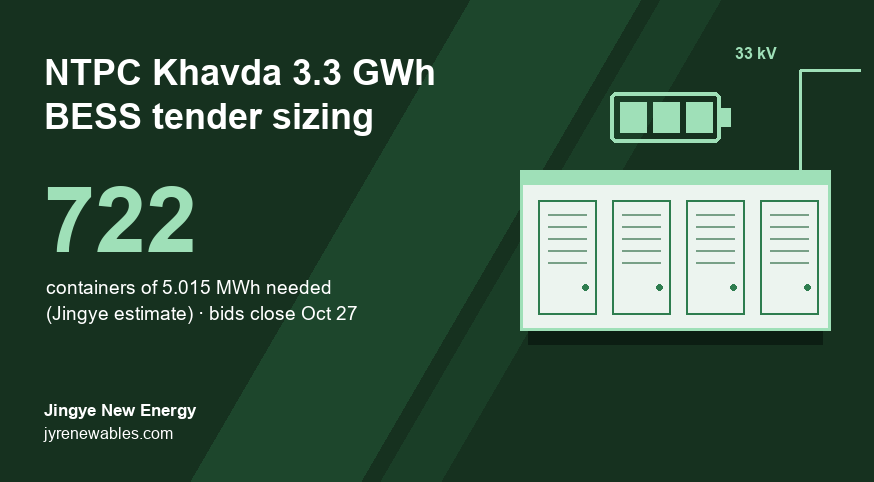
NTPC Green Energy's 1,100 MW / 3,300 MWh Khavda battery tender closes on October 27, 2026. Because capacity is counted as AC energy at the grid point, we estimate it needs about 722 containers of 5.015 MWh, roughly 10% more installed battery than the headline figure.
Oct. 20, 2026
Battery Energy Storage System Architecture: Key Components Explained
A battery energy storage system architecture determines how safely and efficiently a BESS stores, controls, and delivers electricity. The main challenge for overseas buyers is choosing the right structure without creating avoidable cost, safety, or integration problems.
Oct. 19, 2026
Battery Capacity Fade in Commercial Energy Storage Systems
Battery capacity fade in commercial energy storage systems reduces the amount of energy a site can store and deliver. This battery degradation can increase demand charges, reduce backup time, and change the return on investment.
Related Products
LFP-261kWh All-in-One Energy Storage Cabinet
The LFP-261kWh is an all-in-one commercial & industrial energy storage cabinet from Jingye New Energy, with a built-in 125kW inverter (PCS) — battery and inverter in one unit, no separate PCS needed. It delivers 261kWh using 314Ah LFP cells, liquid-cooled, >6,000 cycles, IP54, for peak shaving, load shifting, solar self-consumption, and backup power at small-to-medium sites. OEM/ODM available.
LFP-261kWh All-in-One Energy Storage Cabinet
The LFP-261kWh is an all-in-one commercial & industrial energy storage cabinet from Jingye New Energy, with a built-in 125kW inverter (PCS) — battery and inverter in one unit, no separate PCS needed. It delivers 261kWh using 314Ah LFP cells, liquid-cooled, >6,000 cycles, IP54, for peak shaving, load shifting, solar self-consumption, and backup power at small-to-medium sites. OEM/ODM available.
LFP-261kWh All-in-One Energy Storage Cabinet
The LFP-261kWh is an all-in-one commercial & industrial energy storage cabinet from Jingye New Energy, with a built-in 125kW inverter (PCS) — battery and inverter in one unit, no separate PCS needed. It delivers 261kWh using 314Ah LFP cells, liquid-cooled, >6,000 cycles, IP54, for peak shaving, load shifting, solar self-consumption, and backup power at small-to-medium sites. OEM/ODM available.
LFP-261kWh All-in-One Energy Storage Cabinet
The LFP-261kWh is an all-in-one commercial & industrial energy storage cabinet from Jingye New Energy, with a built-in 125kW inverter (PCS) — battery and inverter in one unit, no separate PCS needed. It delivers 261kWh using 314Ah LFP cells, liquid-cooled, >6,000 cycles, IP54, for peak shaving, load shifting, solar self-consumption, and backup power at small-to-medium sites. OEM/ODM available.
LFP-261kWh All-in-One Energy Storage Cabinet
The LFP-261kWh is an all-in-one commercial & industrial energy storage cabinet from Jingye New Energy, with a built-in 125kW inverter (PCS) — battery and inverter in one unit, no separate PCS needed. It delivers 261kWh using 314Ah LFP cells, liquid-cooled, >6,000 cycles, IP54, for peak shaving, load shifting, solar self-consumption, and backup power at small-to-medium sites. OEM/ODM available.
LFP-261kWh All-in-One Energy Storage Cabinet
The LFP-261kWh is an all-in-one commercial & industrial energy storage cabinet from Jingye New Energy, with a built-in 125kW inverter (PCS) — battery and inverter in one unit, no separate PCS needed. It delivers 261kWh using 314Ah LFP cells, liquid-cooled, >6,000 cycles, IP54, for peak shaving, load shifting, solar self-consumption, and backup power at small-to-medium sites. OEM/ODM available.
LFP-261kWh All-in-One Energy Storage Cabinet
The LFP-261kWh is an all-in-one commercial & industrial energy storage cabinet from Jingye New Energy, with a built-in 125kW inverter (PCS) — battery and inverter in one unit, no separate PCS needed. It delivers 261kWh using 314Ah LFP cells, liquid-cooled, >6,000 cycles, IP54, for peak shaving, load shifting, solar self-consumption, and backup power at small-to-medium sites. OEM/ODM available.
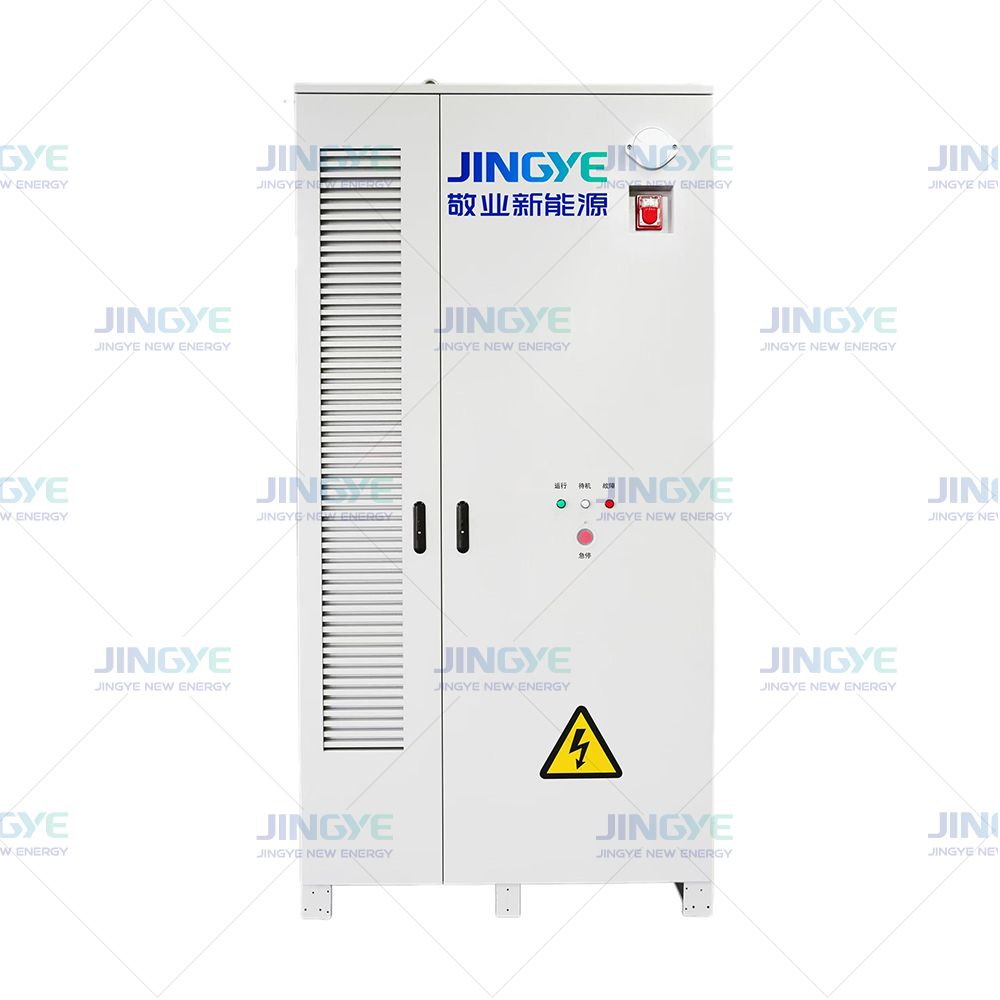
LFP-417kWh Energy Storage Cabinet
The LFP-417kWh is a high-capacity commercial & industrial energy storage cabinet from Jingye New Energy, built for large C&I sites that need maximum energy per footprint. It delivers 417kWh using 314Ah LFP cells on a 1331.2V platform, liquid-cooled, >8,000 cycles, IP55, and is series-scalable with an external PCS — for peak shaving, load management, and solar integration. OEM/ODM available.
LFP-417kWh Energy Storage Cabinet
The LFP-417kWh is a high-capacity commercial & industrial energy storage cabinet from Jingye New Energy, built for large C&I sites that need maximum energy per footprint. It delivers 417kWh using 314Ah LFP cells on a 1331.2V platform, liquid-cooled, >8,000 cycles, IP55, and is series-scalable with an external PCS — for peak shaving, load management, and solar integration. OEM/ODM available.
LFP-417kWh Energy Storage Cabinet
The LFP-417kWh is a high-capacity commercial & industrial energy storage cabinet from Jingye New Energy, built for large C&I sites that need maximum energy per footprint. It delivers 417kWh using 314Ah LFP cells on a 1331.2V platform, liquid-cooled, >8,000 cycles, IP55, and is series-scalable with an external PCS — for peak shaving, load management, and solar integration. OEM/ODM available.
LFP-417kWh Energy Storage Cabinet
The LFP-417kWh is a high-capacity commercial & industrial energy storage cabinet from Jingye New Energy, built for large C&I sites that need maximum energy per footprint. It delivers 417kWh using 314Ah LFP cells on a 1331.2V platform, liquid-cooled, >8,000 cycles, IP55, and is series-scalable with an external PCS — for peak shaving, load management, and solar integration. OEM/ODM available.
LFP-417kWh Energy Storage Cabinet
The LFP-417kWh is a high-capacity commercial & industrial energy storage cabinet from Jingye New Energy, built for large C&I sites that need maximum energy per footprint. It delivers 417kWh using 314Ah LFP cells on a 1331.2V platform, liquid-cooled, >8,000 cycles, IP55, and is series-scalable with an external PCS — for peak shaving, load management, and solar integration. OEM/ODM available.
LFP-417kWh Energy Storage Cabinet
The LFP-417kWh is a high-capacity commercial & industrial energy storage cabinet from Jingye New Energy, built for large C&I sites that need maximum energy per footprint. It delivers 417kWh using 314Ah LFP cells on a 1331.2V platform, liquid-cooled, >8,000 cycles, IP55, and is series-scalable with an external PCS — for peak shaving, load management, and solar integration. OEM/ODM available.
LFP-417kWh Energy Storage Cabinet
The LFP-417kWh is a high-capacity commercial & industrial energy storage cabinet from Jingye New Energy, built for large C&I sites that need maximum energy per footprint. It delivers 417kWh using 314Ah LFP cells on a 1331.2V platform, liquid-cooled, >8,000 cycles, IP55, and is series-scalable with an external PCS — for peak shaving, load management, and solar integration. OEM/ODM available.
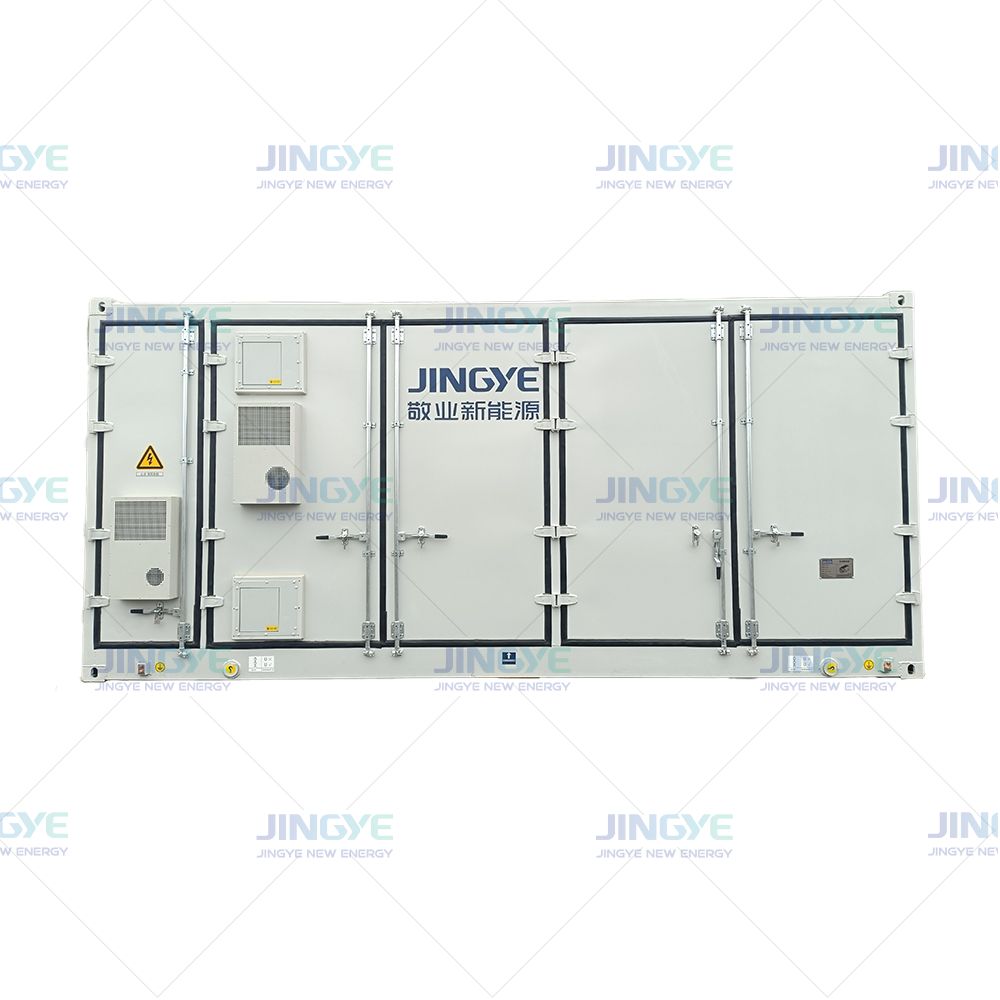
5.015MWh Liquid-Cooled BESS Container (Containerized Energy Storage System)
The 5.015MWh liquid-cooled BESS container from Jingye New Energy is a utility-scale containerized energy storage system built on 314Ah LFP cells. As a China-based BESS container manufacturer and supplier, we deliver 5,015 kWh of battery energy storage in a standard 20-foot container — up to 2.5 MW charge/discharge, liquid-cooled, with multi-level fire protection. OEM/ODM available; request a price today.
5.015MWh Liquid-Cooled BESS Container (Containerized Energy Storage System)
The 5.015MWh liquid-cooled BESS container from Jingye New Energy is a utility-scale containerized energy storage system built on 314Ah LFP cells. As a China-based BESS container manufacturer and supplier, we deliver 5,015 kWh of battery energy storage in a standard 20-foot container — up to 2.5 MW charge/discharge, liquid-cooled, with multi-level fire protection. OEM/ODM available; request a price today.
5.015MWh Liquid-Cooled BESS Container (Containerized Energy Storage System)
The 5.015MWh liquid-cooled BESS container from Jingye New Energy is a utility-scale containerized energy storage system built on 314Ah LFP cells. As a China-based BESS container manufacturer and supplier, we deliver 5,015 kWh of battery energy storage in a standard 20-foot container — up to 2.5 MW charge/discharge, liquid-cooled, with multi-level fire protection. OEM/ODM available; request a price today.
5.015MWh Liquid-Cooled BESS Container (Containerized Energy Storage System)
The 5.015MWh liquid-cooled BESS container from Jingye New Energy is a utility-scale containerized energy storage system built on 314Ah LFP cells. As a China-based BESS container manufacturer and supplier, we deliver 5,015 kWh of battery energy storage in a standard 20-foot container — up to 2.5 MW charge/discharge, liquid-cooled, with multi-level fire protection. OEM/ODM available; request a price today.
5.015MWh Liquid-Cooled BESS Container (Containerized Energy Storage System)
The 5.015MWh liquid-cooled BESS container from Jingye New Energy is a utility-scale containerized energy storage system built on 314Ah LFP cells. As a China-based BESS container manufacturer and supplier, we deliver 5,015 kWh of battery energy storage in a standard 20-foot container — up to 2.5 MW charge/discharge, liquid-cooled, with multi-level fire protection. OEM/ODM available; request a price today.
5.015MWh Liquid-Cooled BESS Container (Containerized Energy Storage System)
The 5.015MWh liquid-cooled BESS container from Jingye New Energy is a utility-scale containerized energy storage system built on 314Ah LFP cells. As a China-based BESS container manufacturer and supplier, we deliver 5,015 kWh of battery energy storage in a standard 20-foot container — up to 2.5 MW charge/discharge, liquid-cooled, with multi-level fire protection. OEM/ODM available; request a price today.
5.015MWh Liquid-Cooled BESS Container (Containerized Energy Storage System)
The 5.015MWh liquid-cooled BESS container from Jingye New Energy is a utility-scale containerized energy storage system built on 314Ah LFP cells. As a China-based BESS container manufacturer and supplier, we deliver 5,015 kWh of battery energy storage in a standard 20-foot container — up to 2.5 MW charge/discharge, liquid-cooled, with multi-level fire protection. OEM/ODM available; request a price today.
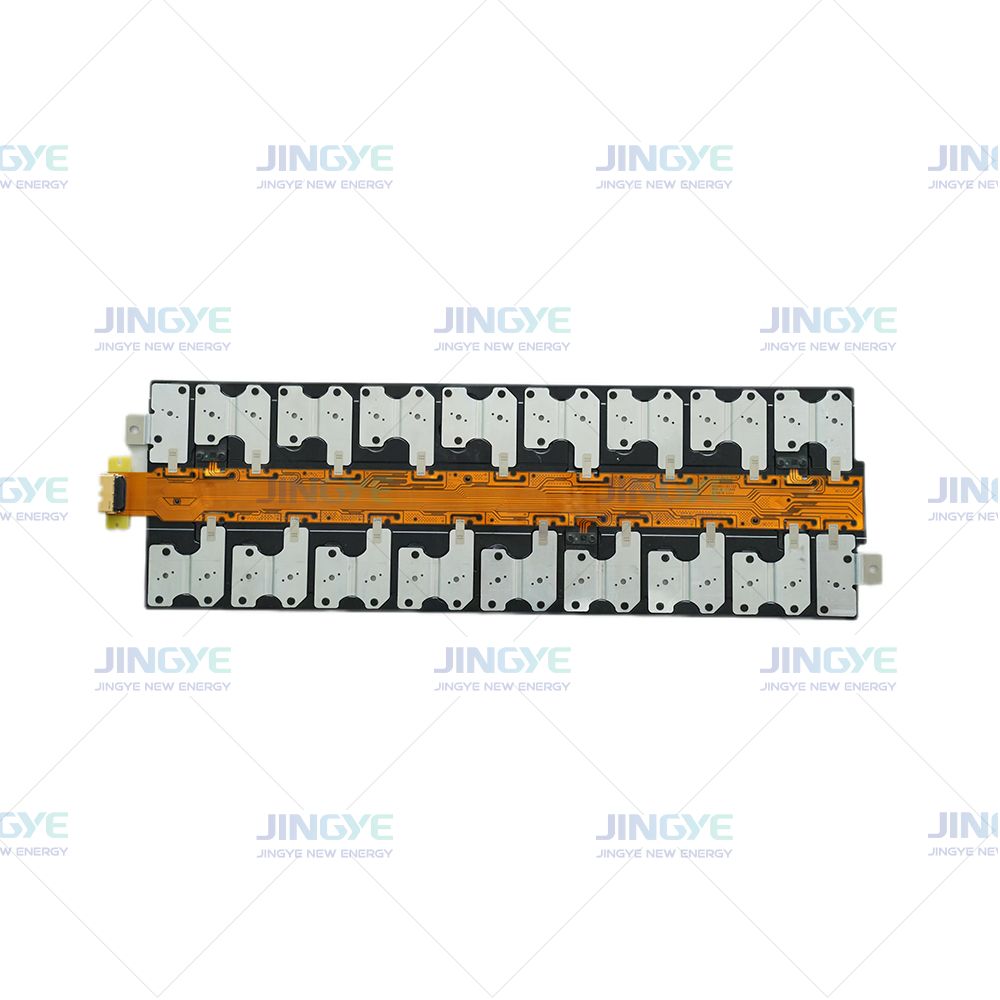
CCS Cell Contact System (Integrated Busbar for Battery Packs)
Jingye New Energy is a Cell Contact System (CCS) manufacturer, producing custom integrated busbars for EV and energy-storage battery packs. Our CCS combines copper-aluminum busbars, voltage and temperature sensing, and an insulating carrier into one module — replacing wire harnesses. Available in injection molding, thermoforming, and direct welding, IATF 16949 certified, with full OEM/ODM design.
CCS Cell Contact System (Integrated Busbar for Battery Packs)
Jingye New Energy is a Cell Contact System (CCS) manufacturer, producing custom integrated busbars for EV and energy-storage battery packs. Our CCS combines copper-aluminum busbars, voltage and temperature sensing, and an insulating carrier into one module — replacing wire harnesses. Available in injection molding, thermoforming, and direct welding, IATF 16949 certified, with full OEM/ODM design.
CCS Cell Contact System (Integrated Busbar for Battery Packs)
Jingye New Energy is a Cell Contact System (CCS) manufacturer, producing custom integrated busbars for EV and energy-storage battery packs. Our CCS combines copper-aluminum busbars, voltage and temperature sensing, and an insulating carrier into one module — replacing wire harnesses. Available in injection molding, thermoforming, and direct welding, IATF 16949 certified, with full OEM/ODM design.
CCS Cell Contact System (Integrated Busbar for Battery Packs)
Jingye New Energy is a Cell Contact System (CCS) manufacturer, producing custom integrated busbars for EV and energy-storage battery packs. Our CCS combines copper-aluminum busbars, voltage and temperature sensing, and an insulating carrier into one module — replacing wire harnesses. Available in injection molding, thermoforming, and direct welding, IATF 16949 certified, with full OEM/ODM design.
CCS Cell Contact System (Integrated Busbar for Battery Packs)
Jingye New Energy is a Cell Contact System (CCS) manufacturer, producing custom integrated busbars for EV and energy-storage battery packs. Our CCS combines copper-aluminum busbars, voltage and temperature sensing, and an insulating carrier into one module — replacing wire harnesses. Available in injection molding, thermoforming, and direct welding, IATF 16949 certified, with full OEM/ODM design.
CCS Cell Contact System (Integrated Busbar for Battery Packs)
Jingye New Energy is a Cell Contact System (CCS) manufacturer, producing custom integrated busbars for EV and energy-storage battery packs. Our CCS combines copper-aluminum busbars, voltage and temperature sensing, and an insulating carrier into one module — replacing wire harnesses. Available in injection molding, thermoforming, and direct welding, IATF 16949 certified, with full OEM/ODM design.
CCS Cell Contact System (Integrated Busbar for Battery Packs)
Jingye New Energy is a Cell Contact System (CCS) manufacturer, producing custom integrated busbars for EV and energy-storage battery packs. Our CCS combines copper-aluminum busbars, voltage and temperature sensing, and an insulating carrier into one module — replacing wire harnesses. Available in injection molding, thermoforming, and direct welding, IATF 16949 certified, with full OEM/ODM design.
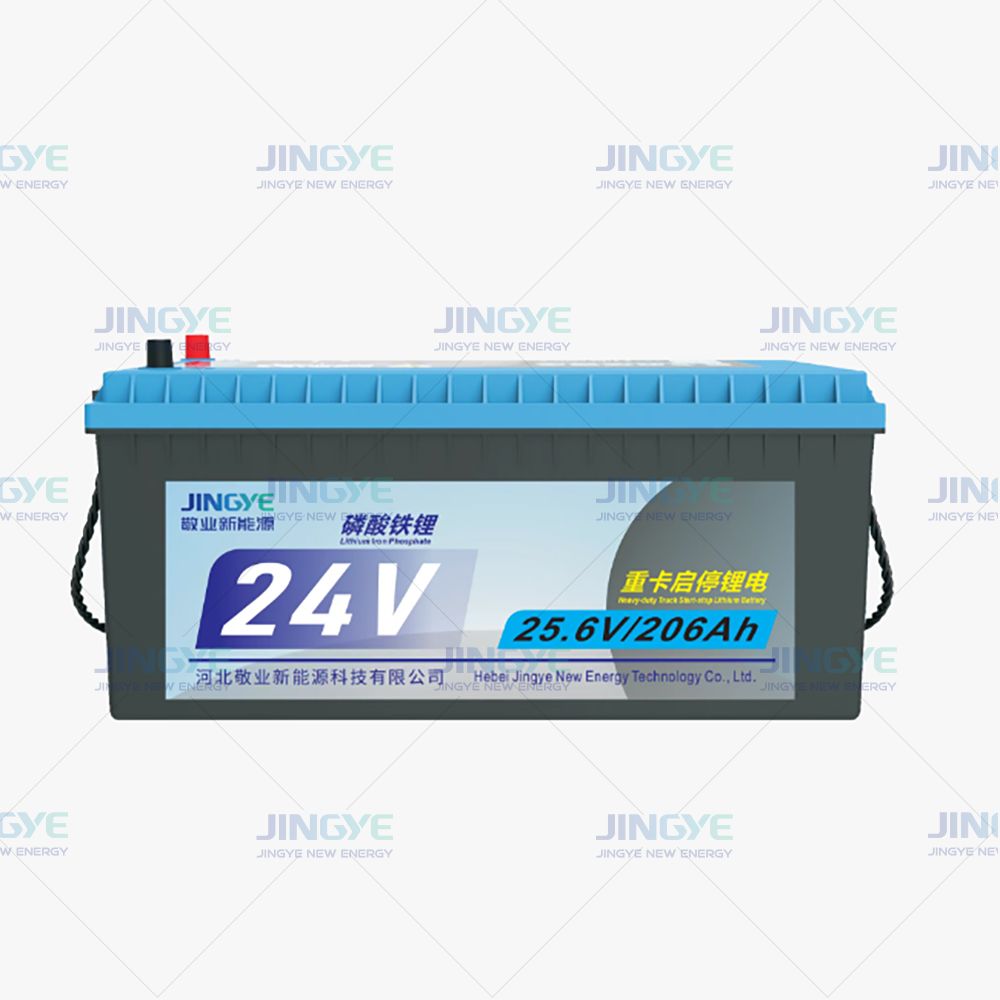
JY530 24V LiFePO4 Commercial Vehicle Battery
The JY530 is a 24V LiFePO4 (lithium) battery for heavy trucks and commercial vehicles, engineered for reliable engine starting and stable low-voltage power. From Jingye New Energy, a China commercial vehicle battery manufacturer, it delivers 25.6V/206Ah (5.3kWh), 1500A starting current, and operation down to -40°C — a direct lead-acid replacement with app, Bluetooth, and cloud monitoring. OEM/ODM available
JY530 24V LiFePO4 Commercial Vehicle Battery
The JY530 is a 24V LiFePO4 (lithium) battery for heavy trucks and commercial vehicles, engineered for reliable engine starting and stable low-voltage power. From Jingye New Energy, a China commercial vehicle battery manufacturer, it delivers 25.6V/206Ah (5.3kWh), 1500A starting current, and operation down to -40°C — a direct lead-acid replacement with app, Bluetooth, and cloud monitoring. OEM/ODM available
JY530 24V LiFePO4 Commercial Vehicle Battery
The JY530 is a 24V LiFePO4 (lithium) battery for heavy trucks and commercial vehicles, engineered for reliable engine starting and stable low-voltage power. From Jingye New Energy, a China commercial vehicle battery manufacturer, it delivers 25.6V/206Ah (5.3kWh), 1500A starting current, and operation down to -40°C — a direct lead-acid replacement with app, Bluetooth, and cloud monitoring. OEM/ODM available
JY530 24V LiFePO4 Commercial Vehicle Battery
The JY530 is a 24V LiFePO4 (lithium) battery for heavy trucks and commercial vehicles, engineered for reliable engine starting and stable low-voltage power. From Jingye New Energy, a China commercial vehicle battery manufacturer, it delivers 25.6V/206Ah (5.3kWh), 1500A starting current, and operation down to -40°C — a direct lead-acid replacement with app, Bluetooth, and cloud monitoring. OEM/ODM available
JY530 24V LiFePO4 Commercial Vehicle Battery
The JY530 is a 24V LiFePO4 (lithium) battery for heavy trucks and commercial vehicles, engineered for reliable engine starting and stable low-voltage power. From Jingye New Energy, a China commercial vehicle battery manufacturer, it delivers 25.6V/206Ah (5.3kWh), 1500A starting current, and operation down to -40°C — a direct lead-acid replacement with app, Bluetooth, and cloud monitoring. OEM/ODM available
JY530 24V LiFePO4 Commercial Vehicle Battery
The JY530 is a 24V LiFePO4 (lithium) battery for heavy trucks and commercial vehicles, engineered for reliable engine starting and stable low-voltage power. From Jingye New Energy, a China commercial vehicle battery manufacturer, it delivers 25.6V/206Ah (5.3kWh), 1500A starting current, and operation down to -40°C — a direct lead-acid replacement with app, Bluetooth, and cloud monitoring. OEM/ODM available
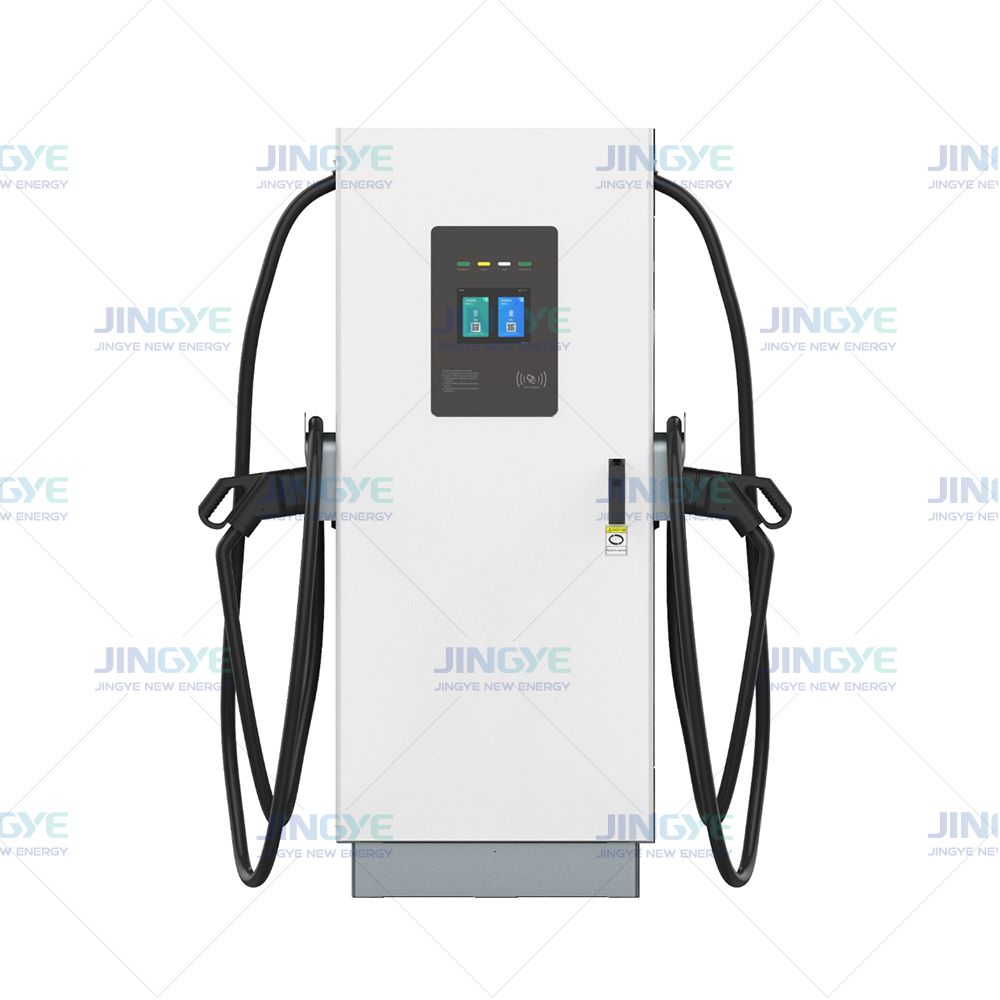
40kW–160kW Electric Vehicle DC Charger
The Jingye 40kW–160kW DC charger covers the mid-power range for destination charging, fleet depots, workplaces, and commercial parking. With a 200V–1000V output supporting both 400V and 800V platforms, ≥94% average efficiency, and an IP54 enclosure for outdoor installation, it delivers dependable everyday fast charging at a lower grid-connection cost than ultra-high-power stations. OEM/ODM available.
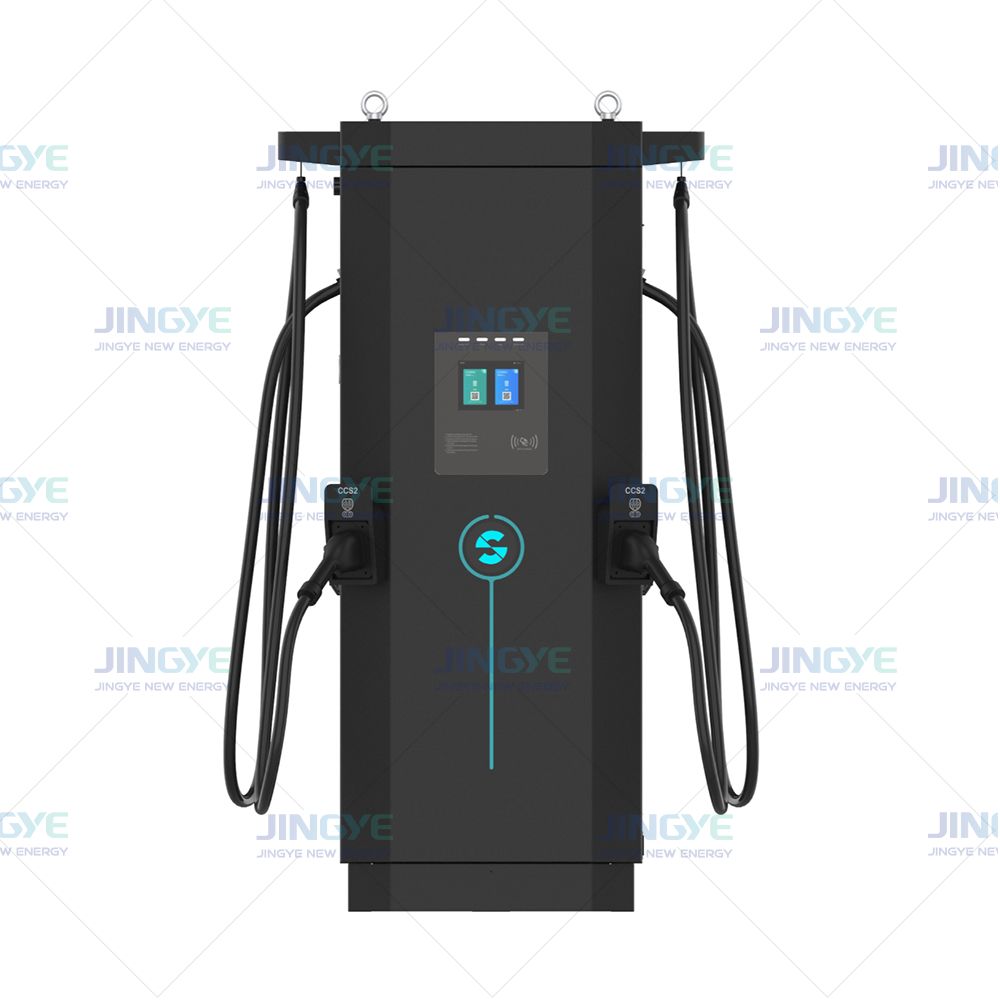
The Jingye 60kW–240kW DC fast EV charger is a high-power commercial charger for public charging stations, fleet depots, and high-traffic infrastructure. With a continuously adjustable 150V–1000V output supporting both 400V and 800V platforms — from passenger cars to electric buses and trucks — and ≥94% average efficiency, it's built for reliable, high-uptime commercial operation. Validated in our CNAS-accredited lab. OEM/ODM available.
Let’s Get Started on Your New Energy Journey.