Oct 14, 2026
Battery energy storage is booming — and so are the headlines about BESS fires. If you are sourcing energy storage for a commercial, industrial, or utility-scale project, one question matters more than any spec sheet: is it safe? Here is the straight answer on LFP battery safety, why chemistry is your first line of defense, and the exact features to check before you buy.
Yes. Lithium iron phosphate (LFP) is widely regarded as the safest lithium battery chemistry for stationary energy storage. LFP is far more thermally and chemically stable than nickel-based chemistries (NMC/NCA). It has a much higher thermal runaway threshold, does not release oxygen as it breaks down, and is far less prone to catching fire or exploding — even when damaged, overcharged, or overheated.
For commercial & industrial (C&I) and utility-scale storage — where systems sit next to factories, substations, and people — this stability is exactly why LFP has become the global standard.
Chemistry is the foundation, but a safe system layers protection. Before you buy, confirm the manufacturer provides:
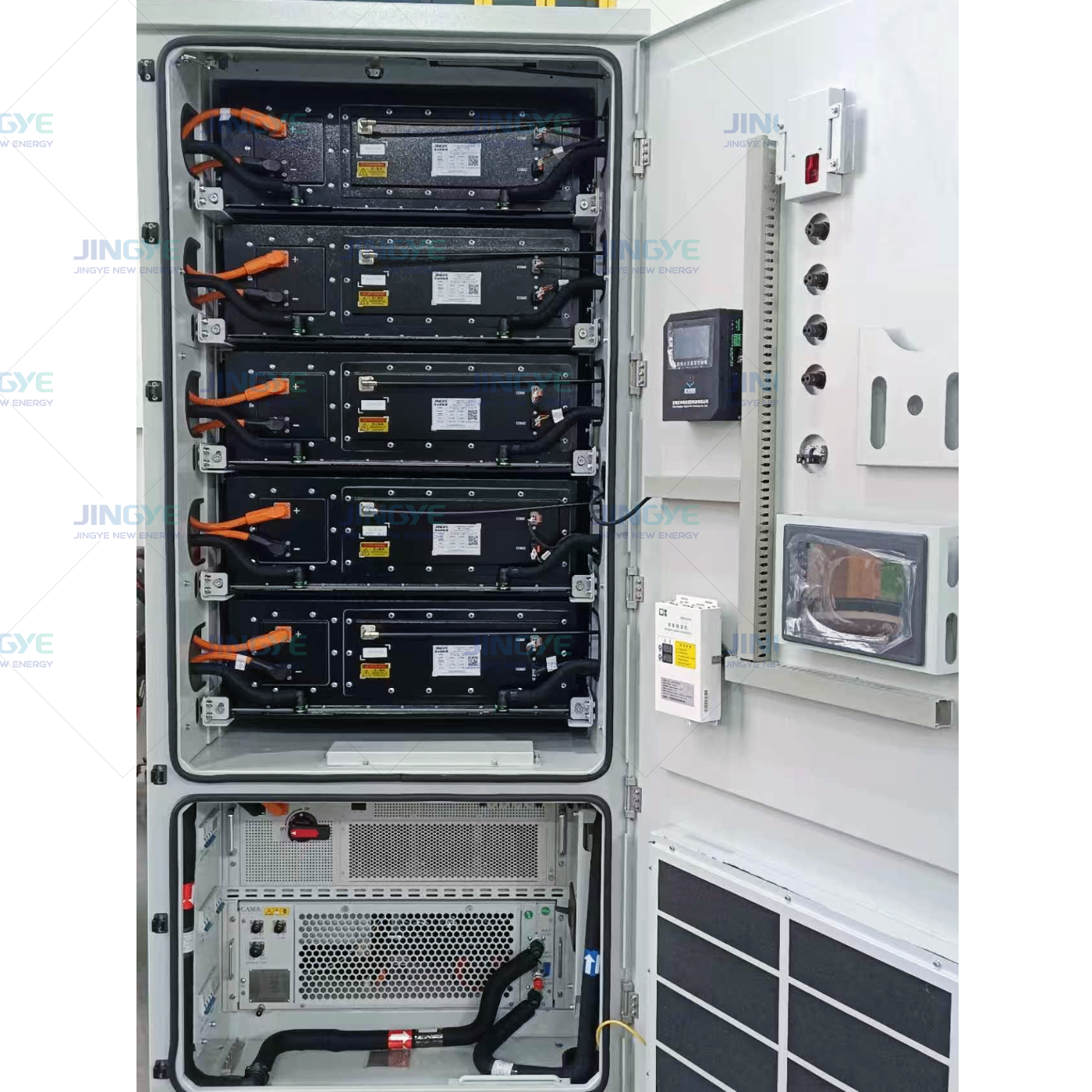
Jingye New Energy manufactures LFP energy storage at scale — 15 GWh of annual capacity — with safety engineered into every layer:
Do LFP batteries catch fire?
It is rare. LFP strongly resists thermal runaway and does not release oxygen as it degrades, so fires are far harder to start and much easier to contain than with NMC.
Is LFP or NMC better for energy storage?
For stationary storage, LFP is generally preferred for its safety, long cycle life, and lower total cost of ownership. NMC’s higher energy density matters more in EVs than in fixed installations.
What certifications should a BESS have?
Look for UN 38.3, IEC, and GB/T 36276 for safety, plus ISO 9001 and IATF 16949 for manufacturing quality.
How long do LFP storage systems last?
Quality LFP systems deliver 6,000+ cycles — typically 15–20 years of service in commercial and utility applications.
Sourcing safe, certified energy storage for a project in the Middle East, Europe, or beyond? Contact Jingye New Energy for spec sheets, safety certifications, and a system sized to your load. Get in touch →
Oct. 20, 2026
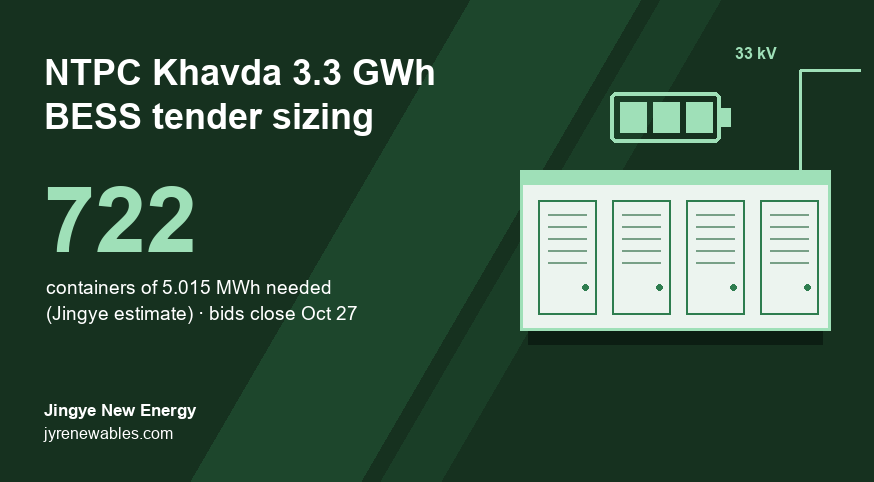
NTPC Khavda 3,300 MWh BESS Tender: How Many Containers You Really Need (2026)
NTPC Green Energy's 1,100 MW / 3,300 MWh Khavda battery tender closes on October 27, 2026. Because capacity is counted as AC energy at the grid point, we estimate it needs about 722 containers of 5.015 MWh, roughly 10% more installed battery than the headline figure.
Oct. 20, 2026
Battery Energy Storage System Architecture: Key Components Explained
A battery energy storage system architecture determines how safely and efficiently a BESS stores, controls, and delivers electricity. The main challenge for overseas buyers is choosing the right structure without creating avoidable cost, safety, or integration problems.
Oct. 19, 2026
Battery Capacity Fade in Commercial Energy Storage Systems
Battery capacity fade in commercial energy storage systems reduces the amount of energy a site can store and deliver. This battery degradation can increase demand charges, reduce backup time, and change the return on investment.
Let’s Get Started on Your New Energy Journey.