Aug 11, 2026
Answer first: A battery management system (BMS) is the electronic brain that keeps a battery pack safe, balanced, and accurate. Its six core jobs are: monitor every cell, balance the cells, protect against faults, estimate state of charge and health, manage temperature, and communicate with the rest of the system. Without a good BMS, even the best cells are unsafe and short-lived.
A BMS is the control electronics that sit on top of the battery cells in any energy storage system or EV battery pack. It doesn't store energy itself — it watches, protects, and manages the cells that do, so the pack runs safely and lasts its full life.
The BMS continuously measures each cell's voltage, temperature, and the pack current. This cell-level visibility is the foundation for every other function.
Cells drift slightly over time. The BMS balances them so no single cell is over- or under-charged, which protects capacity and extends pack life.
It enforces safe limits — disconnecting or throttling on over-voltage, under-voltage, over-current, short circuit, or over-temperature — to prevent damage and reduce the risk of thermal runaway.
The BMS calculates how full the pack is (State of Charge) and how much usable life remains (State of Health), so operators get accurate readings instead of guesswork.
It coordinates with cooling (liquid or air) to keep cells in their optimal temperature window, which matters for both safety and efficiency.
The BMS reports data and alarms to the energy management system (EMS), inverter, and operators — the link that lets the whole storage system make smart charge and discharge decisions.
| BMS | EMS | |
|---|---|---|
| Scope | The battery cells and pack | The whole storage system / site |
| Job | Keep cells safe, balanced, accurate | Decide when to charge and discharge |
| Analogy | The pack's nervous system | The system's strategist |
Two packs with identical cells can have very different lifespans depending on their BMS. Good balancing, tight protection, and accurate state estimation keep cells inside their safe, efficient window every cycle — which is why the quality of the BMS is one of the most important things to check when buying an energy storage system.
It monitors every cell, balances them, protects against over-voltage/current/temperature faults, estimates state of charge and health, helps manage temperature, and communicates with the EMS and inverter.
A BMS manages the battery cells and pack for safety and accuracy; an EMS manages the whole system, deciding when to charge and discharge based on prices, demand, and grid signals.
Not safely. Lithium batteries need a BMS to prevent over-charge, over-discharge, and overheating; without one, the pack is unsafe and its life is drastically shortened.
Yes, significantly. Good balancing, protection, and state estimation keep cells within their safe operating window every cycle, which directly extends pack life.
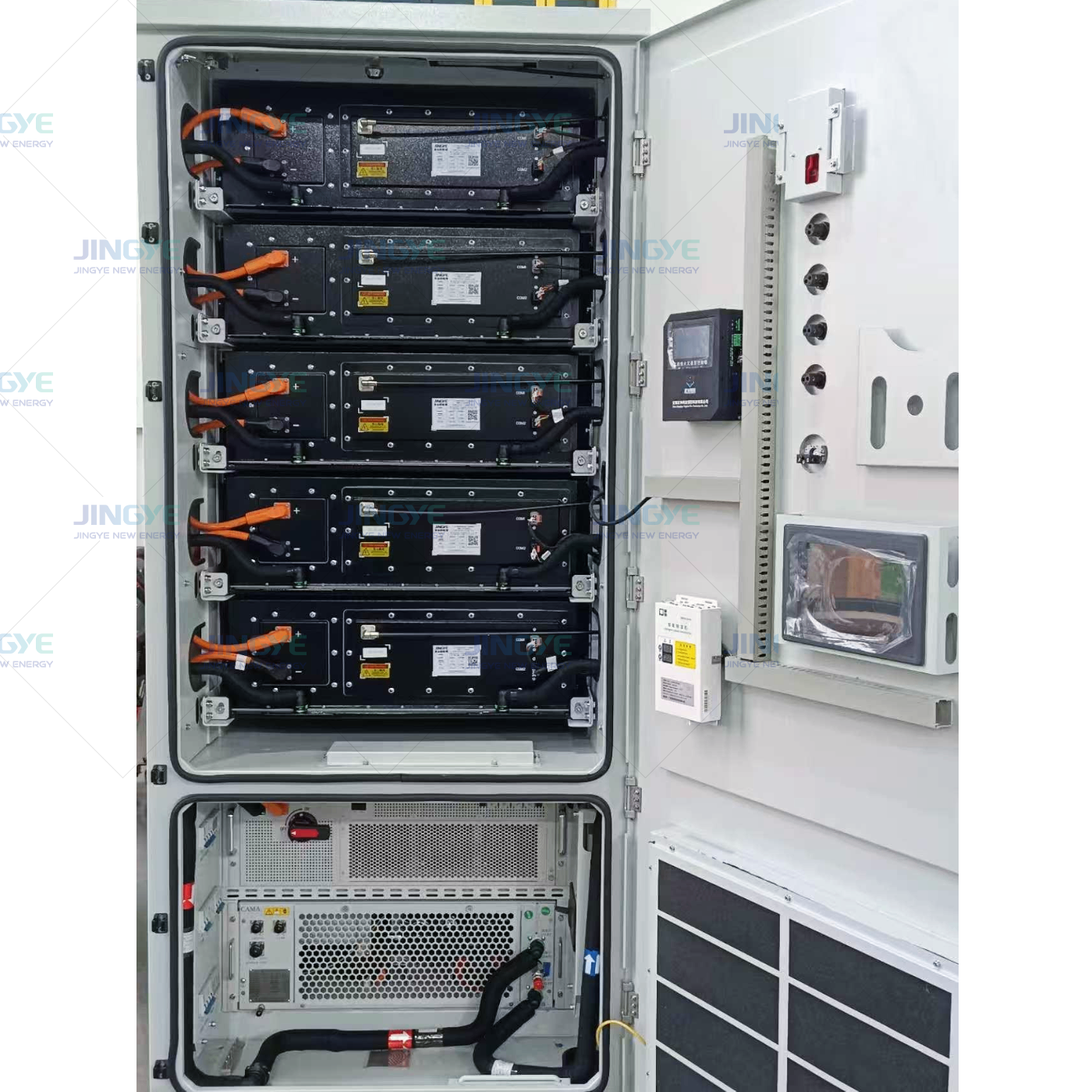
Jingye New Energy builds LFP energy storage with multi-level protection and integrated BMS — from 261kWh and 417kWh C&I cabinets to 5MWh liquid-cooled containers. We also manufacture the CCS integrated busbars that carry cell voltage and temperature signals to the BMS. Tell us your application for a recommendation. Contact daniyal@jyrenewables.com.
Related: What is a BESS? · What is a Cell Contact System (CCS)?
Sep. 28, 2026
C&I Battery Storage Capacity vs Power Rating: What Is the Difference?
Energy Storage Cabinets are increasingly used by commercial and industrial buyers to reduce peak demand, support critical loads, improve solar self-consumption, and provide backup power. However, many purchasing teams compare systems by price or cabinet size before understanding the two specifications that determine performance: battery storage capacity, measured in kilowatt-hours (kWh), and
Sep. 28, 2026
How Commercial Energy Storage Helps Reduce Demand Charges
If your electricity bill is rising because of short, high-power peaks, we can solve the problem in a simple sequence: review 12 months of interval data, identify the tariff’s demand-charge window, size Energy Storage Cabinets for the target peak, and configure an automated energy management system to discharge before the peak is billed. This step-by-step approach helps businesses reduce
Sep. 25, 2026
400V vs 800V EV Charging: Key Differences for Modern Electric Vehicles
Choosing between a 400 V and an 800 V electric vehicle is no longer only an engineering decision. It affects charging time, highway convenience, battery design, purchase price, charging site requirements, operating cost, and long-term reliability. For drivers, fleet managers, charging operators, and vehicle manufacturers comparing a DC Fast EV Charger Manufacturer, the most useful answer is not
Let’s Get Started on Your New Energy Journey.