Aug 10, 2026
As battery pack assemblies scale toward higher voltage and current densities, the reliability of the Cell Contact System (CCS) integrated busbar becomes critical. Sourcing components for automated EV modules or large-scale energy storage arrays requires evaluating a supplier's engineering precision, testing infrastructure, and high-volume manufacturing capabilities.
Use this comprehensive 7-step technical engineering checklist when auditing potential industrial CCS busbar manufacturers.
Any enterprise manufacturing components for electric vehicles or high-reliability grid storage must operate under strict global quality protocols. Verify that the production facility holds an active, audited IATF 16949 certification alongside foundational ISO 9001, ISO 14001, and ISO 45001 frameworks.
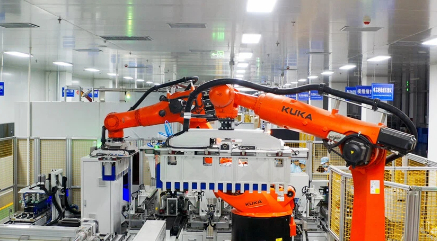
Supply chain security depends on raw manufacturing capacity. Ensure your partner operates dedicated, digital assembly lines capable of handling large production runs. Top-tier manufacturers maintain multi-million piece annual capacities (e.g., 2.4 million CCS pieces per year across 6 automated lines) to absorb sudden shifts in volume demand.
A supplier should not rely on a single process layout. They should offer multiple verified manufacturing technologies tailored to your dimensions, cost profiles, and insulation requirements:
Request data validating high-voltage performance thresholds. Standard quality benchmarks require components to comfortably support up to 1000V DC system environments, withstanding 1000V DC for 60 seconds while maintaining a minimum insulation resistance of 500MΩ.
Modern battery management relies on hyper-accurate telemetry. Ensure the supplier can integrate voltage and NTC temperature sensing elements directly into the busbar assembly, delivering high-precision tracking (voltage tolerances within ±5mV; temperature sensing within ±1°C).
Avoid suppliers that rely entirely on outsourced third-party validation labs. A premier manufacturer operates an internal, CNAS-accredited testing laboratory equipped with comprehensive testing devices to run continuous physical, chemical, and environmental aging stress tests on production samples.
A flexible manufacturer should support diverse physical configurations—spanning standard structural layouts to extreme blade battery dimensions (such as 1P52S layouts reaching up to 2082x218mm) or dense multiline profiles (like 1P26S or 1P61S variants).
Selecting a CCS busbar supplier requires balancing technical competence with scalable production infrastructure. Choosing a partner with verified manufacturing capacity and strict automotive-grade quality controls safeguards your long-term production timeline.
New to the topic? First understand what a Cell Contact System (CCS) is.
Sep. 10, 2026
Solar Inverter Buying Guide 2026: How to Choose the Right One
A 2026 guide to choosing the right solar inverter — single-phase vs three-phase, string vs hybrid, efficiency, MPPTs, sizing, and what actually matters for your project.
Sep. 08, 2026
You Have Solar — So Why Is Your Electricity Bill Still High?
Installed solar but your electricity bill is still high? Here's the reason most systems miss — and how battery storage and a hybrid inverter finally turn your solar into real savings.
Sep. 07, 2026
How Does Laboratory Validation Reduce Battery Project Risk?
When an energy storage project is evaluated, buyers often focus on capacity, efficiency, cycle life, price, and system configuration.
Let’s Get Started on Your New Energy Journey.