Aug 04, 2026
Peak shaving refers to the practice of reducing energy demand during peak usage hours. A 261kWh battery system stores energy during off-peak times and discharges it during high-demand periods, minimizing reliance on expensive peak power rates.
Investing in a 261kWh battery system can lead to substantial savings and efficiency enhancements for businesses. Key benefits include:
Determine the electricity consumption patterns of your facility. Analyze peak demand times and how much excess energy you could store with a 261kWh battery system.
Select a battery system based on efficiency, warranty, lifecycle, and the specific requirements of your facility. Popular options include lithium-ion batteries for their high energy density.
Coordinate with a certified installer to set up your battery system. Ensure proper safety protocols are followed and check local regulations for compliance.
Integrate the battery system with your existing energy management systems. Use software to monitor usage and control discharge times effectively.
Utilize monitoring tools to assess system performance against expected outcomes. Adjust operation schedules based on real-time data to optimize savings.
A 261kWh energy storage system by Jingye can significantly enhance your ability to manage peak shaving effectively, leading to reduced energy costs and improved sustainability. Investing in such technology is not only a smart economic decision but also a responsible choice for the environment. To learn more about how our systems can benefit your organization, visit Jingye.
Peak shaving is one of the main uses of the 261kWh LFP battery energy storage system.
Oct. 22, 2026
EV Charger Preventive Maintenance: Key Practices for Long-Term Reliability
EV charger preventive maintenance helps charging operators protect uptime, safety, and revenue over many years. A planned service program is more reliable than waiting for a fault after a vehicle cannot charge. This guide explains DC fast charger maintenance, EV charging station inspection, and charging cable inspection in simple steps.
Oct. 20, 2026
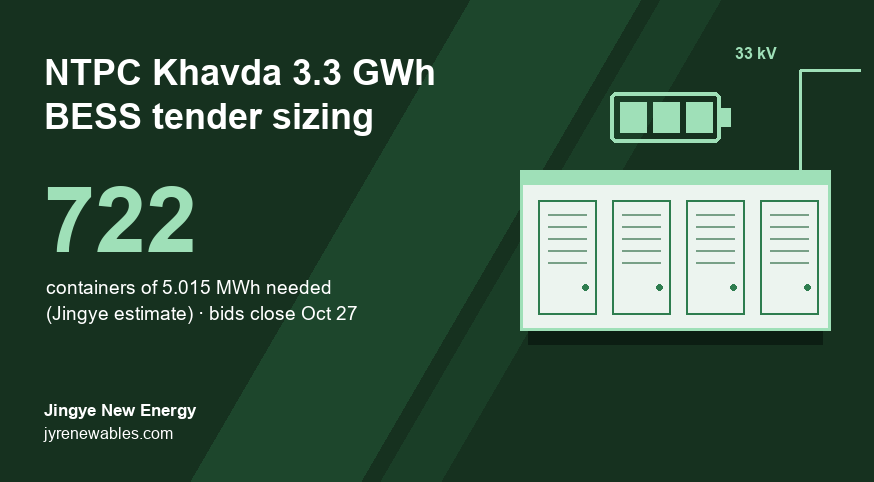
NTPC Khavda 3,300 MWh BESS Tender: How Many Containers You Really Need (2026)
NTPC Green Energy's 1,100 MW / 3,300 MWh Khavda battery tender closes on October 27, 2026. Because capacity is counted as AC energy at the grid point, we estimate it needs about 722 containers of 5.015 MWh, roughly 10% more installed battery than the headline figure.
Oct. 20, 2026
Battery Energy Storage System Architecture: Key Components Explained
A battery energy storage system architecture determines how safely and efficiently a BESS stores, controls, and delivers electricity. The main challenge for overseas buyers is choosing the right structure without creating avoidable cost, safety, or integration problems.
Let’s Get Started on Your New Energy Journey.