Aug 11, 2026
Answer first: A commercial & industrial (C&I) energy storage system lowers your electricity bill in four main ways: peak shaving to cut demand charges, load shifting to buy power when it's cheap and use it when it's expensive, solar self-consumption to use more of your own generation, and backup power to avoid the cost of downtime. How fast it pays back depends on your tariff, the price spread, how many cycles you run per day, and the installed cost.
Many commercial tariffs bill you not just for energy (kWh) but for your highest power draw in the month (kW — the "demand charge"). A storage system discharges during those short demand spikes so the grid sees a lower peak, cutting the demand charge without changing how you operate.
Under time-of-use pricing, electricity is cheaper off-peak and dearer at peak. The battery charges when power is cheap and discharges during expensive peak hours, so more of your consumption is billed at the low rate.
If you have solar, storage captures midday surplus you'd otherwise export cheaply (or curtail) and releases it in the evening — raising the share of your own generation you actually use.
For sites where an outage stops production or spoils product, storage keeps critical loads running. The saving here is the cost of downtime you avoid, which can dwarf the energy savings for some operations.
Two identical systems can pay back at very different speeds depending on the site. The main levers are:
The figures below are a simplified, hypothetical illustration — not a quote or a guarantee. Actual results depend on your tariff and load.
| Assumption | Value |
|---|---|
| Usable capacity | 417 kWh |
| Cycles per day | 2 |
| Peak vs off-peak spread | $0.15 / kWh |
| Energy value per day | 417 × 2 × $0.15 ≈ $125 |
| Plus demand-charge savings | Site-specific (often significant) |
The energy arbitrage alone is illustrative; on many commercial sites the demand-charge reduction is the larger prize. A proper assessment uses your interval meter data and tariff.
| Site profile | Typical fit |
|---|---|
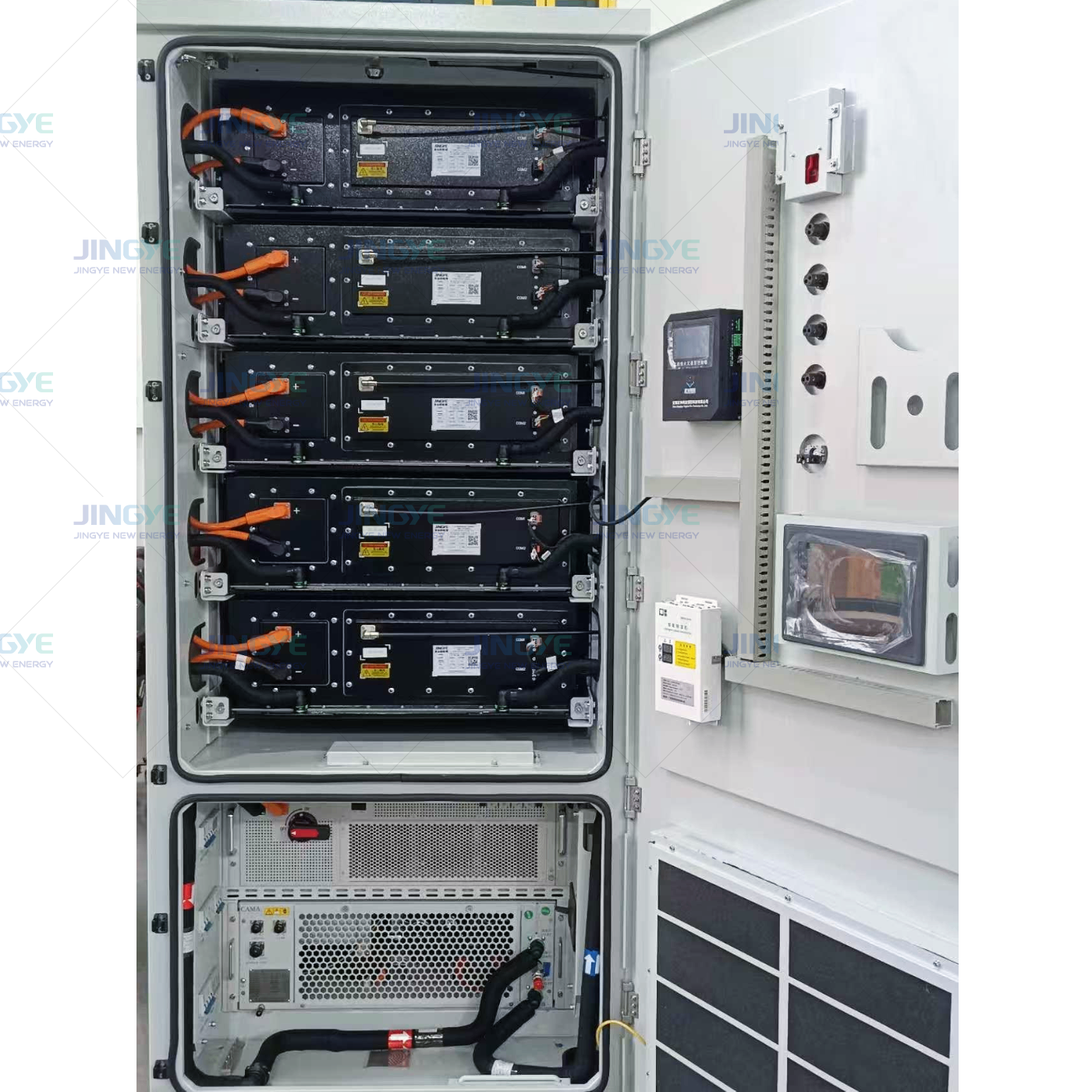
| Small-to-medium commercial building or workshop | All-in-one cabinet (e.g., 261 kWh) |
| Larger factory or industrial park | Higher-capacity cabinet (e.g., 417 kWh) or multiple units |
| Utility-scale or heavy industry | Containerized MWh-class system |
It shaves demand-charge peaks, shifts consumption from expensive peak hours to cheap off-peak hours, increases use of your own solar, and provides backup that avoids the cost of downtime.
Peak shaving is discharging the battery during short spikes in your power demand so the grid records a lower peak, which reduces the demand (kW) portion of your bill.
Mainly your tariff (demand charge size and peak/off-peak spread), how many cycles you run per day, the system's usable capacity and efficiency, the installed cost, and any incentives.
Yes. Storage captures midday solar surplus and releases it later, raising self-consumption and often improving the overall economics compared with either technology alone.
Jingye New Energy manufactures LFP commercial & industrial energy storage, from the 261kWh all-in-one cabinet to the 417kWh cabinet and utility-scale containers — liquid-cooled, long cycle life, with multi-level protection. Send us your tariff and load profile and we'll help size a system and estimate the savings. Contact allen.meng@jyrenewables.com.
Related: What is a BESS? · Explore our energy storage products
Sep. 28, 2026
C&I Battery Storage Capacity vs Power Rating: What Is the Difference?
Energy Storage Cabinets are increasingly used by commercial and industrial buyers to reduce peak demand, support critical loads, improve solar self-consumption, and provide backup power. However, many purchasing teams compare systems by price or cabinet size before understanding the two specifications that determine performance: battery storage capacity, measured in kilowatt-hours (kWh), and
Sep. 28, 2026
How Commercial Energy Storage Helps Reduce Demand Charges
If your electricity bill is rising because of short, high-power peaks, we can solve the problem in a simple sequence: review 12 months of interval data, identify the tariff’s demand-charge window, size Energy Storage Cabinets for the target peak, and configure an automated energy management system to discharge before the peak is billed. This step-by-step approach helps businesses reduce
Sep. 25, 2026
400V vs 800V EV Charging: Key Differences for Modern Electric Vehicles
Choosing between a 400 V and an 800 V electric vehicle is no longer only an engineering decision. It affects charging time, highway convenience, battery design, purchase price, charging site requirements, operating cost, and long-term reliability. For drivers, fleet managers, charging operators, and vehicle manufacturers comparing a DC Fast EV Charger Manufacturer, the most useful answer is not
Let’s Get Started on Your New Energy Journey.