
Grid-scale battery storage helps utilities use more solar and wind power without reducing reliability. A battery Energy Storage System supports renewable energy integration, while grid stability improves through fast control, peak shaving, and frequency regulation. These three functions answer the main concern of energy buyers: how to connect more clean power when generation and demand do not match.
Solar output falls in the evening, and wind production can change within minutes. Without flexible storage, operators may curtail renewable electricity or start expensive fossil fuel generators. A utility-scale battery storage project stores electricity when supply is high and sends it back when the grid needs it most.
This guide explains how the technology works, what buyers should compare, and how Jingye can support a reliable project from system design to long-term service.

1. Why Renewable Energy Needs Grid-Scale Battery Storage
Renewable power is clean, but its output is variable. Solar panels produce the most electricity during daylight hours, while many homes and businesses use the most electricity after sunset. Wind farms may generate more power at night, even when demand is low.
Grid-scale battery storage separates the time of generation from the time of use. This simple function gives grid operators more control over renewable electricity and reduces pressure on transmission networks.
Solar generation and evening demand do not match
A battery can charge during the solar peak and discharge during the evening demand peak. This process is called energy shifting or energy arbitrage. It helps utilities use stored solar power instead of buying electricity from high-cost peaking plants.
Wind and solar can create sudden power changes
Cloud cover, wind speed, and weather systems can change renewable output quickly. A battery energy storage system can respond in milliseconds to support frequency, voltage, and power balance.
Transmission lines may become overloaded
A battery installed near a renewable energy project can absorb excess generation. It can then release power later, reducing congestion and improving the use of existing grid assets.
2. How a Grid-Scale BESS Works
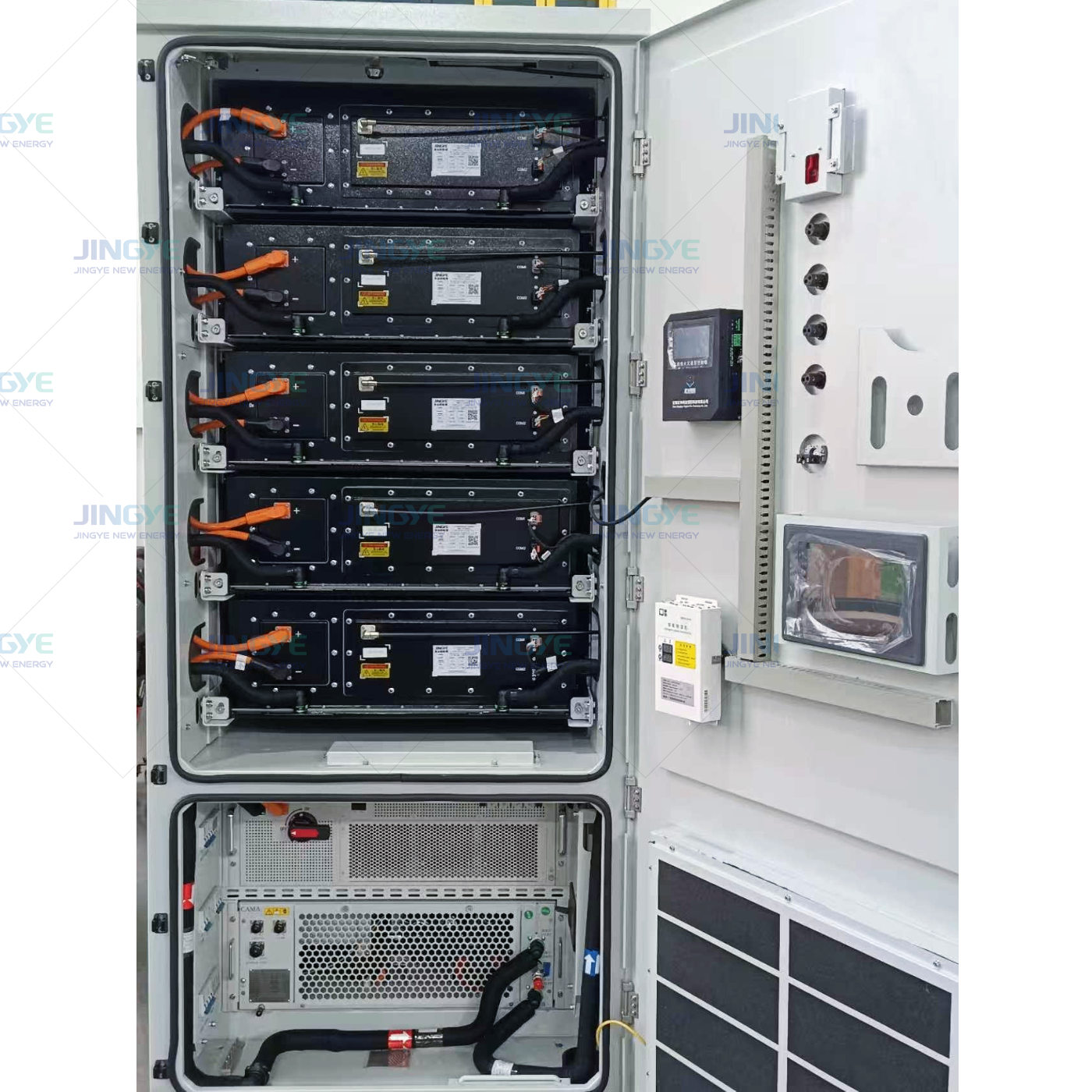
A grid-scale battery storage system is more than a group of battery cells. It combines battery modules, battery racks, a battery management system, power conversion equipment, thermal management, fire protection, energy management software, and site control equipment.
The power conversion system changes direct current from the batteries into alternating current for the grid. The energy management system decides when to charge, discharge, or reserve capacity. The battery management system monitors voltage, temperature, state of charge, and cell balance.
Basic operating flow
- Renewable electricity is produced by a solar or wind project.
- The energy management system checks grid demand, prices, and battery status.
- The power conversion system sends surplus electricity into the battery.
- The battery management system monitors safety and operating limits.
- The system discharges electricity during peak demand or grid events.
- Software records performance and adjusts the next operating cycle.
Step-by-step project flow from design to operation
- Load and renewable assessment: Review solar or wind output, load curves, grid limits, and the required response time.
- Battery sizing: Select power capacity in megawatts and energy capacity in megawatt-hours.
- Electrical design: Match the battery system with inverters, transformers, switchgear, and the point of interconnection.
- Safety planning: Define fire detection, emergency shutdown, thermal management, access, and separation requirements.
- Factory testing: Check battery racks, PCS performance, controls, communications, and protection functions.
- Site installation: Install containers, cables, transformers, monitoring systems, and network connections.
- Commissioning: Test charging, discharging, grid response, alarms, and communication with the control center.
- Commercial operation: Use software to optimize energy shifting, ancillary services, and reserve capacity.
3. Main Applications for Renewable Energy Integration
1. Renewable energy time shifting
Time shifting stores electricity when renewable output is high and releases it when demand increases. A 100 MW system with 400 MWh of usable energy can theoretically deliver 100 MW for four hours, subject to operating limits and efficiency losses.
2. Peak shaving
Peak shaving reduces the highest power demand during selected hours. It can lower demand charges for industrial users and reduce the need for grid upgrades. The control system must forecast demand and keep enough state of charge for the expected peak.
3. Frequency regulation
The grid must keep frequency close to its target value. A battery can increase or decrease power within seconds, helping correct small differences between generation and consumption.
4. Renewable curtailment reduction
Curtailment occurs when renewable electricity is available but cannot be delivered to the grid. Charging the battery during congested periods can capture part of this energy and improve the project output factor.
5. Spinning reserve and backup power
Some battery capacity can remain reserved for outages or sudden generator failures. When paired with suitable grid-forming or backup controls, the system can support critical loads and improve resilience.
4. Battery Technologies for Utility-Scale Projects
Lithium iron phosphate, often called LFP, is widely used in modern stationary energy storage. It offers a balance of safety, cycle life, energy density, and cost. Other chemistries may suit longer-duration applications, but the selection should follow the project duty cycle rather than a single product feature.
| Technology or design choice | Main advantage | Important buyer question | Typical project fit |
|---|---|---|---|
| LFP battery system | Strong safety profile and good cycle performance | What thermal controls and protection systems are included? | Solar plus storage, peak shaving, frequency services |
| Two-hour BESS | Lower energy capacity investment | Can it meet the required discharge window? | Fast response and short peak periods |
| Four-hour BESS | Longer renewable energy shifting | What is the usable energy after reserve and operating limits? | Solar evening peak and capacity support |
| Containerized design | Modular transport and faster installation | How will containers be expanded or replaced? | Utility projects and distributed power sites |
| Outdoor cabinet design | Flexible layout for smaller installations | Are weather, dust, and temperature controls adequate? | Commercial and industrial storage projects |
5. What Buyers Should Compare Before Ordering
Capacity alone does not show whether a battery is suitable. Overseas buyers and distributors should compare the full system, including usable energy, power output, operating temperature, warranty conditions, safety design, communications, and service support.
| Specification | Why it matters | What to request from the manufacturer |
|---|---|---|
| Rated power in MW | Shows how much electricity the system can deliver at one time | Continuous power, overload power, and response time |
| Usable energy in MWh | Shows the practical discharge duration | Usable energy at the stated depth of discharge |
| Round-trip efficiency | Shows energy lost during charging and discharging | Test conditions and efficiency at different loads |
| Cycle life | Influences long-term project value | Cycle definition, end-of-life capacity, and temperature conditions |
| Safety controls | Protects people, equipment, and the project site | Detection, suppression, ventilation, isolation, and emergency procedures |
| Warranty and service | Reduces operational and replacement risk | Capacity warranty, response time, spare parts, and remote support |
Power capacity and energy capacity are different
Power capacity is measured in megawatts and describes the output rate. Energy capacity is measured in megawatt-hours and describes how long the system can operate. A 50 MW battery with 100 MWh of usable energy has a two-hour duration at full output.
Usable energy is more important than nameplate energy
Reserve requirements, depth of discharge, temperature, degradation, and conversion losses reduce the energy available to the grid. Ask for a clear usable energy calculation instead of comparing nameplate figures only.
6. Safety, Reliability, and Battery Life
Safety is a core requirement for grid-scale battery storage. A reliable system uses several protection layers rather than depending on one device. These layers may include cell monitoring, rack-level protection, smoke and gas detection, thermal management, automatic isolation, fire suppression, and emergency shutdown.
Temperature control also affects battery life. High temperatures can speed up degradation, while very low temperatures can reduce available power and charging performance. The HVAC system should be sized for the local climate, container layout, battery chemistry, and operating profile.
Battery degradation should be included in the financial model. Frequent deep cycles usually place more stress on the cells than occasional shallow cycles. A good energy management system balances revenue opportunities with state-of-health protection.
Reliability checklist for project evaluation
- Cell, module, rack, and container monitoring
- Independent battery management and energy management functions
- Clear emergency stop and isolation procedures
- Thermal management for the local climate
- Remote monitoring with event records and alarms
- Factory acceptance testing and site acceptance testing
- Replacement plan for high-risk or end-of-life components
7. How Grid-Scale Storage Creates Project Value
A battery project may earn value from several services. The exact business model depends on local electricity markets, grid rules, renewable output, and the contract with the utility or off-taker.
| Revenue or value stream | How storage helps | Key performance requirement |
|---|---|---|
| Energy arbitrage | Charges at lower prices and discharges at higher prices | Accurate price forecasting and sufficient duration |
| Capacity support | Provides dependable power during system peaks | Available energy during contracted hours |
| Ancillary services | Responds quickly to frequency and reserve requests | Fast control and reliable communication |
| Transmission support | Reduces congestion and supports local power flow | Correct location and suitable interconnection design |
| Renewable project optimization | Stores excess solar or wind production | Coordinated control between generation and storage |
8. Common Questions About Utility-Scale Battery Storage
How long can a grid-scale battery operate?
Many current projects are designed for two to four hours of discharge at rated power. Longer-duration systems are also possible when the project needs overnight energy shifting, extended backup, or a higher renewable energy share.
Can batteries replace all fossil fuel generation?
Batteries can reduce the use of peaking generators and support renewable integration, but they do not solve every grid problem. Long periods of low wind and low solar may require other resources, stronger transmission, demand response, or longer-duration storage.
What is the difference between BESS and grid-scale battery storage?
BESS means battery energy storage system. It can describe systems from small commercial units to large utility projects. Grid-scale battery storage usually refers to a system connected to the transmission or distribution grid and operated for network-level services.
Does a battery work during a grid outage?
It depends on the system design and interconnection rules. A battery with suitable controls can provide backup or black-start support, but the project must include the correct switchgear, protection, controls, and operating agreement.
9. Why Choose Jingye for Renewable Energy Storage Projects
Jingye supports energy storage buyers with integrated system solutions for renewable energy projects, commercial facilities, and utility applications. The focus should be on matching battery capacity, power conversion, controls, safety systems, and service plans to the real operating needs of each site.
For overseas buyers and distributors, supplier capability includes more than factory pricing. It also includes technical documents, communication protocols, packaging, delivery planning, commissioning support, warranty terms, and spare parts availability.
Information to prepare for a quotation
Share the renewable project size, target battery power, required discharge duration, grid voltage, connection type, local climate, operating temperature, preferred battery chemistry, installation location, and expected daily cycles. These details help Jingye prepare a more accurate configuration.
10. Final Guide: Selecting the Right Grid-Scale BESS
Grid-scale battery storage is a practical tool for renewable energy integration because it manages timing, power quality, and system flexibility. A well-designed project can reduce renewable curtailment, lower peak demand, support frequency regulation, and improve the use of existing grid infrastructure.
- Define the main purpose: energy shifting, peak shaving, backup, or ancillary services.
- Calculate the required MW power and MWh usable energy.
- Choose a battery chemistry and enclosure suited to the site.
- Check safety systems, efficiency, degradation, and warranty conditions.
- Confirm grid codes, communications, and interconnection requirements.
- Compare installation, commissioning, monitoring, and after-sales support.
The best battery system is not always the largest system. It is the system that provides the required power and duration, operates safely in local conditions, and creates measurable value throughout its service life. With the right design and supplier, renewable generation can become more predictable, flexible, and useful to the grid.