Jul 20, 2026
The rapid growth of electric vehicles (EVs) has increased demand for safer, lighter, and more efficient battery pack technologies. As battery energy density and production requirements continue to improve, the connection method between battery cells has become a key factor affecting pack performance.
Among current EV battery interconnect technologies, cell connection systems (CCS) and wire bonding battery packs are two important approaches. While wire bonding has been widely used in traditional battery module designs, modern EV manufacturers are increasingly adopting integrated cell connection systems for improved monitoring, safety, and manufacturing efficiency.
This article compares cell connection system vs wire bonding, explains their differences, and helps battery manufacturers, automotive suppliers, and engineers select the right EV battery interconnect solution.
Jingye specializes in advanced battery connection solutions, providing reliable cell connection systems for electric vehicle battery modules and energy storage applications.
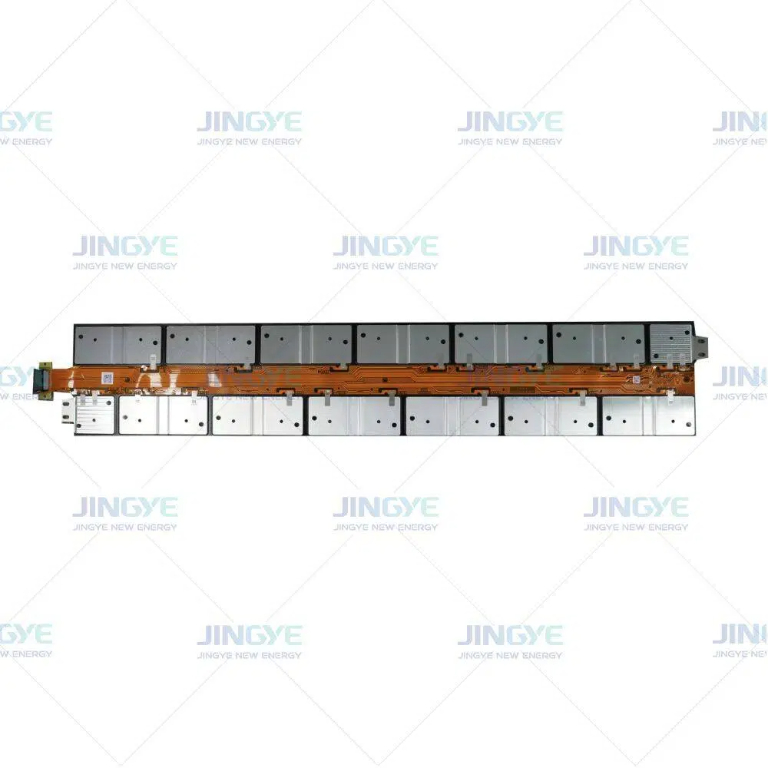
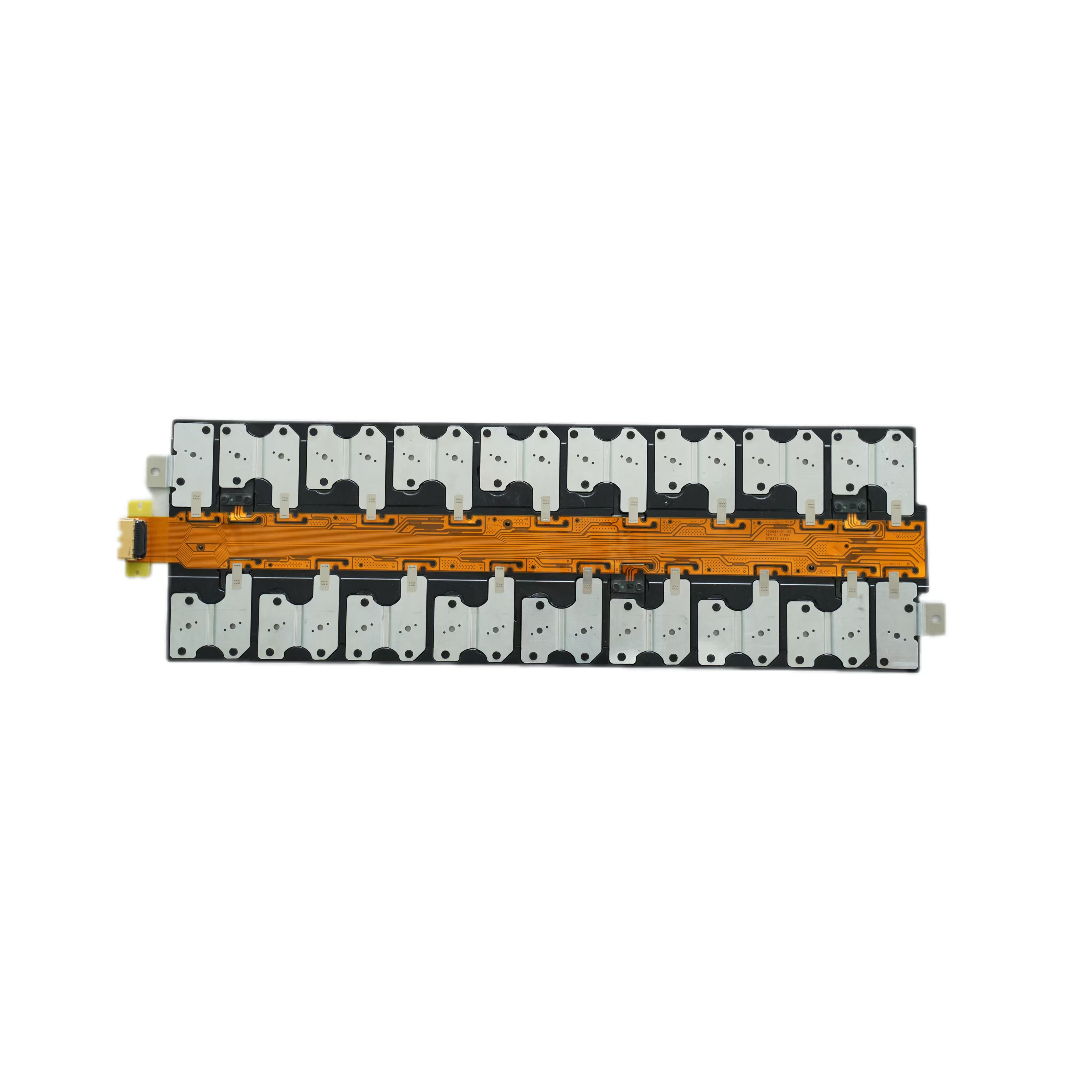
A cell connection system (CCS) is an integrated solution used inside EV battery modules to connect battery cells electrically while providing signal monitoring functions.
A CCS typically combines:
The main function of a CCS is to connect individual battery cells in series or parallel configurations while transmitting critical data to the Battery Management System (BMS).
The BMS uses this information to monitor:
This helps improve battery safety, efficiency, and service life.
Wire bonding battery pack technology uses thin metal wires to connect individual battery cells.
Traditionally, wire bonding has been widely applied in:
The wires create electrical connections between battery cells and the module circuit.
Common bonding materials include:
Wire bonding is valued for its mature technology and relatively simple manufacturing process.
| Feature | Cell Connection System | Wire Bonding Battery Pack |
|---|---|---|
| Connection Method | Busbar/FPC integrated connection | Thin metal wire connection |
| Weight | Lightweight design possible | More wiring required |
| Signal Monitoring | Integrated voltage & temperature sensing | Requires additional wiring |
| Automation | Highly suitable for automated production | More process steps |
| Space Efficiency | Excellent | Limited |
| Mechanical Protection | Strong integrated structure | Wire damage risk |
| Application Trend | Increasing in modern EV packs | Traditional module applications |
One of the biggest advantages of CCS is combining power connection and signal transmission in one structure.
A modern EV battery pack requires real-time monitoring of:
CCS simplifies this process by integrating sensors and connection circuits into the battery module cover.
Weight reduction is a major goal for electric vehicle manufacturers.
Compared with traditional cable-based solutions, flexible CCS designs offer:
Flexible circuit-based solutions can also handle complex layouts where traditional cables are difficult to install.
EV battery production requires high-volume and consistent manufacturing.
Cell connection systems support:
This makes CCS attractive for large-scale EV battery production.
Although CCS technology is growing rapidly, wire bonding still has specific advantages.
Wire bonding has decades of industrial experience.
Benefits include:
Wire bonding can be useful for:
Compared with some advanced CCS production lines, wire bonding may require lower initial manufacturing investment.
The choice between busbar-based CCS and wire bonding depends on battery design requirements.
| Factor | Busbar / CCS | Wire Bonding |
|---|---|---|
| High Current Capability | Excellent | Limited |
| Large EV Battery Packs | Recommended | Less common |
| Space Optimization | Excellent | Moderate |
| Production Scale | High-volume EV manufacturing | Specialized applications |
| Maintenance | Easier module integration | More individual connections |
For modern electric vehicles requiring higher energy density and intelligent monitoring, CCS solutions are becoming the preferred choice.
Battery safety is one of the most important concerns in electric vehicle development.
CCS helps improve safety through:
Integrated sensors can detect abnormal temperature changes and help prevent thermal risks.
The BMS receives accurate cell-level voltage information to balance battery performance.
An integrated structure reduces potential issues caused by loose wires or damaged connections.
An EV battery pack typically includes:
Among these components, the CCS acts as an important connection bridge between battery cells and intelligent battery management.
As EV manufacturers pursue higher energy density and faster production, battery connection technologies are moving toward:
Cell connection systems are expected to play an increasingly important role in next-generation battery modules.
Jingye provides advanced battery connection solutions designed for EV battery packs and energy storage applications.
Advantages include:
By combining electrical connection, signal monitoring, and structural integration, Jingye helps battery manufacturers improve efficiency, reliability, and safety.
CCS integrates electrical connections and monitoring functions through busbars and flexible circuits, while wire bonding uses individual metal wires to connect battery cells.
CCS provides better integration, lighter weight, improved monitoring capability, and easier automation for large-scale EV battery production.
Yes. Wire bonding remains suitable for certain battery designs, especially where mature manufacturing processes and flexible connection methods are required.
A CCS connects battery cells and transmits important information such as voltage and temperature data to the Battery Management System.
Both cell connection systems and wire bonding battery packs have advantages depending on application requirements. Wire bonding remains a proven technology, while CCS is becoming increasingly important for modern EV battery packs due to its integrated design, lightweight structure, and intelligent monitoring capabilities.
For electric vehicle manufacturers seeking higher efficiency, safety, and production scalability, advanced EV battery interconnect solutions such as cell connection systems provide a future-ready approach.
Jingye delivers reliable battery connection technologies to support the development of next-generation electric vehicles and energy storage systems.
Contact Jingye
Email: jyxny@jyrenewables.com
Email: allen.meng@jyrenewables.com
Jul. 20, 2026
Cell Connection System vs Wire Bonding for EV Battery Packs: Which Is Better?
A Cell Connection System (CCS) is a core component inside electric vehicle (EV) and energy storage battery packs. It integrates copper or aluminum busbars, voltage/temperature sensors, and a flexible circuit board (FPC or PCB). The CCS links individual battery cells to the Battery Management System (BMS), replacing bulky wiring harnesses to save space, reduce weight, and monitor safety.
Jul. 17, 2026
How to Choose a CCS Busbar Supplier: 7 Things to Check
A B2B purchasing checklist detailing the core manufacturing, quality validation, and process technical metrics required when sourcing high-volume CCS integrated busbars.
Jul. 17, 2026
How Much Does a Commercial Energy Storage System Cost?
A realistic guide to evaluating the total cost of ownership for commercial and industrial (C&I) energy storage systems, covering hardware, integration, and engineering factors.
Related Products
LFP-261kWh Energy Storage Cabinet
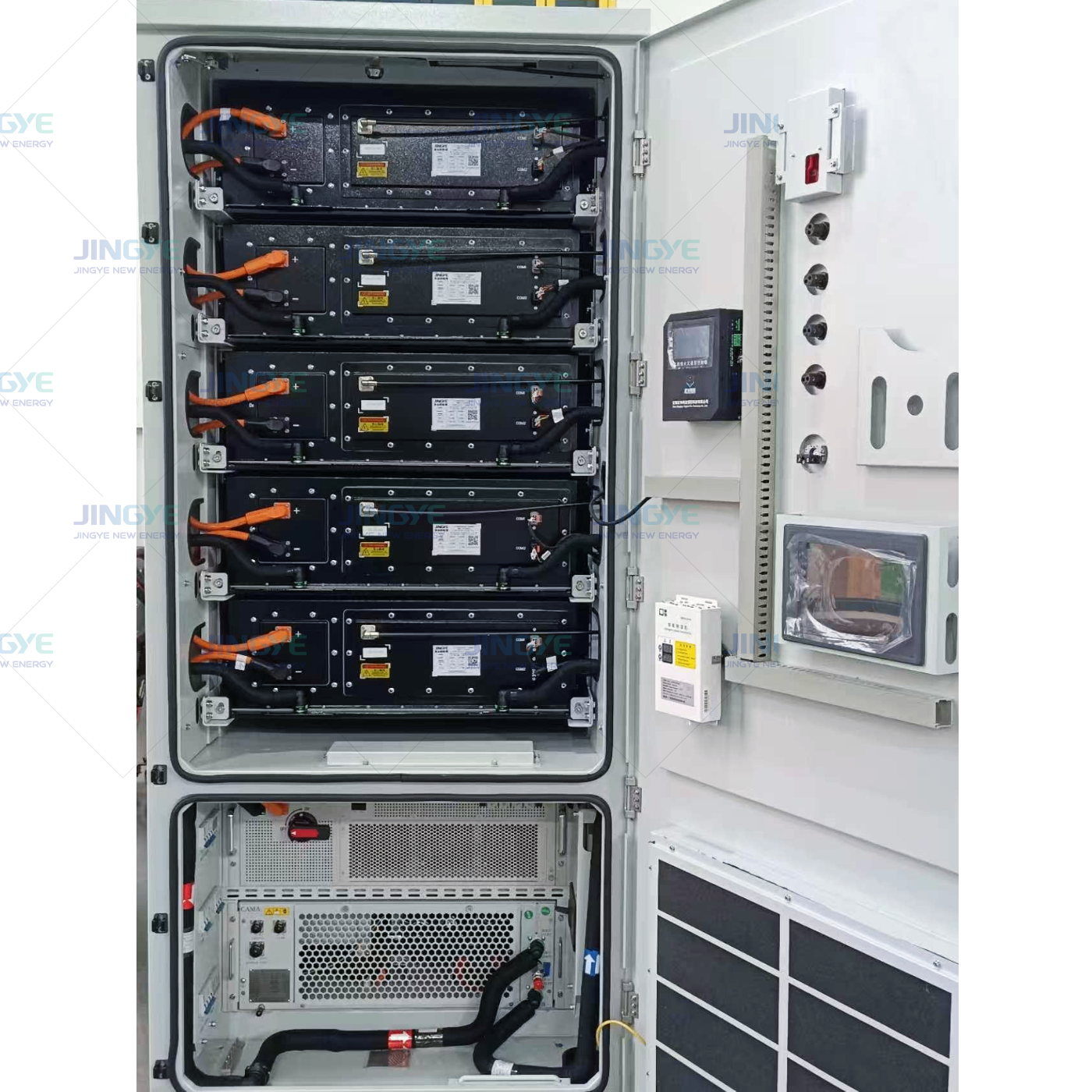
LFP-261kWh Energy Storage Cabinet from Jingye New Energy is engineered for industrial and commercial power applications where high performance, safety, and long service life are priorities. Built around a lithium iron phosphate (LFP) battery system with a high-energy density cell configuration and composite cooling that delivers up to 90% system efficiency, this cabinet provides stable capacity and reliable operation across demanding use cases — from peak shaving and load shifting to solar storage and backup power. OEM/ODM customization is available
LFP-261kWh Energy Storage Cabinet
LFP-261kWh Energy Storage Cabinet from Jingye New Energy is engineered for industrial and commercial power applications where high performance, safety, and long service life are priorities. Built around a lithium iron phosphate (LFP) battery system with a high-energy density cell configuration and composite cooling that delivers up to 90% system efficiency, this cabinet provides stable capacity and reliable operation across demanding use cases — from peak shaving and load shifting to solar storage and backup power. OEM/ODM customization is available
LFP-261kWh Energy Storage Cabinet
LFP-261kWh Energy Storage Cabinet from Jingye New Energy is engineered for industrial and commercial power applications where high performance, safety, and long service life are priorities. Built around a lithium iron phosphate (LFP) battery system with a high-energy density cell configuration and composite cooling that delivers up to 90% system efficiency, this cabinet provides stable capacity and reliable operation across demanding use cases — from peak shaving and load shifting to solar storage and backup power. OEM/ODM customization is available
LFP-261kWh Energy Storage Cabinet
LFP-261kWh Energy Storage Cabinet from Jingye New Energy is engineered for industrial and commercial power applications where high performance, safety, and long service life are priorities. Built around a lithium iron phosphate (LFP) battery system with a high-energy density cell configuration and composite cooling that delivers up to 90% system efficiency, this cabinet provides stable capacity and reliable operation across demanding use cases — from peak shaving and load shifting to solar storage and backup power. OEM/ODM customization is available
LFP-261kWh Energy Storage Cabinet
LFP-261kWh Energy Storage Cabinet from Jingye New Energy is engineered for industrial and commercial power applications where high performance, safety, and long service life are priorities. Built around a lithium iron phosphate (LFP) battery system with a high-energy density cell configuration and composite cooling that delivers up to 90% system efficiency, this cabinet provides stable capacity and reliable operation across demanding use cases — from peak shaving and load shifting to solar storage and backup power. OEM/ODM customization is available
LFP-261kWh Energy Storage Cabinet
LFP-261kWh Energy Storage Cabinet from Jingye New Energy is engineered for industrial and commercial power applications where high performance, safety, and long service life are priorities. Built around a lithium iron phosphate (LFP) battery system with a high-energy density cell configuration and composite cooling that delivers up to 90% system efficiency, this cabinet provides stable capacity and reliable operation across demanding use cases — from peak shaving and load shifting to solar storage and backup power. OEM/ODM customization is available
LFP-261kWh Energy Storage Cabinet
LFP-261kWh Energy Storage Cabinet from Jingye New Energy is engineered for industrial and commercial power applications where high performance, safety, and long service life are priorities. Built around a lithium iron phosphate (LFP) battery system with a high-energy density cell configuration and composite cooling that delivers up to 90% system efficiency, this cabinet provides stable capacity and reliable operation across demanding use cases — from peak shaving and load shifting to solar storage and backup power. OEM/ODM customization is available
LFP-417kWh Energy Storage Cabinet
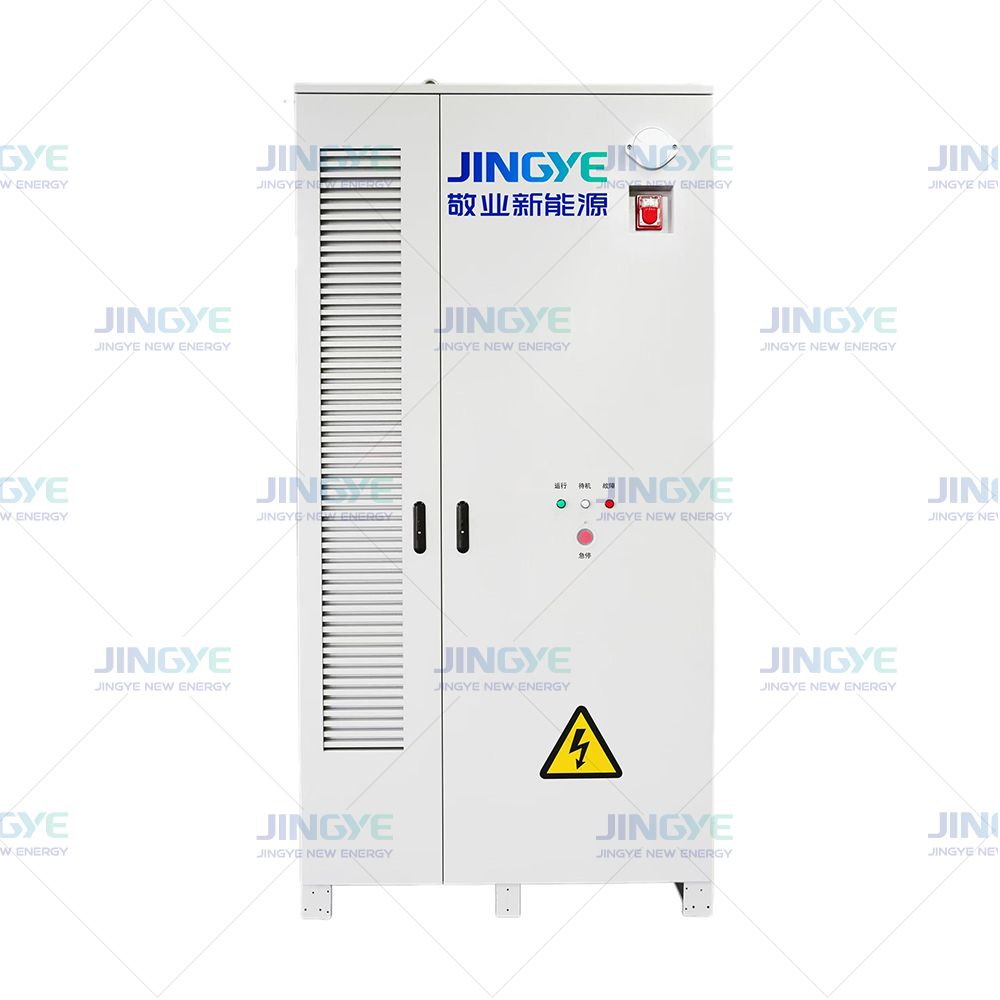
LFP-417kWh Energy Storage Cabinet from Jingye New Energy is engineered to support large commercial and industrial sites with high-capacity, reliable energy storage. Built around a robust lithium iron phosphate (LFP) battery system using 314Ah high-density cells with liquid cooling and over 8,000 cycle life, this cabinet combines strong performance, intelligent BMS monitoring, and scalable series deployment to meet demanding energy needs — from peak shaving and load management to solar integration.
LFP-417kWh Energy Storage Cabinet
LFP-417kWh Energy Storage Cabinet from Jingye New Energy is engineered to support large commercial and industrial sites with high-capacity, reliable energy storage. Built around a robust lithium iron phosphate (LFP) battery system using 314Ah high-density cells with liquid cooling and over 8,000 cycle life, this cabinet combines strong performance, intelligent BMS monitoring, and scalable series deployment to meet demanding energy needs — from peak shaving and load management to solar integration.
LFP-417kWh Energy Storage Cabinet
LFP-417kWh Energy Storage Cabinet from Jingye New Energy is engineered to support large commercial and industrial sites with high-capacity, reliable energy storage. Built around a robust lithium iron phosphate (LFP) battery system using 314Ah high-density cells with liquid cooling and over 8,000 cycle life, this cabinet combines strong performance, intelligent BMS monitoring, and scalable series deployment to meet demanding energy needs — from peak shaving and load management to solar integration.
LFP-417kWh Energy Storage Cabinet
LFP-417kWh Energy Storage Cabinet from Jingye New Energy is engineered to support large commercial and industrial sites with high-capacity, reliable energy storage. Built around a robust lithium iron phosphate (LFP) battery system using 314Ah high-density cells with liquid cooling and over 8,000 cycle life, this cabinet combines strong performance, intelligent BMS monitoring, and scalable series deployment to meet demanding energy needs — from peak shaving and load management to solar integration.
LFP-417kWh Energy Storage Cabinet
LFP-417kWh Energy Storage Cabinet from Jingye New Energy is engineered to support large commercial and industrial sites with high-capacity, reliable energy storage. Built around a robust lithium iron phosphate (LFP) battery system using 314Ah high-density cells with liquid cooling and over 8,000 cycle life, this cabinet combines strong performance, intelligent BMS monitoring, and scalable series deployment to meet demanding energy needs — from peak shaving and load management to solar integration.
LFP-417kWh Energy Storage Cabinet
LFP-417kWh Energy Storage Cabinet from Jingye New Energy is engineered to support large commercial and industrial sites with high-capacity, reliable energy storage. Built around a robust lithium iron phosphate (LFP) battery system using 314Ah high-density cells with liquid cooling and over 8,000 cycle life, this cabinet combines strong performance, intelligent BMS monitoring, and scalable series deployment to meet demanding energy needs — from peak shaving and load management to solar integration.
LFP-417kWh Energy Storage Cabinet
LFP-417kWh Energy Storage Cabinet from Jingye New Energy is engineered to support large commercial and industrial sites with high-capacity, reliable energy storage. Built around a robust lithium iron phosphate (LFP) battery system using 314Ah high-density cells with liquid cooling and over 8,000 cycle life, this cabinet combines strong performance, intelligent BMS monitoring, and scalable series deployment to meet demanding energy needs — from peak shaving and load management to solar integration.
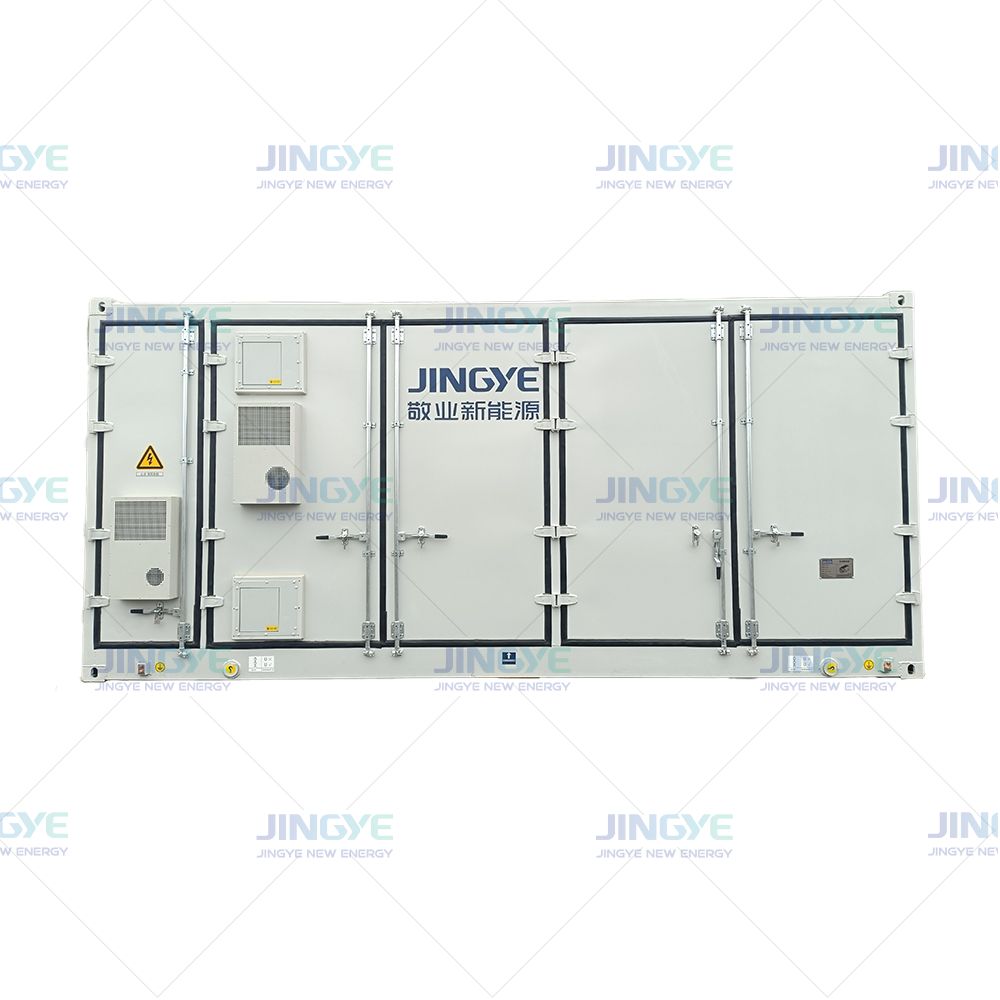
5.015MWh Liquid-Cooled Containerized Energy Storage System (ESS)
5.015MWh Containerized Energy Storage System from Jingye New Energy is a high-capacity, integrated solution designed to support large-scale commercial, industrial, and utility energy applications. Housed in a standard 20-foot container, this system brings together 314Ah lithium iron phosphate (LFP) cells, liquid cooling, integrated fire protection, and intelligent BMS monitoring — all engineered for demanding operational environments and proven in projects like the 50MW/100.32MWh Jiangsu Jingye Iron and Steel power station.
5.015MWh Liquid-Cooled Containerized Energy Storage System (ESS)
5.015MWh Containerized Energy Storage System from Jingye New Energy is a high-capacity, integrated solution designed to support large-scale commercial, industrial, and utility energy applications. Housed in a standard 20-foot container, this system brings together 314Ah lithium iron phosphate (LFP) cells, liquid cooling, integrated fire protection, and intelligent BMS monitoring — all engineered for demanding operational environments and proven in projects like the 50MW/100.32MWh Jiangsu Jingye Iron and Steel power station.
5.015MWh Liquid-Cooled Containerized Energy Storage System (ESS)
5.015MWh Containerized Energy Storage System from Jingye New Energy is a high-capacity, integrated solution designed to support large-scale commercial, industrial, and utility energy applications. Housed in a standard 20-foot container, this system brings together 314Ah lithium iron phosphate (LFP) cells, liquid cooling, integrated fire protection, and intelligent BMS monitoring — all engineered for demanding operational environments and proven in projects like the 50MW/100.32MWh Jiangsu Jingye Iron and Steel power station.
5.015MWh Liquid-Cooled Containerized Energy Storage System (ESS)
5.015MWh Containerized Energy Storage System from Jingye New Energy is a high-capacity, integrated solution designed to support large-scale commercial, industrial, and utility energy applications. Housed in a standard 20-foot container, this system brings together 314Ah lithium iron phosphate (LFP) cells, liquid cooling, integrated fire protection, and intelligent BMS monitoring — all engineered for demanding operational environments and proven in projects like the 50MW/100.32MWh Jiangsu Jingye Iron and Steel power station.
5.015MWh Liquid-Cooled Containerized Energy Storage System (ESS)
5.015MWh Containerized Energy Storage System from Jingye New Energy is a high-capacity, integrated solution designed to support large-scale commercial, industrial, and utility energy applications. Housed in a standard 20-foot container, this system brings together 314Ah lithium iron phosphate (LFP) cells, liquid cooling, integrated fire protection, and intelligent BMS monitoring — all engineered for demanding operational environments and proven in projects like the 50MW/100.32MWh Jiangsu Jingye Iron and Steel power station.
5.015MWh Liquid-Cooled Containerized Energy Storage System (ESS)
5.015MWh Containerized Energy Storage System from Jingye New Energy is a high-capacity, integrated solution designed to support large-scale commercial, industrial, and utility energy applications. Housed in a standard 20-foot container, this system brings together 314Ah lithium iron phosphate (LFP) cells, liquid cooling, integrated fire protection, and intelligent BMS monitoring — all engineered for demanding operational environments and proven in projects like the 50MW/100.32MWh Jiangsu Jingye Iron and Steel power station.
5.015MWh Liquid-Cooled Containerized Energy Storage System (ESS)
5.015MWh Containerized Energy Storage System from Jingye New Energy is a high-capacity, integrated solution designed to support large-scale commercial, industrial, and utility energy applications. Housed in a standard 20-foot container, this system brings together 314Ah lithium iron phosphate (LFP) cells, liquid cooling, integrated fire protection, and intelligent BMS monitoring — all engineered for demanding operational environments and proven in projects like the 50MW/100.32MWh Jiangsu Jingye Iron and Steel power station.
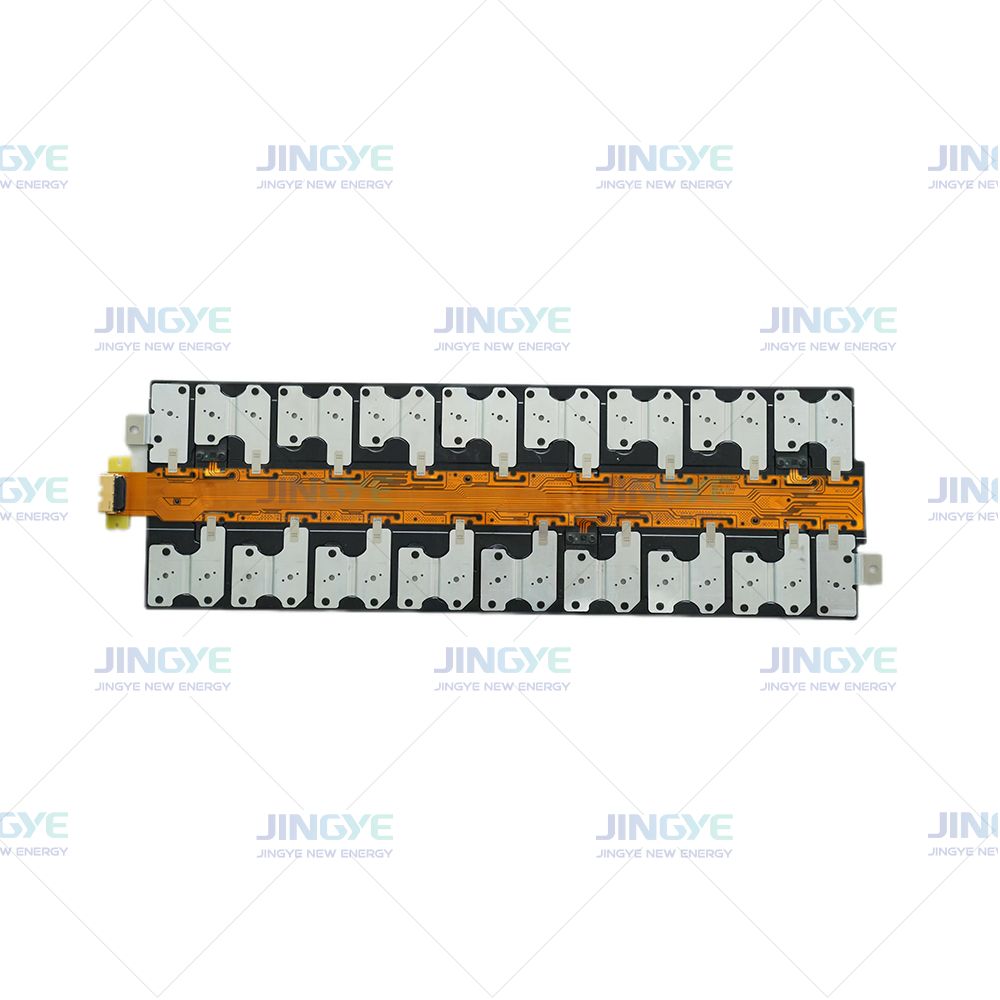
Jingye New Energy manufactures custom CCS (Cell Connection Systems) for battery packs — integrated busbar modules that replace traditional wire harnesses. Available in injection molding, thermoforming, and direct welding processes, with full OEM/ODM design support and CNAS-certified testing.
Jingye New Energy manufactures custom CCS (Cell Connection Systems) for battery packs — integrated busbar modules that replace traditional wire harnesses. Available in injection molding, thermoforming, and direct welding processes, with full OEM/ODM design support and CNAS-certified testing.
Jingye New Energy manufactures custom CCS (Cell Connection Systems) for battery packs — integrated busbar modules that replace traditional wire harnesses. Available in injection molding, thermoforming, and direct welding processes, with full OEM/ODM design support and CNAS-certified testing.
Jingye New Energy manufactures custom CCS (Cell Connection Systems) for battery packs — integrated busbar modules that replace traditional wire harnesses. Available in injection molding, thermoforming, and direct welding processes, with full OEM/ODM design support and CNAS-certified testing.
Jingye New Energy manufactures custom CCS (Cell Connection Systems) for battery packs — integrated busbar modules that replace traditional wire harnesses. Available in injection molding, thermoforming, and direct welding processes, with full OEM/ODM design support and CNAS-certified testing.
Jingye New Energy manufactures custom CCS (Cell Connection Systems) for battery packs — integrated busbar modules that replace traditional wire harnesses. Available in injection molding, thermoforming, and direct welding processes, with full OEM/ODM design support and CNAS-certified testing.
Jingye New Energy manufactures custom CCS (Cell Connection Systems) for battery packs — integrated busbar modules that replace traditional wire harnesses. Available in injection molding, thermoforming, and direct welding processes, with full OEM/ODM design support and CNAS-certified testing.
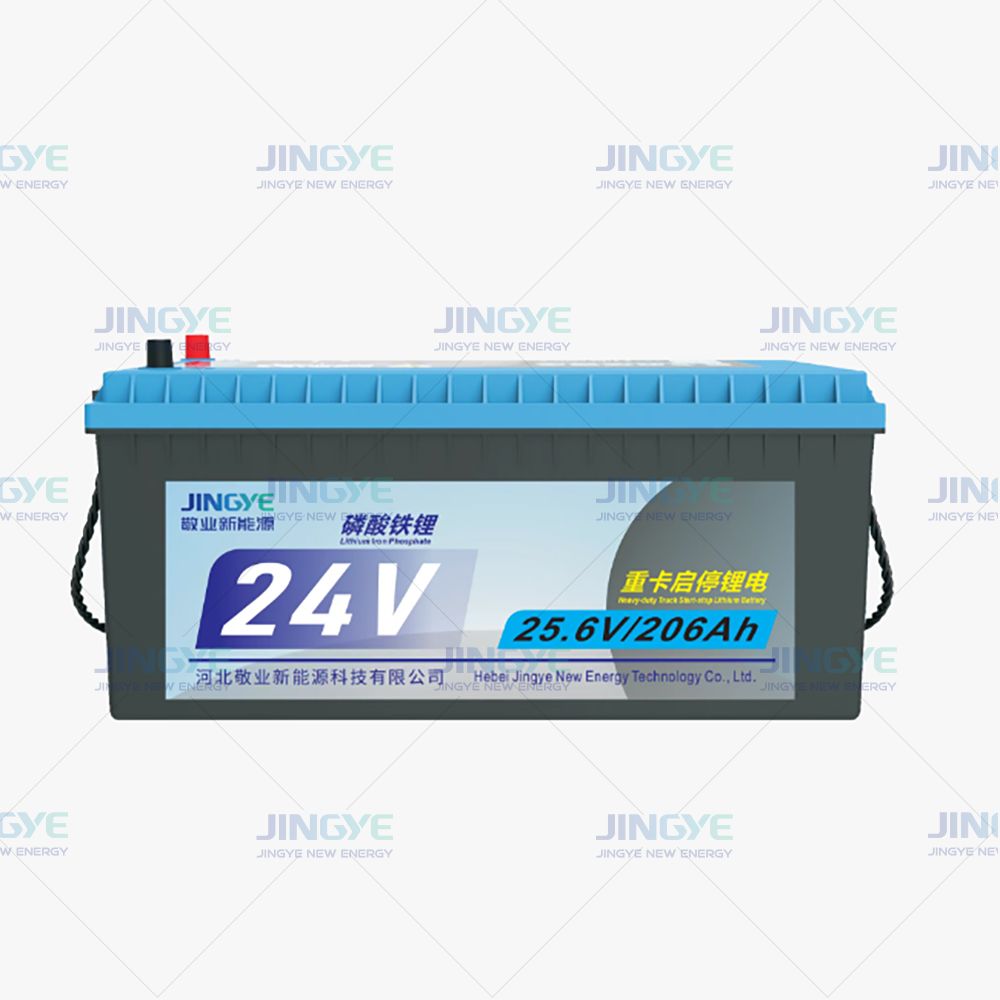
24V LiFePO4 Engine Start-Stop Battery
The JY530 24V LiFePO4 battery from Jingye New Energy is engineered for heavy trucks and commercial vehicles, delivering reliable engine starting and stable power for low-voltage equipment such as 24V parking air conditioning systems. With 25.6V/206Ah (5.3kWh) capacity, 1500A starting current and 2500A peak output, it operates in extreme cold down to -40°C with 12-layer protection, directly replaces lead-acid batteries, and adds smart remote monitoring via mobile app, Bluetooth, and cloud diagnostics.
24V LiFePO4 Engine Start-Stop Battery
The JY530 24V LiFePO4 battery from Jingye New Energy is engineered for heavy trucks and commercial vehicles, delivering reliable engine starting and stable power for low-voltage equipment such as 24V parking air conditioning systems. With 25.6V/206Ah (5.3kWh) capacity, 1500A starting current and 2500A peak output, it operates in extreme cold down to -40°C with 12-layer protection, directly replaces lead-acid batteries, and adds smart remote monitoring via mobile app, Bluetooth, and cloud diagnostics.
24V LiFePO4 Engine Start-Stop Battery
The JY530 24V LiFePO4 battery from Jingye New Energy is engineered for heavy trucks and commercial vehicles, delivering reliable engine starting and stable power for low-voltage equipment such as 24V parking air conditioning systems. With 25.6V/206Ah (5.3kWh) capacity, 1500A starting current and 2500A peak output, it operates in extreme cold down to -40°C with 12-layer protection, directly replaces lead-acid batteries, and adds smart remote monitoring via mobile app, Bluetooth, and cloud diagnostics.
24V LiFePO4 Engine Start-Stop Battery
The JY530 24V LiFePO4 battery from Jingye New Energy is engineered for heavy trucks and commercial vehicles, delivering reliable engine starting and stable power for low-voltage equipment such as 24V parking air conditioning systems. With 25.6V/206Ah (5.3kWh) capacity, 1500A starting current and 2500A peak output, it operates in extreme cold down to -40°C with 12-layer protection, directly replaces lead-acid batteries, and adds smart remote monitoring via mobile app, Bluetooth, and cloud diagnostics.
24V LiFePO4 Engine Start-Stop Battery
The JY530 24V LiFePO4 battery from Jingye New Energy is engineered for heavy trucks and commercial vehicles, delivering reliable engine starting and stable power for low-voltage equipment such as 24V parking air conditioning systems. With 25.6V/206Ah (5.3kWh) capacity, 1500A starting current and 2500A peak output, it operates in extreme cold down to -40°C with 12-layer protection, directly replaces lead-acid batteries, and adds smart remote monitoring via mobile app, Bluetooth, and cloud diagnostics.
24V LiFePO4 Engine Start-Stop Battery
The JY530 24V LiFePO4 battery from Jingye New Energy is engineered for heavy trucks and commercial vehicles, delivering reliable engine starting and stable power for low-voltage equipment such as 24V parking air conditioning systems. With 25.6V/206Ah (5.3kWh) capacity, 1500A starting current and 2500A peak output, it operates in extreme cold down to -40°C with 12-layer protection, directly replaces lead-acid batteries, and adds smart remote monitoring via mobile app, Bluetooth, and cloud diagnostics.
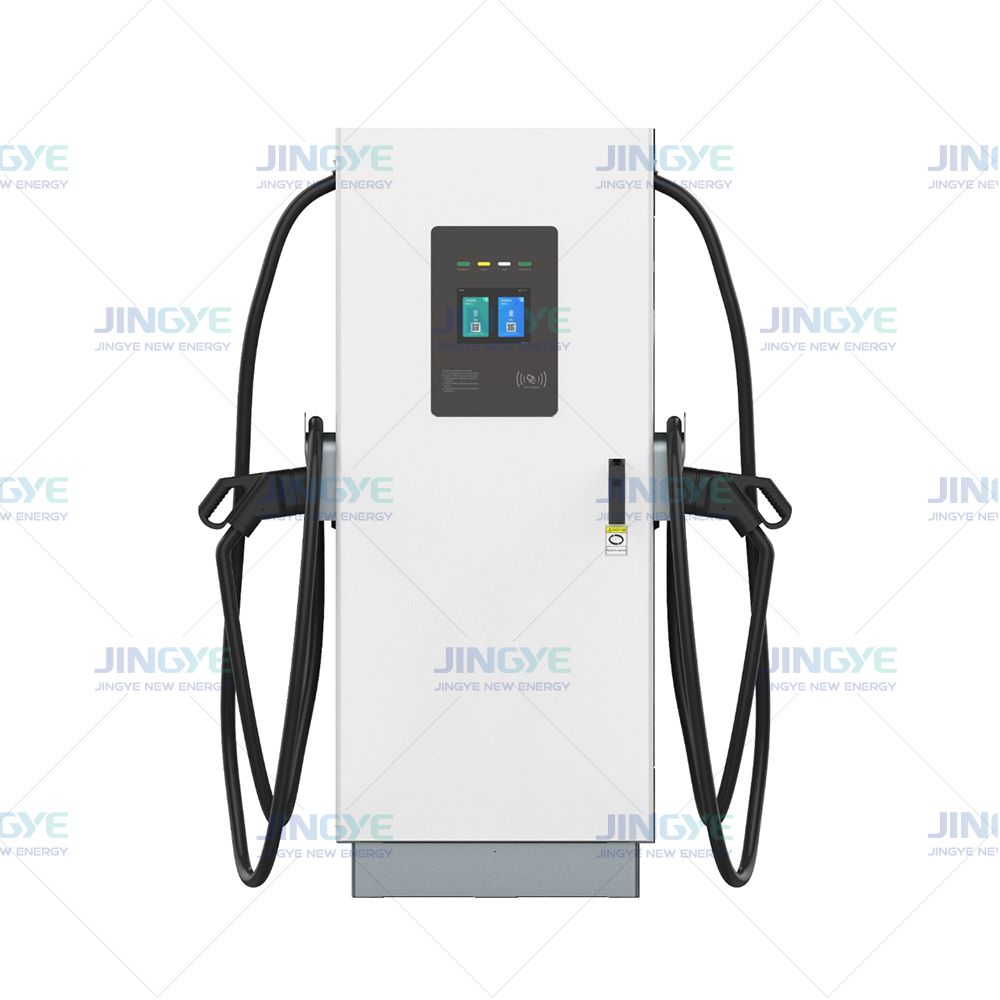
40kW-160kW Electric Vehicle DC Charger
Jingye New Energy's 40kW-160kW DC chargers cover the mid-power range for destination charging, fleet depots, workplaces, and commercial parking. With a 200V-1000V output range supporting both 400V and 800V vehicle platforms, ≥94% average efficiency, and an IP54-rated enclosure for outdoor installation, they deliver dependable everyday fast charging at a lower grid connection cost than ultra-high-power stations. OEM/ODM customization is available.
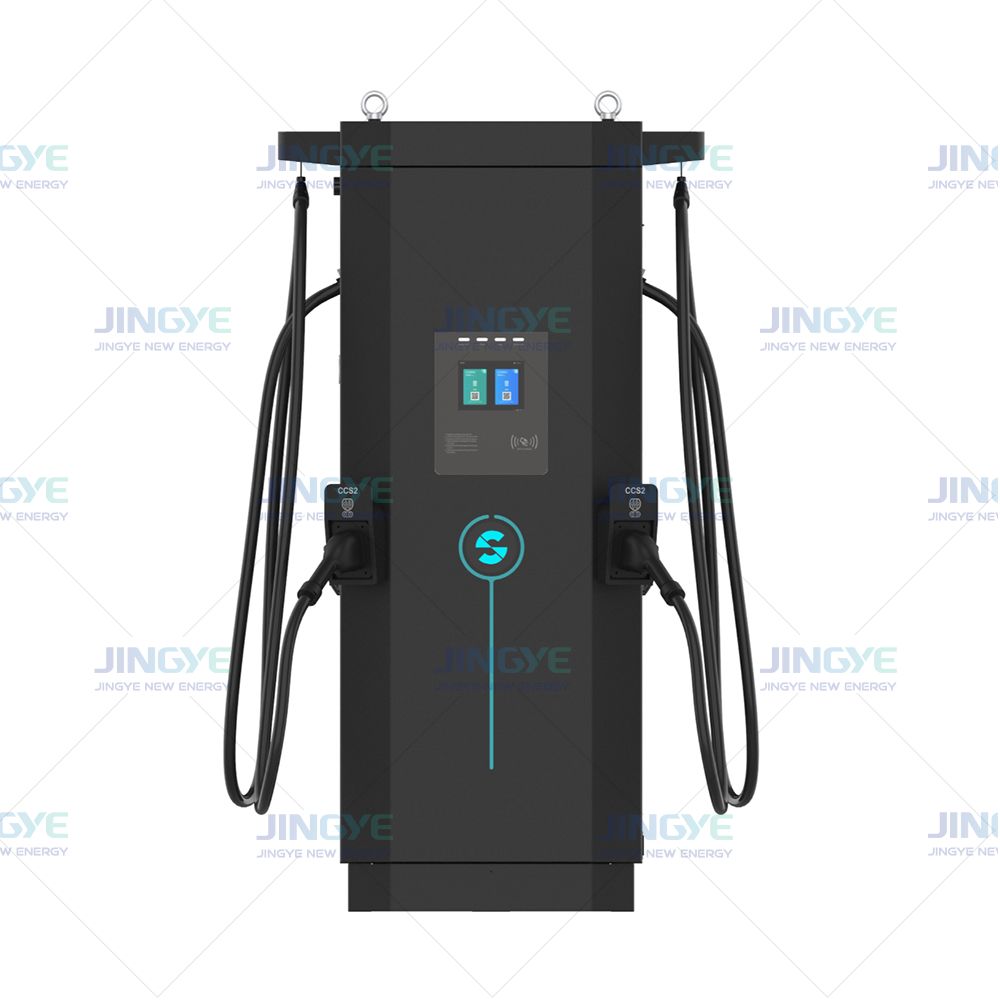
Jingye New Energy's DC fast EV chargers deliver 60kW to 240kW of charging power for commercial charging stations, fleet depots, and public infrastructure. With a continuously adjustable 150V–1000V output range, they support both 400V and 800V vehicle platforms — from passenger cars to electric buses and trucks. Engineered for ≥94% average efficiency and validated in our CNAS-accredited testing laboratory, these chargers are built for reliable, high-uptime commercial operation. OEM/ODM customization is available.
Let’s Get Started on Your New Energy Journey.

+86 0311 6736 8615
+86 150 3207 1231