Aug 04, 2026
Can a 261kWh battery system work with solar PV? This question is becoming more common as people look for ways to use renewable energy. A 261KWH Energy Storage System can store the energy generated by solar panels. This system can also help manage energy use and reduce costs. Understanding how these systems can work together is essential for homeowners. By learning about the benefits, you can make better decisions for your energy needs.

Yes, a 261kWh battery system can work effectively with solar PV systems. These batteries offer reliable storage and can enhance the efficiency of solar energy use. When paired together, they provide a consistent power supply, even during times without sunlight.
Solar panels generate electricity during the day. However, at night, this energy isn’t available. A 261kWh battery can store excess energy for use when the sun isn’t shining. This ensures you have power when you need it most.
Using a battery system can lessen your reliance on the grid. By storing energy and using it during peak hours when electricity rates are high, you can save money. This can lead to significant savings over time.
Power outages can disrupt daily life. A 261kWh battery can act as a backup power source. This is particularly useful during emergencies or severe weather when the grid fails.
By combining solar PV systems with battery storage, you are using clean, renewable energy. Reducing reliance on fossil fuels helps lower carbon footprints and protect the environment.
The process can be visualized in a simple flowchart:
| Battery Size (kWh) | Typical Household Use (kWh/day) | Days of Backup |
|---|---|---|
| 261 | 30 | 8.7 |
Before investing in a 261kWh battery, consider your household’s energy consumption. This will help determine if this size is suitable for your needs.
The cost of a 261kWh battery system can vary. It is crucial to compare prices and consider long-term savings on your electricity bills.
A professional installer should be hired to set up the system correctly. This ensures safety and maximizes efficiency.
In conclusion, a 261kWh battery system can indeed work with solar PV. This combination offers numerous benefits, including energy storage for nighttime use, lower electricity costs, and backup power during outages. With the right setup, this system can significantly enhance your energy independence and sustainability.
Solar pairing is a common use case for the 261kWh LFP battery energy storage system.
1. How long do 261kWh batteries last?
A properly maintained 261kWh battery can last for several years, typically between 10 to 15 years.
2. Can I combine a 261kWh battery with other energy systems?
Yes, these batteries can work with other renewable solutions like wind energy.
3. What maintenance is required for a 261kWh battery system?
Regular checks of the battery’s health and monitoring of energy output can help maintain performance.
4. Is it difficult to install a 261kWh battery system?
Professional installation is recommended to ensure safety and effectiveness.
5. What happens if the battery is fully charged?
Excess energy can often be sent back to the grid, depending on your solar setup.
Oct. 22, 2026
EV Charger Preventive Maintenance: Key Practices for Long-Term Reliability
EV charger preventive maintenance helps charging operators protect uptime, safety, and revenue over many years. A planned service program is more reliable than waiting for a fault after a vehicle cannot charge. This guide explains DC fast charger maintenance, EV charging station inspection, and charging cable inspection in simple steps.
Oct. 20, 2026
NTPC Khavda 3,300 MWh BESS Tender: How Many Containers You Really Need (2026)
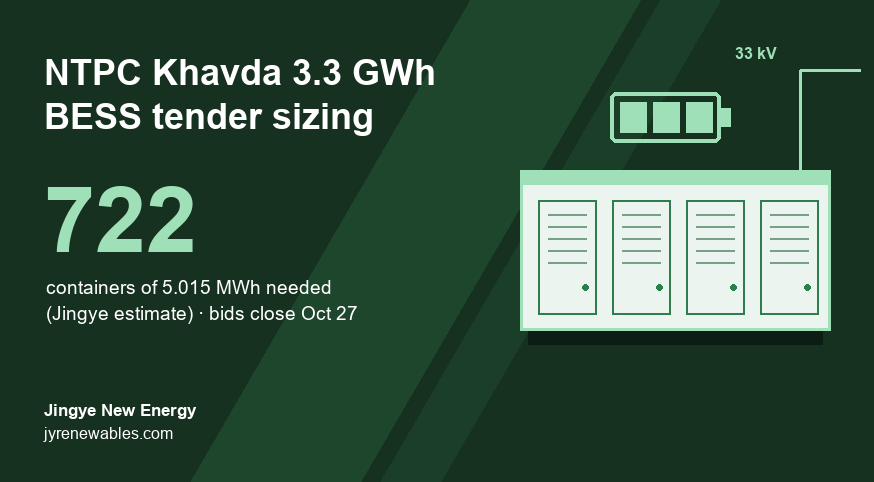
NTPC Green Energy's 1,100 MW / 3,300 MWh Khavda battery tender closes on October 27, 2026. Because capacity is counted as AC energy at the grid point, we estimate it needs about 722 containers of 5.015 MWh, roughly 10% more installed battery than the headline figure.
Oct. 20, 2026
Battery Energy Storage System Architecture: Key Components Explained
A battery energy storage system architecture determines how safely and efficiently a BESS stores, controls, and delivers electricity. The main challenge for overseas buyers is choosing the right structure without creating avoidable cost, safety, or integration problems.
Let’s Get Started on Your New Energy Journey.