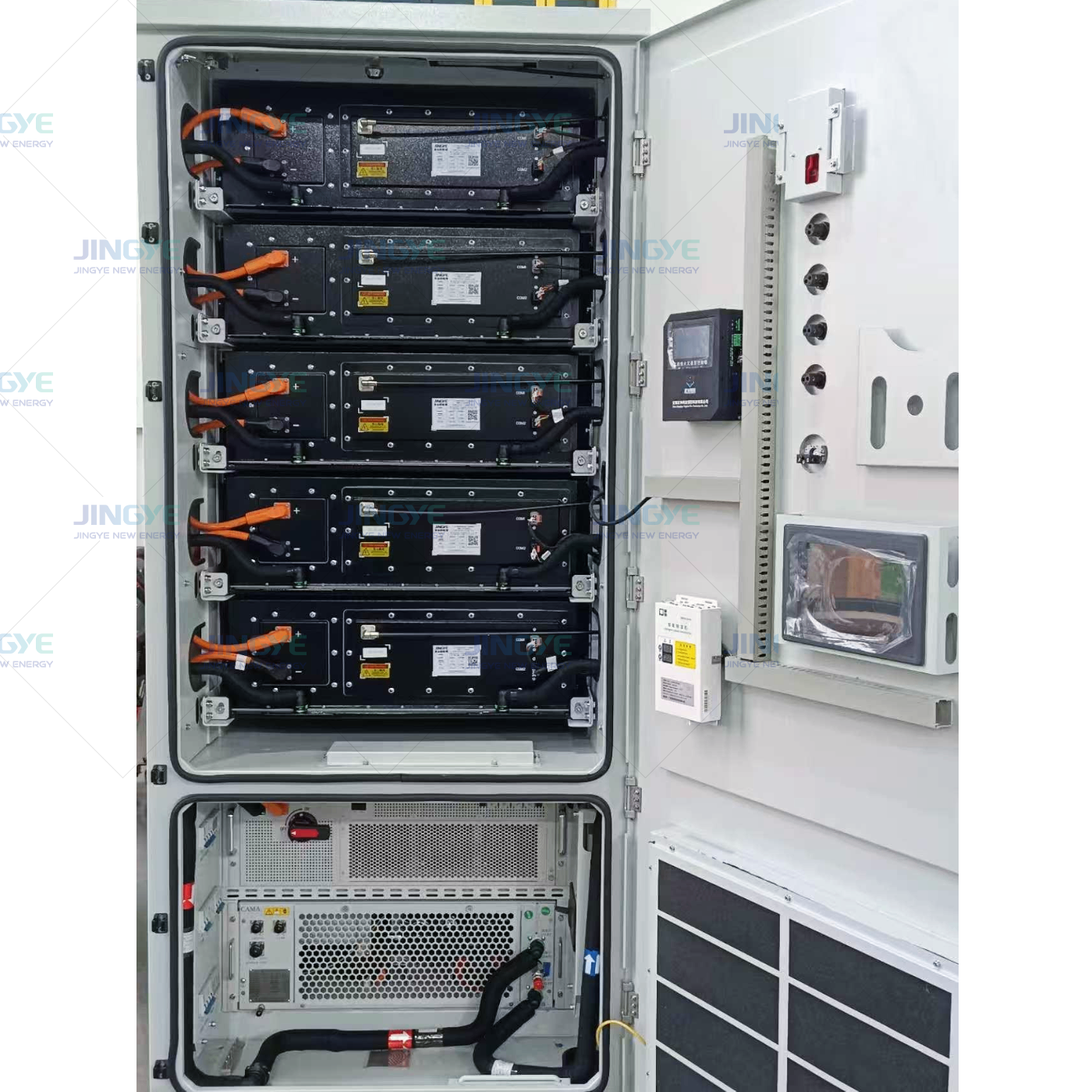

When a homeowner searches for an AC-coupled battery storage system for existing solar, a DC-coupled solar battery storage system, or the best battery storage system for home solar, the real concern is rarely the battery chemistry alone. The difficult questions are usually practical: Will the battery work with an existing photovoltaic array? How much solar energy will be lost during conversion? Is a hybrid inverter worth the additional installation work? The answers depend on system architecture, round-trip efficiency, inverter loading ratio, and depth of discharge rather than on a single headline capacity figure.
How AC-Coupled and DC-Coupled Energy Storage Systems Work
To understand the difference, follow the electricity as it moves through a typical solar-plus-storage project. Solar modules generate direct current, or DC. Most homes and commercial buildings consume alternating current, or AC. The system architecture determines where the battery is connected and how many times electricity must be converted.
AC-Coupled Battery Energy Storage System Operation
In an AC-coupled Energy Storage System, the solar array normally has its own PV inverter. That inverter converts solar DC into AC for household loads or grid export. A separate battery inverter then converts AC back to DC when charging the battery and converts battery DC into AC during discharge.
The energy path is therefore commonly:
Solar modules → PV inverter → AC bus → battery inverter → battery
This design can require two conversion stages during charging and discharging. A well-designed residential system may deliver approximately 86% to 92% round-trip efficiency from PV generation through battery storage and back to AC loads, although actual performance depends on inverter efficiency, battery temperature, standby consumption, cable losses, and operating power.
The main advantage appears when the solar system already exists. An installer can often add a battery inverter, transfer equipment, protection devices, and energy-management controls without replacing the original PV inverter. This is why an AC-coupled battery storage system for existing solar is frequently selected for retrofit projects.
DC-Coupled Solar Battery Storage System Operation
In a DC-coupled solar battery storage system, the PV array and battery connect on the DC side of a hybrid inverter or shared power-conversion system. Solar energy can charge the battery before being converted to AC.
The simplified energy path is:
Solar modules → DC bus → battery or hybrid inverter → AC loads and grid
Because the system can avoid one AC-to-DC conversion during charging, a properly sized DC-coupled installation may achieve approximately 90% to 95% round-trip efficiency at useful operating loads. The improvement is not guaranteed at every power level. Low-load operation, battery balancing, inverter standby power, and clipping control can narrow the difference.
DC coupling also helps capture solar energy that would otherwise be curtailed when the PV inverter reaches its AC output limit. This is known as clipping. For example, a 10 kW PV array connected to a 7.6 kW AC inverter may produce more than 7.6 kW under strong midday conditions. A DC-coupled battery can store some of that excess before the inverter limit is reached, provided the battery, DC bus, and controls are rated for the operating condition.
AC-Coupled vs DC-Coupled Energy Storage System Parameters
The following comparison uses typical project ranges rather than a single manufacturer’s specification. Actual results should be confirmed with a one-line diagram, equipment datasheets, local interconnection rules, and a site-specific load profile.
| Parameter | AC-Coupled Energy Storage System | DC-Coupled Energy Storage System |
|---|---|---|
| Typical connection point | AC bus, downstream or alongside the PV inverter | DC bus between PV modules, battery, and hybrid inverter |
| Best installation type | Solar retrofit, modular expansion, mixed-inverter projects | New solar construction, high-DC-ratio systems, clipping reduction |
| Typical battery charging path | PV DC → PV inverter AC → battery inverter DC | PV DC → battery DC, with fewer conversion steps |
| Indicative round-trip efficiency | Approximately 86%–92% | Approximately 90%–95% |
| Retrofit compatibility | High, especially when the existing PV inverter remains serviceable | Limited unless the PV system uses a compatible hybrid inverter or is substantially redesigned |
| Clipping-energy recovery | Usually limited unless AC controls and inverter capacity support it | Generally stronger because excess DC can charge the battery before AC conversion |
| Backup integration | Flexible, but may require additional transfer equipment and inverter coordination | Can be highly integrated through a hybrid inverter and energy-management system |
| Expansion flexibility | Often easier to add independently sized battery units | Expansion must remain within DC voltage, current, MPPT, and inverter limits |
| Control complexity | More AC devices must coordinate during islanding and grid reconnection | Fewer primary conversion devices, but DC protection and control design are more specialized |
| Common battery chemistry | Lithium iron phosphate, or LFP, is common because of its thermal stability and cycle-life profile | |
| Typical compliance considerations | UL 9540, UL 1973, NFPA 855, NEC Articles 690 and 706, and IEEE 1547 may apply depending on location and project type | |
For a 10 kWh usable battery discharged once per day, a 90% round-trip system would return roughly 9 kWh after accounting for the complete charge-discharge pathway. A system operating at 86% would return approximately 8.6 kWh under comparable conditions. The difference is only 0.4 kWh per cycle, but over 365 cycles it becomes about 146 kWh per year. Whether that energy justifies a redesign depends on electricity prices, battery cycling frequency, and installation cost.
Energy Storage System Performance in Different Solar Scenarios
Existing Rooftop Solar Retrofit
AC coupling is usually the more practical option when a homeowner has a functioning PV inverter with several years of useful service remaining. Replacing that inverter solely to obtain DC coupling can add labor, permitting, equipment removal, and possible roof or wiring changes.
Consider a homeowner in California with a 7.6 kW rooftop array, a six-year-old string inverter, and average evening consumption of 8 kWh. The installer proposed a 10 kWh LFP battery connected through an AC battery inverter. The homeowner retained the PV inverter, reduced the electrical redesign, and used the battery during the 4 p.m. to 9 p.m. peak period. In the first operating month, the monitoring portal recorded approximately 248 kWh of battery discharge and reduced grid imports during the selected peak window by about 31%. The project did not recover all midday clipping, but it avoided the cost of replacing a working PV inverter.
This type of result is not a universal guarantee. It shows the trade-off: an AC-coupled system may sacrifice some conversion efficiency but reduce retrofit disruption and preserve existing equipment value.
New Solar Construction with High Inverter Loading Ratio
DC coupling becomes more attractive in a new installation, particularly when the PV array is intentionally oversized relative to the inverter. The relationship between array DC rating and inverter AC rating is called the inverter loading ratio, or ILR. An array-to-inverter ratio around 1.2 to 1.5 is common in some designs, but the appropriate value depends on climate, roof orientation, module temperature coefficients, and interconnection limits.
For example, a new 12 kW DC solar array paired with an 8 kW hybrid inverter may experience clipping during high-irradiance hours. If a 15 kWh battery can accept the surplus DC power, the system may store energy that an AC-only architecture would discard. The financial result depends on how often clipping occurs and whether the stored energy is later used during a high-value tariff period.
Whole-Home Backup Energy Storage System
Whole-home backup requires more than battery capacity. The inverter must support the home’s continuous load, motor-starting surge, phase configuration, transfer time, and critical-load priorities. Air-conditioning compressors, well pumps, heat pumps, and induction cooktops can each affect the required power rating.
AC-coupled systems can provide strong backup flexibility when the battery inverter is designed to form a stable microgrid and coordinate with the PV inverter. DC-coupled systems can simplify the primary conversion path, but the hybrid inverter must be sized to supply both backup loads and charging power. A 10 kWh battery with a 5 kW inverter may provide two hours at a continuous 5 kW load in theory, while a 10 kW inverter could support higher instantaneous demand; battery usable capacity and surge ratings still determine the actual result.
Commercial Energy Storage System with Demand Charges
Commercial customers often evaluate storage based on peak-demand reduction rather than only kilowatt-hours. If a facility reduces a monthly peak by 100 kW and the demand charge is $18 per kW-month, the theoretical monthly saving is $1,800 before considering battery degradation, control limits, and tariff rules.
AC coupling is often easier when the facility already has several PV inverters or when the battery must be installed near the main switchboard. DC coupling may produce higher solar capture in a new project, but the additional design constraints around DC voltage, string configuration, and inverter power sharing can affect construction schedules.
AC-Coupled and DC-Coupled Energy Storage System Price Analysis
Price comparisons should separate equipment cost from total installed cost. A battery advertised at a low price per kilowatt-hour may still require a service upgrade, new disconnects, fire-code work, communications equipment, engineering, and utility approval.
| Cost category | AC-coupled tendency | DC-coupled tendency |
|---|---|---|
| Battery and power-conversion equipment | May be higher because a separate battery inverter is added | May be lower in a new build when one hybrid inverter serves PV and battery functions |
| Retrofit labor | Often lower when existing PV equipment is retained | Can be higher if the PV inverter, wiring, or control platform must be replaced |
| Design and commissioning | Requires coordination between PV inverter, battery inverter, and backup controls | Requires careful DC sizing, string design, protection, and hybrid-inverter commissioning |
| Indicative residential installed range | Approximately $900–$1,500 per usable kWh in many U.S. retrofit markets | Approximately $750–$1,300 per usable kWh in many U.S. new-build markets |
| Main financial risk | Additional conversion losses and possible inverter replacement later | Higher redesign cost if the system is not compatible with future expansion |
These figures are planning ranges, not quotations. Local labor, permitting, tax treatment, battery location, fire separation, utility requirements, and project scale can move the final cost by thousands of dollars. A simple payback calculation should include usable capacity, annual cycles, tariff spread, efficiency, degradation, and replacement reserve.
For example, assume a battery delivers 3,000 kWh annually, the average avoided electricity cost is $0.22 per kWh, and annual operating savings are approximately $660. If the installed premium for a DC-coupled design is $3,000 and efficiency improvement contributes only $70 per year, efficiency alone would not justify the premium. The value might instead come from clipping recovery, backup capability, or avoided inverter replacement.
Energy Storage System Safety, Maintenance, and Compatibility
Both architectures can be safe when engineered and installed correctly. Safety depends on cell chemistry, enclosure design, thermal management, battery-management-system controls, spacing, ventilation requirements, fault detection, and emergency procedures. LFP batteries are widely used because their cathode chemistry generally offers improved thermal stability compared with nickel-rich lithium-ion chemistries, although no lithium battery is risk-free.
AC-coupled systems place more conversion equipment on the AC side. This can make troubleshooting familiar to electricians, but the controls must prevent unintended islanding and coordinate grid reconnection. DC-coupled systems reduce some conversion steps but require precise DC overcurrent protection, isolation, connector selection, and voltage compatibility.
Before approving a quotation, users should request the following:
- Usable battery capacity rather than only nominal capacity.
- Continuous and surge inverter power in kilowatts.
- Round-trip efficiency under the intended load range.
- Operating temperature and derating data.
- Warranty throughput, retained capacity, and cycle limitations.
- UL 9540 system certification or the applicable local certification pathway.
- Battery-management-system communications and remote-monitoring access.
- Replacement procedure for the inverter and battery modules.
Customer Experience with AC-Coupled and DC-Coupled Energy Storage Systems
Customer feedback tends to follow project type rather than a simple preference for one architecture. Retrofit owners commonly value short installation periods and retaining a working PV inverter. New-build owners more often mention solar capture, integrated controls, and a cleaner equipment layout.
One homeowner who selected an AC-coupled system after installing solar several years earlier described the most useful feature as predictable evening coverage rather than maximum theoretical efficiency. Their monitoring data showed the battery supplying about 7 to 9 kWh on high-consumption days, while the home remained connected to the grid for overnight reserve. The owner accepted the additional conversion stage because replacing the original PV inverter would have increased the project scope.
By contrast, a small business that installed a DC-coupled system with a new 120 kW solar array focused on demand control. During the first quarter, the energy-management system discharged the battery during selected demand peaks and reduced the highest measured monthly demand by approximately 74 kW. The facility manager reported that commissioning took longer than expected because the battery controls, PV strings, and utility interconnection settings had to be validated together. The result was financially useful, but the customer emphasized the importance of post-installation controls support.
In installer evaluations, Jingye is often considered when buyers want modular LFP battery options, monitoring functions, and a supplier able to discuss both AC and DC system configurations. The fair comparison is not whether Jingye is automatically better than every competing product. Buyers should compare warranty terms, certified system combinations, local service capability, documented efficiency curves, and the installer’s commissioning experience.
Energy Storage System Selection Recommendations
Choose AC-Coupled Energy Storage First When
- You already own a functioning PV system and want to add storage without replacing the PV inverter.
- Your main objective is evening energy shifting, backup, or tariff arbitrage rather than clipping recovery.
- You expect to expand battery capacity in stages.
- Your site has multiple PV inverters or an existing AC distribution arrangement.
- The project schedule and retrofit simplicity are more important than achieving the highest theoretical efficiency.
Choose DC-Coupled Energy Storage First When
- You are building solar and storage at the same time.
- The PV array is oversized relative to the AC inverter and clipping is measurable.
- You want to maximize direct PV-to-battery charging.
- The selected hybrid inverter supports the required battery voltage, current, MPPT range, and backup loads.
- One integrated control platform is more valuable than independent equipment flexibility.
Ranking the Decision Priorities for an Energy Storage System
- System compatibility: Confirm inverter, battery voltage, communications, protection, and utility requirements before comparing brands.
- Load profile: Measure hourly consumption and identify peak loads instead of sizing only from monthly kWh.
- Usable capacity and power: Check kWh and kW separately; a large battery cannot compensate for an undersized inverter.
- Total installed cost: Include labor, permitting, switchgear, controls, commissioning, and future replacement risk.
- Warranty and service: Review throughput limits, capacity retention, response time, and local technician availability.
- Efficiency and clipping value: Quantify the annual energy benefit rather than assuming a percentage improvement automatically creates a short payback.
A fair evaluation of Jingye should therefore begin with the same checklist used for other suppliers. Request a site-specific single-line diagram, a battery dispatch simulation, efficiency data at your expected power level, and a written explanation of what happens during grid outages. If the supplier can provide those details and the equipment meets the applicable certification requirements, Jingye may be a practical candidate for either a residential or commercial project.
Who Should and Should Not Choose Each Energy Storage System
An AC-coupled battery storage system for existing solar is usually suitable for homeowners and businesses adding storage to an operating PV installation, especially when the existing inverter is still reliable. It is also suitable when modular expansion, independent battery placement, or straightforward retrofit work has greater value than the highest possible conversion efficiency.
A DC-coupled solar battery storage system is usually suitable for new solar projects, high-ILR designs, commercial sites with significant clipping, and users who want a tightly integrated hybrid inverter. It may not be suitable when the existing PV inverter must remain, when future battery expansion is uncertain, or when the site requires several different inverter platforms.
Neither architecture is ideal for every user. A household with minimal evening consumption may not cycle a battery often enough to justify the investment. A commercial site with poor load data may select the wrong power rating regardless of coupling method. A property with frequent outages may need a generator, critical-load panel, or load-shedding strategy in addition to battery storage.
In the end, the best battery storage system for home solar is the one that matches the existing PV equipment, tariff structure, backup expectations, and measured load profile. Compare the DC-coupled solar battery storage system and the AC-coupled battery storage system for existing solar using annual usable kWh, not marketing adjectives. Evaluate photovoltaic production, hybrid inverter compatibility, and round-trip efficiency alongside safety certification, warranty throughput, and service response. The next practical step is to collect 12 months of interval utility data, obtain an AC and DC design from a qualified installer, and ask Jingye or competing suppliers to model the same load profile and tariff. That side-by-side proposal will reveal which architecture delivers the stronger result for your site.