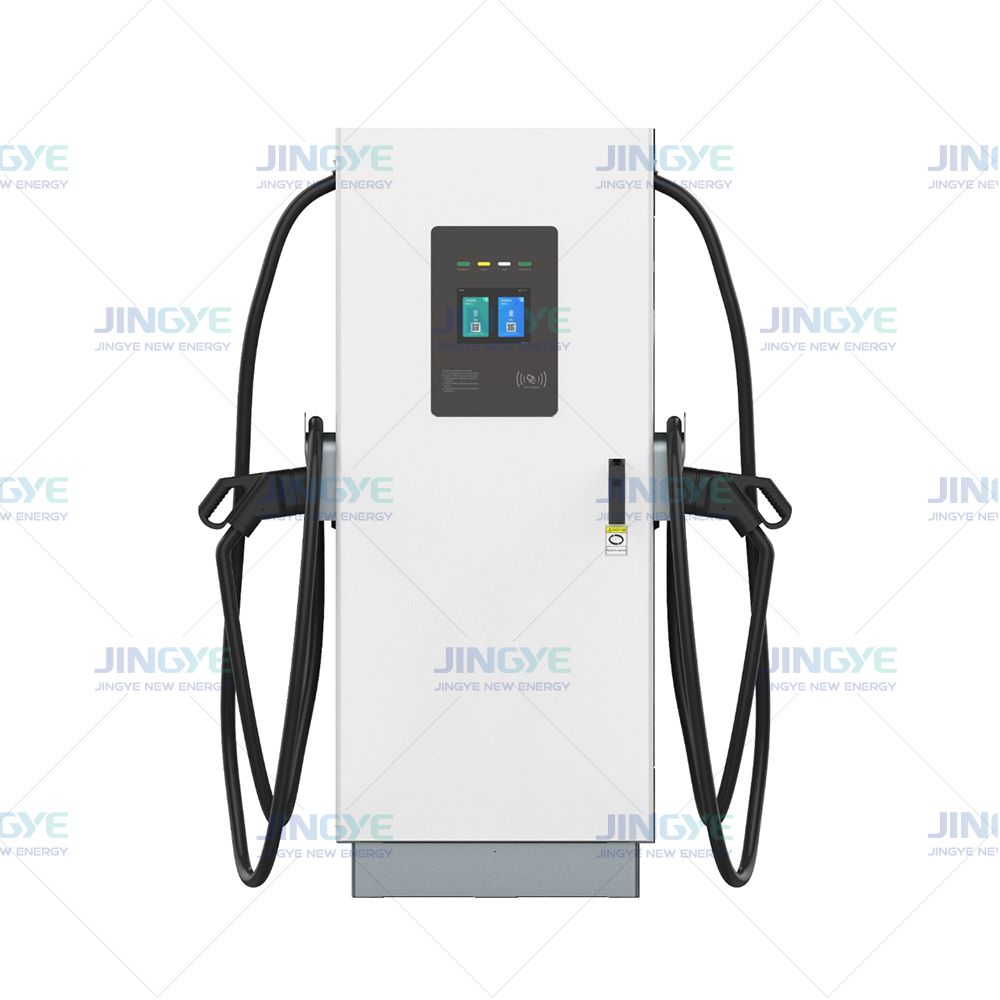
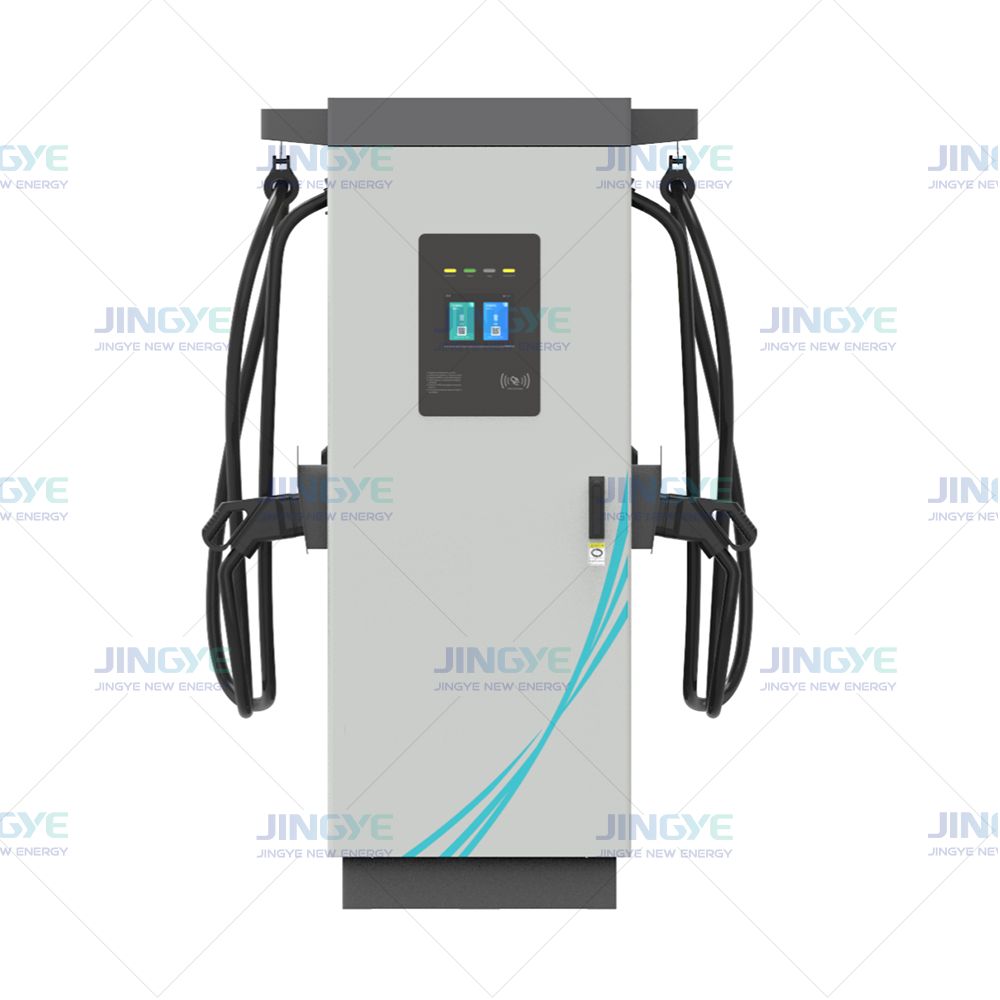
The 40kW–160kW electric vehicle DC charger from Jingye New Energy covers the mid-power range for destination charging, fleet depots, workplaces, and commercial parking. As a commercial EV charger manufacturer, we build it for dependable everyday fast charging at a lower grid-connection cost than ultra-high-power stations. Validated in our CNAS-accredited lab; OEM/ODM available.
Mid-power range: 40kW to 160kW DC — ideal for locations where vehicles dwell for a while.
Platform support: 200V–1000V output supports both 400V and 800V EV platforms.
High efficiency: ≥94% average efficiency with ≥0.99 power factor.
Clean output: Voltage/current precision and ripple ≤0.5%.
Outdoor IP54 enclosure: Weather-rated for reliable outdoor commercial installation.
Lower grid cost: A cost-efficient alternative to ultra-high-power stations for depots and destinations.
As a direct commercial EV charger manufacturer, we quote by power level, connectors, and quantity, with OEM/ODM options. Tell us your site type and number of charging points for a price and quotation.
It's suited to destination charging, fleet depots, workplaces, and commercial parking — sites where vehicles are parked long enough that mid-power charging is ideal and more cost-efficient than ultra-high-power stations.
Its 200V–1000V output supports both 400V and 800V EV platforms — passenger cars, vans, and light commercial vehicles.
Yes. It uses an IP54-rated, weather-resistant enclosure designed for outdoor commercial installation.
Yes. We customize power configuration, connectors, and communication protocols.
Main Technical Parameter
Jingye’s 40kW–160kW commercial DC EV charger is designed for fleet depots, workplaces, hotels, shopping centers, commercial parking facilities and other locations where electric vehicles normally remain parked for 30 minutes to several hours.
The charger provides an adjustable DC output from 200V to 1000V, supporting both 400V and 800V electric vehicle platforms. Power configurations within the 40kW–160kW range allow project owners to balance charging speed, daily vehicle demand and available transformer capacity without installing an unnecessarily high-power charging system.
With an IP54-rated enclosure, air-cooling design, average efficiency of at least 94% and a power factor of at least 0.99, the charger is suitable for dependable indoor or outdoor commercial charging projects.
These values are based on the technical specifications currently published for this charger series.
Not every commercial charging site requires a 240kW or higher charging system. At workplaces, hotels, fleet parking areas and destination charging sites, vehicles usually remain parked longer than they do at highway charging stations.
A medium-power DC charger can provide practical charging speed while helping the project owner control:
The most suitable power level depends on the vehicle battery, available parking time and number of vehicles that need to charge each day.
| Charger Power | Recommended Applications | Typical Selection Logic |
| 40kW–60kW | Hotels, workplaces, smaller commercial parking sites | Longer parking time and limited grid capacity |
| 80kW–100kW | Delivery fleets, dealerships and medium-sized parking facilities | Moderate vehicle turnover and faster daytime charging |
| 120kW | Fleet depots, shopping centers and mixed commercial sites | Balance between charging speed and transformer demand |
| 160kW | Higher-use fleet depots and commercial charging hubs | Shorter turnaround time and higher daily vehicle volume |
This table provides an application guideline rather than a fixed technical rule.
Actual charging performance also depends on:
A vehicle will not continuously charge at 160kW simply because it is connected to a 160kW charger.
The 40kW–160kW DC EV charger is suitable for commercial fleets that have predictable arrival and departure schedules.
Typical applications include:
Fleet charging design should consider the number of vehicles, battery capacity, daily mileage, parking window and number of vehicles charging simultaneously.
For vehicles parked overnight, several medium-power charging points may offer better fleet coverage than one high-power charger.
Employees and company vehicles often remain parked for several hours. Medium-power DC charging can provide faster charging than standard AC charging without creating the same grid demand as an ultra-high-power public charging station.
Important considerations include:
Hotels, resorts and destination facilities need charging equipment that can restore useful driving range while guests stay, dine or attend events.
The 40kW–160kW range allows the operator to select a charger based on expected dwell time and customer turnover rather than installing the maximum available charging power.
Shopping centers and commercial parking operators can use medium-power DC chargers to provide faster charging during visits lasting from approximately 30 minutes to several hours.
Project planning should account for:
Dealerships and service facilities may need to charge different 400V and 800V vehicles during inspection, delivery preparation, repair or demonstration.
The wide 200V–1000V output range helps support different vehicle battery platforms, subject to connector and communication compatibility.
The charger provides an output-voltage range from 200V to 1000V, allowing it to serve vehicles based on both 400V and 800V battery architectures.
However, output-voltage range alone does not confirm complete vehicle compatibility. Buyers must also confirm:
The specific connector standards supported by Jingye should be confirmed before they are listed on the page.
The charger uses a 400V±15%, three-phase five-wire TN-S input and supports a 45–65Hz grid frequency.
Before selecting the charger, the project owner should provide:
The electrical infrastructure should be designed around expected simultaneous charging demand, not only the total number of installed chargers.
This mid-power range fits locations where vehicles park for 30 minutes to a few hours — fleet depots, workplaces, hotels, shopping centers, and commercial parking. It provides genuine DC fast charging while requiring a smaller grid connection than 240kW+ highway stations, which lowers installation and operating costs.
The output voltage is adjustable from 200V to 1000V, covering both 400V and 800V EV platforms — passenger cars, vans, and light commercial vehicles.
Average efficiency is ≥94% at 50% load and above, with a power factor of ≥0.99, keeping electricity losses and operating costs low.
Yes. The IP54-rated enclosure protects against dust and water splashes, making the charger suitable for outdoor commercial installations. Cooling is handled by a reliable air-cooling design.
Yes. Output voltage error, voltage precision, current precision, and ripple factor are all ≤0.5% across the full output range, and the unit is tested to 2500VAC withstand voltage with ≥20MΩ insulation resistance.
The 40-160kW series is optimized for destination and depot charging, while the 60-240kW series extends to higher power for highway and high-traffic public stations. Our team can help you choose based on your site's traffic and grid capacity.
Yes — Jingye manufactures both EV chargers and battery energy storage systems, enabling storage-plus-charging solutions that reduce grid connection costs and support fast charging on sites with limited grid capacity.
| No. | Items | Specifications | Remarks |
| 1 | Input Voltage | 400V±15% | The parameters on the nameplate shall prevail. |
| 2 | Input Voltage Type | TN-S(Three Phase Five Wire) | TN-S (Three Phase Five Wire) |
| 3 | AC Grid Frequency | 45-65Hz | |
| 4 | Output Voltage | 200V-1000V | The parameters on the nameplate shall prevail. |
| 5 | Output Voltage Error | ≤0.5% | Full output range |
| 6 | Output Current Error | When Output current≥30A:≤±1% When output current< 30A:≤±0.3A |
Full output range |
| 7 | Stabilized Voltage Precision |
≤0.5% | Full output range |
| 8 | Stabilized Current Precision |
≤0.5% | Full output range |
| 9 | Ripple Factor | ≤0.5% | Full output range |
| 10 | Average efficiency | ≥94% | 50%and above load |
| 11 | Power Factor | ≥0.99 | 50%and above load |
| 12 | Leakage current | ≤10mA | |
| 13 | Power Frequency Withstand Voltage |
2500VAC | No insulation breakdown and flashover within 1 min |
| 14 | Insulation Resistance | ≥20MQ | Test voltage 1000VDC |
| 15 | IP level | IP54 | |
| 16 | Cooling Method | Air Cooling |
Let’s Get Started on Your New Energy Journey.