Sep 08, 2026
You spent money on solar panels to slash your electricity bill — and yet, when the statement arrives, it's still surprisingly high. You're not alone, and your panels probably aren't faulty. The problem is almost always the same, and once you understand it, the fix is simple.
Solar panels only produce power while the sun is shining. But most households use the majority of their electricity in the evening and at night — cooking, lighting, air conditioning, TVs, charging devices — exactly when the panels have stopped producing.
So during the day your system often makes more power than you need and exports the surplus to the grid for a small feed-in rate. Then at night you buy that power back from the grid at a much higher price. You're selling low and buying high, every single day. That gap is why the bill stays high.
The fix is battery storage. A home battery captures the excess solar your panels make during the day and lets you use it in the evening and overnight — instead of buying expensive grid power. This is called self-consumption, and it's the difference between a solar system that half-works and one that genuinely cuts your bill.
With storage, your own cheap daytime solar covers your expensive evening usage. Many homes go from using 30–40% of their solar to using 70–90% of it — and the bill finally drops.
It depends on how much energy you use after sunset. As a rough guide:
The smart move is a modular, scalable battery — start with what you need today and add units as your usage grows, rather than over-buying up front.
The inverter is the brain of the system. A hybrid inverter manages the flow between your panels, your battery, your home and the grid — charging the battery with surplus solar by day and discharging it at night automatically. Pairing a quality inverter with the right battery is what makes self-consumption actually work.
Will a battery completely eliminate my electricity bill? Not always — but properly sized solar-plus-storage can dramatically reduce it, and in many homes cover the large majority of usage.
Can I add a battery to an existing solar system? Yes. With a hybrid or retrofit setup, storage can be added to most existing solar installations.
How long do home batteries last? Quality LFP batteries are designed for thousands of cycles — typically many years of daily use.
Is lithium battery storage safe at home? LFP chemistry is known for its thermal stability, and a good battery includes a built-in BMS for full cell-to-module protection.
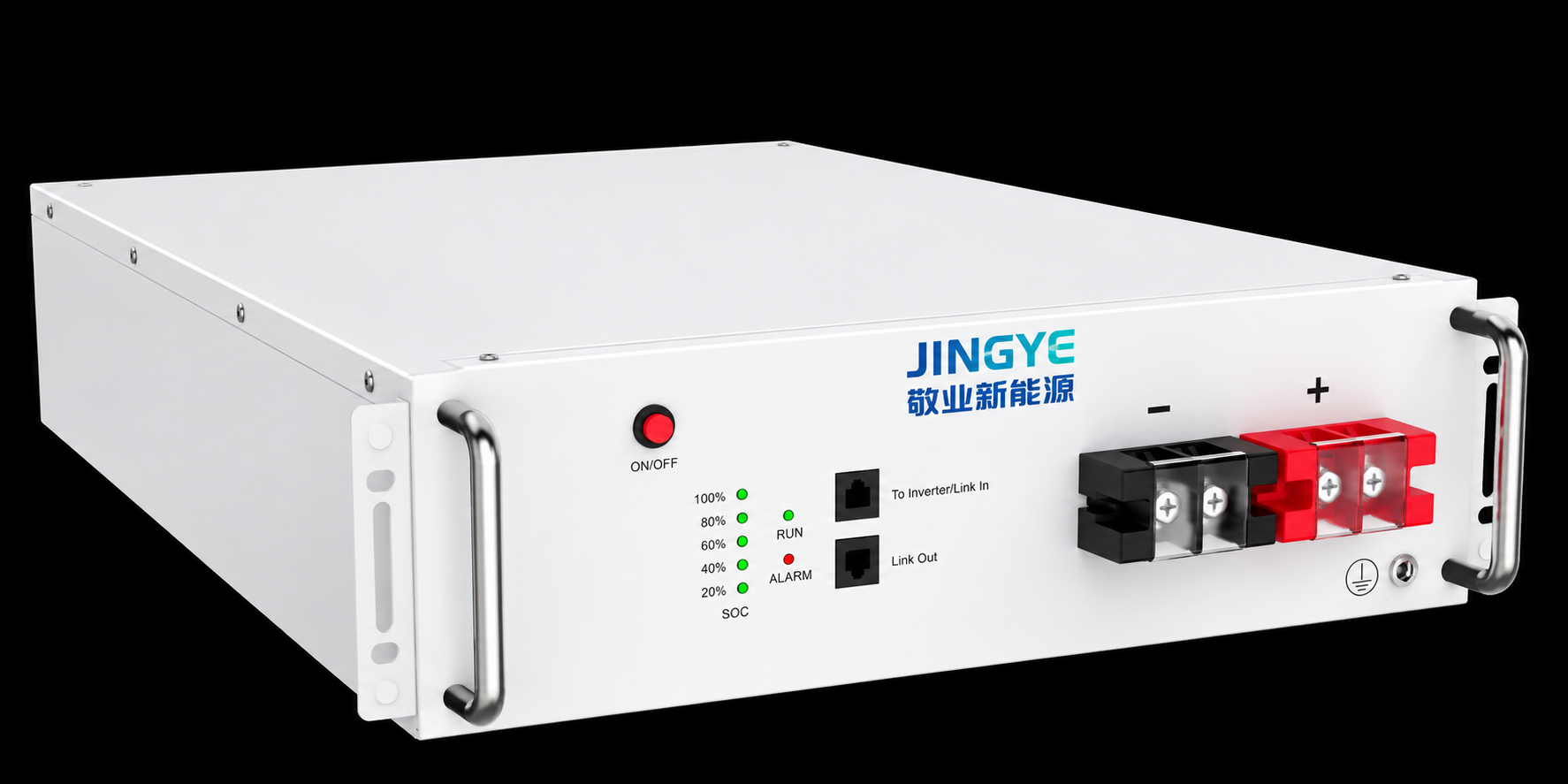
Jingye New Energy supplies residential LiFePO4 storage batteries (scalable from a few kWh up to cabinet-scale systems) and matched solar inverters for homes and small commercial sites — the pieces that turn daytime solar into evening savings. Contact us for a system recommendation or distributor pricing.
Oct. 23, 2026
Energy Storage Cabinet vs Containerized BESS: Key Differences
When buyers compare Energy Storage Cabinets with containerized battery energy storage systems, they are usually trying to answer a practical question: which format will deliver reliable power, acceptable operating costs, and a safe installation for the intended site? The right choice depends on capacity, available space, cooling conditions, fire protection requirements, maintenance resources, and
Oct. 22, 2026
EV Charger Preventive Maintenance: Key Practices for Long-Term Reliability
EV charger preventive maintenance helps charging operators protect uptime, safety, and revenue over many years. A planned service program is more reliable than waiting for a fault after a vehicle cannot charge. This guide explains DC fast charger maintenance, EV charging station inspection, and charging cable inspection in simple steps.
Oct. 20, 2026
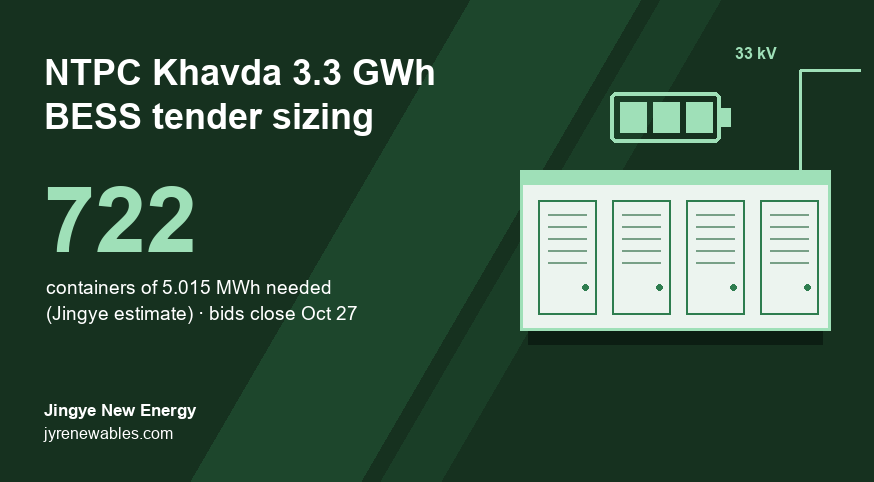
NTPC Khavda 3,300 MWh BESS Tender: How Many Containers You Really Need (2026)
NTPC Green Energy's 1,100 MW / 3,300 MWh Khavda battery tender closes on October 27, 2026. Because capacity is counted as AC energy at the grid point, we estimate it needs about 722 containers of 5.015 MWh, roughly 10% more installed battery than the headline figure.
Let’s Get Started on Your New Energy Journey.