Oct 01, 2026
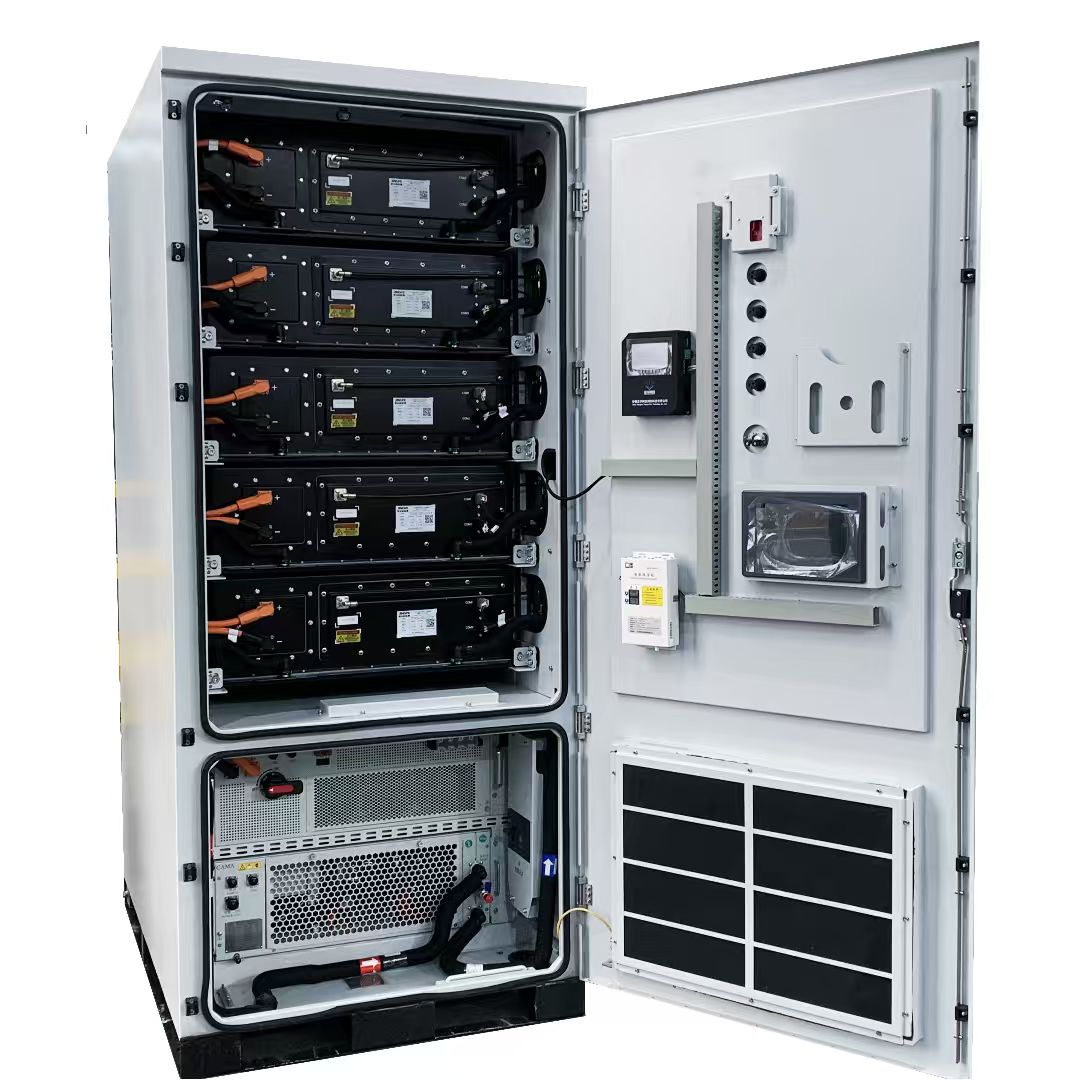
Energy Storage Cabinets help commercial facilities control when electricity is purchased, reduce exposure to demand charges, and improve power reliability. However, the best operating strategy depends on whether the facility needs to reduce short-duration power spikes, move energy from expensive periods to cheaper periods, or combine both approaches. This guide compares peak shaving and load shifting through operating principles, core parameters, actual use experience, economics, and suitability for different purchasing groups.
For businesses evaluating commercial battery systems, the central question is not simply which strategy sounds better. The real question is which strategy matches the facility's tariff structure, load profile, available space, backup requirements, battery operating limits, and expected return on investment.

Peak shaving uses a battery to discharge during short periods when a facility's power demand approaches a tariff threshold or contracted capacity limit. The battery supplies part of the load, so the facility draws less power from the utility during that interval.
For example, a commercial building may normally operate at 600 kW but briefly reach 900 kW when air conditioning, elevators, pumps, and production equipment operate at the same time. A battery system can discharge 200 kW during the critical interval and reduce the grid demand to approximately 700 kW.
Peak shaving is especially valuable when the utility calculates demand charges from the highest 15-minute or 30-minute average demand during a billing period. A short event can affect the entire month's electricity bill, so a battery with sufficient power output can create substantial savings even if its energy capacity is relatively modest.
Load shifting charges the battery when electricity prices are low and discharges it when electricity prices are high. The purpose is to change the timing of energy purchases rather than only reduce a brief power spike.
A facility may charge the battery overnight or during a solar generation period and discharge it during an afternoon or evening peak tariff period. This strategy can operate for several hours and generally requires more battery energy capacity than peak shaving.
Load shifting is most attractive where time-of-use price differences are large, the expensive period lasts several hours, and the facility has a predictable daily load profile.
Many commercial facilities need both services. The battery can shift energy throughout the day while preserving a portion of its state of charge for unexpected demand spikes. During a critical interval, the energy storage controller temporarily prioritizes peak shaving over normal load shifting.
This hybrid approach requires more advanced energy management software. The controller must understand utility tariffs, demand thresholds, battery state of charge, weather conditions, solar output, operating schedules, and backup priorities.
Peak shaving is power intensive because the system must respond quickly and deliver a high output for a relatively short period. Load shifting is energy intensive because the system must deliver energy for a longer period, even if the discharge power is moderate.
| Parameter | Peak Shaving | Load Shifting | Why It Matters |
|---|---|---|---|
| Primary objective | Reduce short demand peaks | Move energy use from expensive periods to cheaper periods | Determines the operating schedule and battery sizing method |
| Typical discharge duration | 15 minutes to 2 hours | 2 to 6 hours | Longer discharge requires more usable energy capacity |
| Primary sizing factor | Power rating in kW or MW | Energy capacity in kWh or MWh | Prevents the system from having high energy capacity but insufficient output power |
| Response speed | Seconds to minutes | Usually scheduled in advance | Fast controls are essential for demand threshold protection |
| Typical tariff benefit | Lower demand charges | Lower time-of-use energy charges | The tariff structure determines the available savings |
| Battery cycling pattern | Irregular or event driven | Often one or two planned cycles per day | Cycle frequency affects degradation and warranty conditions |
| Required control precision | High, because a missed threshold can reduce savings | Moderate to high, depending on price variation | Accurate forecasting improves financial performance |
| Common battery size | High kW relative to kWh | Higher kWh relative to kW | The correct power to energy ratio controls capital cost |
| Best commercial fit | Facilities with brief, expensive demand peaks | Facilities with predictable daily price differences | Matching the system to the load profile improves payback |
Assume a facility wants to reduce a 200 kW demand spike for 30 minutes. The theoretical energy requirement is:
Now assume the same facility wants to replace 200 kW of grid electricity for four hours during a high-price period:
The example shows why a peak shaving system can be compact while a load shifting system may require a much larger Energy Storage Cabinet installation.
Commercial systems commonly use lithium iron phosphate batteries because they offer strong thermal stability, long cycle life, and a lower risk profile than many alternative lithium chemistries. Under suitable operating conditions, a commercial battery system may deliver approximately 4,000 to 8,000 equivalent full cycles, although the actual result depends on cell quality, depth of discharge, temperature, charging speed, and maintenance.
Peak shaving may appear easier on the battery because each event is short. However, frequent unexpected events can create irregular cycling and repeated high-power operation. Load shifting usually follows a predictable daily schedule, but it may use a deeper discharge window and complete more equivalent cycles over the year.
Purchasers should review the following battery life conditions instead of relying only on a cycle count:
In daily commercial operation, stability is determined by the complete system, including battery modules, battery management system, power conversion system, thermal management, fire protection, energy management software, communication networks, and site electrical equipment.
A stable system should be able to:
Peak shaving is particularly sensitive to control stability. If the controller reacts too slowly, the facility may exceed its demand target before the battery starts discharging. If it reacts too aggressively, the system may create unnecessary charge and discharge actions or cause the battery to reach its reserve limit too early.
Load shifting is more sensitive to forecast accuracy. If the controller charges during a period that later becomes expensive, or discharges before the actual price peak begins, the expected savings can fall quickly.
A battery cannot provide unlimited services at all times. A system that discharges completely during load shifting may have no energy available for a sudden demand peak or backup event later in the day.
Practical systems therefore use operating reserves such as:
These reserves improve reliability but reduce the amount of energy available for tariff savings. The financial model must account for this tradeoff.
Peak shaving can produce a strong financial result with a relatively small battery if the facility has a high demand charge and a clear recurring peak pattern.
Peak shaving also has limitations:
Load shifting can generate recurring savings where electricity prices vary significantly between off-peak and peak periods.
Load shifting has its own limitations:
A hybrid system can use the battery for load shifting under normal conditions and reserve capacity for peak shaving. This may create more revenue streams, but it also adds control complexity.
Before selecting a hybrid operating mode, purchasers should verify whether the energy management system can:
Peak shaving cannot be evaluated accurately from a monthly electricity bill alone. The purchasing team should collect at least 12 months of 15-minute or 30-minute interval demand data, depending on the utility tariff.
The analysis should identify:
A system with a high power rating may not be economical if the peak occurs only once a year. Conversely, a smaller system may fail financially if it cannot reliably control the recurring monthly peak.
The gross price difference between off-peak and peak electricity is not the same as the net savings. The calculation should include charging losses, discharging losses, auxiliary consumption, demand charges, maintenance, financing costs, and battery degradation.
A basic net energy saving estimate can be structured as follows:
For example, a system with 90 percent round-trip efficiency must purchase approximately 1.11 kWh from the grid to deliver 1 kWh to the facility. The tariff spread must be large enough to offset this energy loss and the long-term cost of battery wear.
Commercial battery projects can have very different payback periods. A facility with high demand charges, frequent peaks, and a well-matched system may achieve a more attractive return than a facility with low tariff differences and irregular operations.
Purchasers should compare at least three scenarios:
The model should also test the effect of a battery capacity fade. A project that is profitable only when the battery operates at its original nameplate capacity may not remain attractive over its useful life.
The power conversion system must deliver enough output to control the facility's demand threshold. Buyers should not select the inverter only by matching the battery energy capacity.
A system with 1,000 kWh of storage but only 100 kW of output may be useful for slow load shifting, but it may not be able to manage a 300 kW demand spike. The power rating must match the facility's highest control requirement.
For load shifting, the purchaser should focus on usable energy rather than only nominal energy. Usable energy is limited by minimum and maximum state of charge settings, temperature derating, conversion losses, and reserve requirements.
Energy Storage Cabinets are installed in commercial environments where safety, noise, heat, and maintenance access are practical concerns. The cabinet design should match the building, electrical room, outdoor location, or containerized installation area.
In hot or cold climates, temperature management can influence both battery life and available power. A low-cost system with insufficient cooling may lose performance during the exact periods when the facility experiences its highest electrical demand.
Peak shaving is usually the better first option for purchasers with the following conditions:
Typical examples include manufacturing plants, cold storage facilities, commercial buildings with large HVAC systems, hotels, shopping centers, and logistics facilities with charging equipment.
Load shifting is generally more appropriate for purchasers with the following conditions:
Typical examples include office campuses, data and communication facilities, retail sites, schools, universities, industrial parks, and solar-powered commercial facilities.
A hybrid configuration is worth considering when the purchaser wants to reduce both demand charges and time-of-use energy costs, maintain backup capacity, integrate solar generation, or participate in demand response programs.
Hybrid systems are most appropriate for organizations that can support:
Organizations without an energy manager may prefer a simpler control strategy, even if a hybrid system appears to offer more theoretical benefits.
The first step is to review the electricity tariff and the facility's actual load behavior. Do not begin by selecting a battery size from a standard product catalog.
The purchasing team should determine whether the primary goal is lower demand charges, lower energy charges, higher resilience, renewable energy utilization, or a combination of these objectives.
Suppliers should be asked to provide performance data under the conditions expected at the site. Nameplate capacity alone does not prove that the system will meet the commercial objective.
Important questions include:
The lowest initial price may not deliver the lowest cost over the project life. The comparison should include equipment, installation, grid connection, commissioning, software, cooling, maintenance, insurance, replacement components, warranty extensions, and eventual decommissioning.
A complete evaluation should also consider the cost of unavailable battery capacity during maintenance and the financial effect of performance degradation.
Peak shaving is the stronger choice when a facility experiences short, recurring demand spikes and pays substantial demand charges. The system should be sized around the required kW output, response time, demand threshold, and reserve state of charge.
Load shifting is more effective when electricity prices vary significantly by time and the facility can follow a predictable daily schedule. The system should be sized around usable kWh, discharge duration, round-trip efficiency, battery cycle life, and price spread.
A hybrid strategy can provide the most complete solution when the facility has demand charges, time-of-use rates, solar generation, and backup requirements. However, the additional value depends on reliable controls, proper reserve management, and accurate financial modeling.
Jingye can be considered by commercial buyers looking for Energy Storage Cabinets that support peak shaving, load shifting, renewable energy integration, and site-specific energy management. The final selection should be based on actual interval data, tariff rules, battery life expectations, system stability, safety requirements, and the facility's long-term operating goals. A correctly sized Energy Storage Cabinet is not simply a battery purchase. It is a power management asset whose value depends on how accurately it matches the site's real electrical behavior.
Oct. 01, 2026
Fleet Depot Charging: Electrical and Infrastructure Considerations
Fleet depot charging must match vehicle schedules, electrical capacity, and the right DC Fast EV Charger Manufacturer. A depot may need managed charging, load balancing, and a reliable charging network to keep buses, trucks, vans, or service vehicles ready each day. The main challenge is not only charger power. It also includes utility limits, cable routing, transformer size, parking patterns,
Oct. 01, 2026
Peak Shaving vs Load Shifting in Commercial Energy Storage
Energy Storage Cabinets help commercial facilities control when electricity is purchased, reduce exposure to demand charges, and improve power reliability. However, the best operating strategy depends on whether the facility needs to reduce short-duration power spikes, move energy from expensive periods to cheaper periods, or combine both approaches. This guide compares peak shaving and load
Sep. 30, 2026
C&I Battery Storage in Germany: Costs, Payback and Sizing Guide (2026)
What does commercial battery storage cost in Germany in 2026? Price ranges per kWh, a worked payback example for a 261 kWh cabinet, a sizing guide, and the grid rules and incentives German businesses need to know.
Let’s Get Started on Your New Energy Journey.