Sep 28, 2026
If your electricity bill is rising because of short, high-power peaks, we can solve the problem in a simple sequence: review 12 months of interval data, identify the tariff’s demand-charge window, size Energy Storage Cabinets for the target peak, and configure an automated energy management system to discharge before the peak is billed. This step-by-step approach helps businesses reduce avoidable kW charges while maintaining reliable operations with Jingye commercial energy storage solutions.
Commercial electricity bills commonly include two separate components:
A facility may consume a moderate amount of electricity overall but still receive a high demand charge after operating several large loads simultaneously. For example, a warehouse could start refrigeration compressors, HVAC equipment, conveyor motors, and electric vehicle chargers within the same 15-minute interval. The resulting demand spike may determine the bill for the entire month.
Commercial battery storage addresses this issue through peak shaving. The battery charges during lower-cost or low-demand periods and discharges during high-load intervals. The goal is not necessarily to power the entire facility. Instead, the system supplies enough power to keep grid demand below a predefined threshold.
Assume a commercial facility has the following tariff:
| Item | Example value |
|---|---|
| Monthly peak demand | 500 kW |
| Demand-charge rate | $20/kW |
| Monthly demand charge | $10,000 |
| Target peak after storage control | 400 kW |
| Potential demand-charge reduction | $2,000/month |
In this example, reducing the peak by 100 kW can lower the demand charge by approximately $2,000 per month, before considering battery efficiency, tariff rules, taxes, and other utility adjustments.
This is why How Commercial Energy Storage Helps Reduce Demand Charges is primarily a power-management question, not only a battery-capacity question. The system must respond quickly enough and intelligently enough to control the facility’s kW profile.
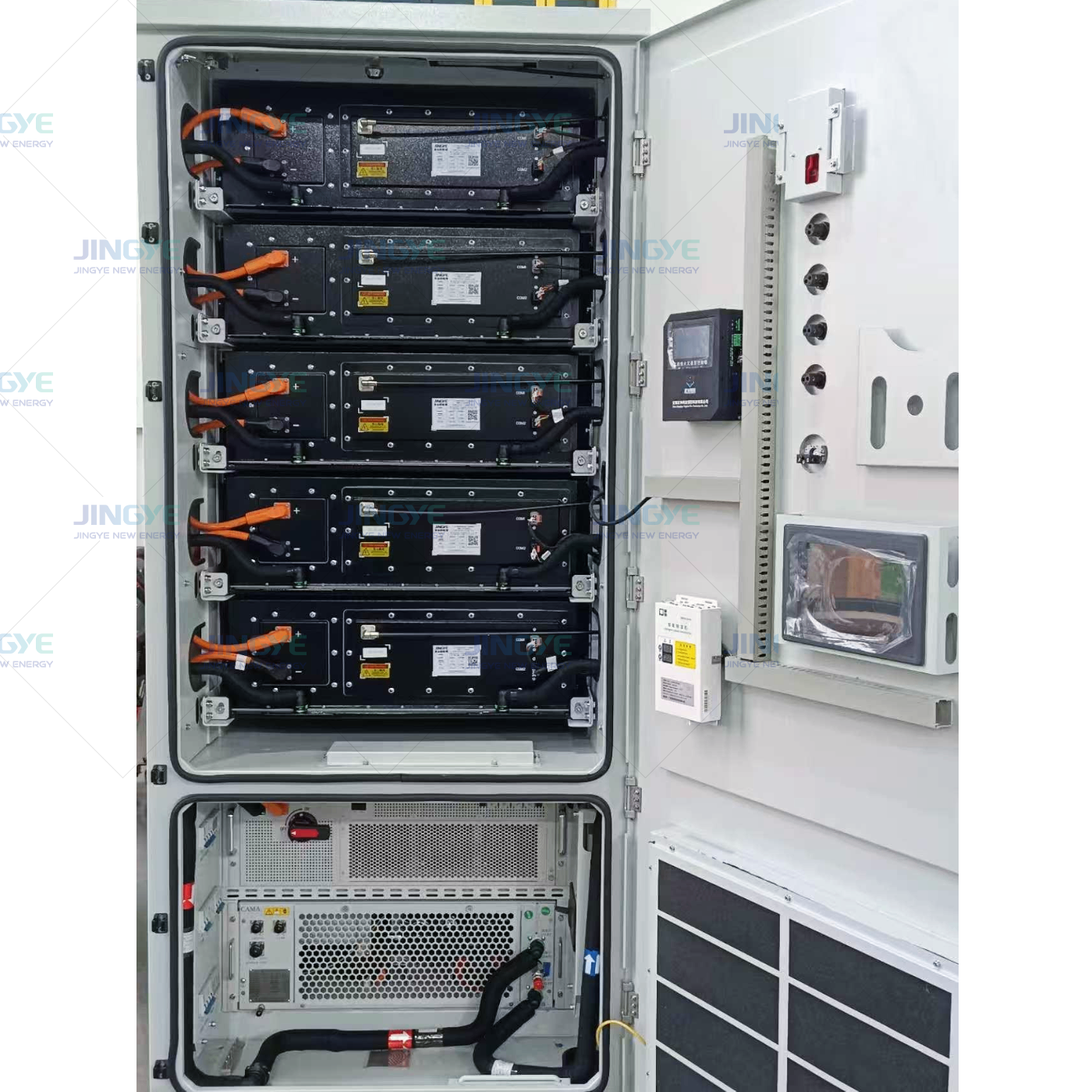
Jingye Energy Storage Cabinets are designed for commercial and industrial applications that require coordinated battery storage, power conversion, thermal management, and safety controls in one integrated solution.
A commercial system normally includes:
The battery stores energy in kWh, while the PCS determines how much power can be charged or discharged in kW. Both ratings matter. A facility with a short but severe peak may require high PCS output, while a facility with a long peak period may require greater battery energy capacity.
Jingye Energy Storage Cabinets can be evaluated according to the customer’s:
!
We recommend collecting at least 12 months of utility bills and interval meter data. Monthly bills alone may not reveal when the peak occurred or which loads caused it.
Gather:
A spreadsheet is sufficient for an initial review. For larger facilities, use an energy analytics platform that can create load-duration curves, peak-demand heat maps, and load forecasts.
Not every high-load device should be controlled by the battery. We first separate predictable loads from unexpected events.
Typical peak-causing equipment includes:
Record the start time, operating duration, and power rating of each major load. A 200 kW motor that operates for 10 minutes may affect demand charges differently from a 100 kW HVAC load that operates continuously for two hours.
This step prevents oversizing. The objective is to control the specific load pattern responsible for the billed peak.
The EMS needs a target grid-import level, sometimes called a demand limit or peak-shaving setpoint.
For example:
We should not set the target too aggressively at the beginning. A target that is 5% to 10% below the historical peak can be used for initial commissioning, followed by data-based optimization.
The control system should also maintain a reserve State of Charge (SOC). If the battery reaches 0% SOC before the demand interval ends, the facility may still create a new peak. A practical operating strategy may reserve 15% to 30% SOC, depending on the application and backup requirements.
Battery sizing requires both power and energy calculations.
The basic formula is:
Required battery power = historical peak demand − target grid demand
For a 500 kW peak and a 400 kW target:
500 kW − 400 kW = 100 kW
The system may require additional power capacity to account for response time, battery degradation, PCS limits, and site conditions.
The basic formula is:
Required battery energy = peak-shaving power × discharge duration
If the battery must provide 100 kW for two hours:
100 kW × 2 hours = 200 kWh
After allowing for usable depth of discharge, round-trip efficiency, temperature effects, and aging, the installed capacity may need to be larger than 200 kWh.
A qualified Jingye project assessment should also examine:
Manual battery operation is not a reliable demand-management strategy. The EMS should monitor facility load and respond automatically.
A typical control sequence is:
The EMS should include ramp-rate limits, alarm notifications, SOC protection, and communication with the building management system. It should also prevent unnecessary battery cycling when the potential demand-charge savings are lower than the cost of charging and degradation.
Demand-charge reduction is often the primary financial benefit, but commercial storage can provide several additional value streams.
When a facility has rooftop solar, Jingye Energy Storage Cabinets can store excess midday generation and discharge later when solar production declines but facility demand remains high. This improves solar self-consumption and reduces grid imports during expensive periods.
If the utility offers different energy rates throughout the day, the battery can charge during off-peak periods and discharge during on-peak periods. This reduces kWh costs while peak shaving reduces kW costs.
With the proper system architecture, commercial storage can support selected critical loads during grid interruptions. However, backup operation requires appropriate islanding controls, transfer equipment, protection coordination, and interconnection approval.
Some systems can help manage voltage fluctuations, reactive power, and power factor. These functions must be confirmed through PCS specifications and site commissioning tests rather than assumed from the battery capacity alone.
A demand-charge project must be financially effective and technically compliant. We recommend confirming the applicable local electrical code and utility requirements before equipment procurement.
Relevant standards and practices may include:
Where applicable, project documentation should include factory acceptance testing, insulation-resistance testing, protection verification, communication testing, emergency-stop testing, and commissioning records. Product quality should be supported by traceable inspection documentation rather than general marketing statements.
Some tariffs calculate demand using a rolling interval, seasonal schedule, or ratchet clause. A battery may reduce one type of peak without reducing the billed demand under another rule.
Solution: Ask the utility or energy consultant to confirm the exact demand-charge calculation before sizing the system.
If the EMS discharges before the actual peak period, the battery may lose SOC and become unavailable later.
Solution: Use interval-data forecasting, weather information, production schedules, and a minimum SOC reserve.
A system may have adequate kWh capacity but insufficient kW output to control a rapid load increase.
Solution: Size the PCS and battery discharge power according to the site’s highest ramp rate, not only its daily energy consumption.
Battery capacity and maximum output can decline over time because of cycling, temperature, and operating conditions.
Solution: Include degradation assumptions in the financial model and specify performance guarantees, warranty conditions, and end-of-life capacity requirements.
Outdoor Energy Storage Cabinets may require foundations, fire clearances, cable routing, grounding, ventilation or cooling provisions, and utility approval.
Solution: Complete a site survey early. Confirm available space, access routes, transformer capacity, fire-code requirements, and protection coordination before finalizing the equipment layout.
Demand charges may not be the only factor affecting project economics. Charging costs, battery degradation, software fees, maintenance, and demand-ratcheting provisions can reduce the actual return.
Solution: Build a 12-month simulation using real interval data. Compare a conservative case, expected case, and high-savings case before approving the investment.
The following resources can make commercial storage planning more efficient:
For a reliable evaluation, compare the expected baseline demand with actual post-installation demand every billing cycle. A 24-hour technical response target can also be valuable for facilities that depend on continuous monitoring, although service-level terms should be confirmed in the project contract.
After commissioning Jingye Energy Storage Cabinets, we should track more than the battery’s charge level.
Key performance indicators include:
A practical review cycle is:
This measurement process confirms whether How Commercial Energy Storage Helps Reduce Demand Charges is producing the expected financial result at the actual facility.
To move from analysis to implementation, follow these five actions:
Before ordering equipment, confirm applicable UL 9540, UL 9540A, NFPA 855, IEC, IEEE, and local code requirements. Also verify the warranty, thermal-management design, remote monitoring functions, maintenance scope, and replacement-part availability.
How Commercial Energy Storage Helps Reduce Demand Charges becomes clear when the project connects accurate tariff analysis with automated peak-shaving controls. By collecting interval data, identifying peak-causing loads, setting a realistic demand target, sizing the PCS and battery correctly, and monitoring performance after commissioning, we can reduce costly kW spikes without disrupting normal business operations.
Jingye Energy Storage Cabinets provide a practical platform for demand management, solar integration, time-of-use optimization, and selected backup applications. The image below represents the type of integrated commercial storage equipment that can be evaluated for a site-specific project.
!
The most effective next step is to prepare your recent utility data and have Jingye evaluate the facility’s load profile. With a properly engineered system, a short demand spike can become a controlled battery-discharge event instead of a recurring charge on every monthly electricity bill.
Sep. 28, 2026
C&I Battery Storage Capacity vs Power Rating: What Is the Difference?
Energy Storage Cabinets are increasingly used by commercial and industrial buyers to reduce peak demand, support critical loads, improve solar self-consumption, and provide backup power. However, many purchasing teams compare systems by price or cabinet size before understanding the two specifications that determine performance: battery storage capacity, measured in kilowatt-hours (kWh), and
Sep. 28, 2026
How Commercial Energy Storage Helps Reduce Demand Charges
If your electricity bill is rising because of short, high-power peaks, we can solve the problem in a simple sequence: review 12 months of interval data, identify the tariff’s demand-charge window, size Energy Storage Cabinets for the target peak, and configure an automated energy management system to discharge before the peak is billed. This step-by-step approach helps businesses reduce
Sep. 25, 2026
400V vs 800V EV Charging: Key Differences for Modern Electric Vehicles
Choosing between a 400 V and an 800 V electric vehicle is no longer only an engineering decision. It affects charging time, highway convenience, battery design, purchase price, charging site requirements, operating cost, and long-term reliability. For drivers, fleet managers, charging operators, and vehicle manufacturers comparing a DC Fast EV Charger Manufacturer, the most useful answer is not
Let’s Get Started on Your New Energy Journey.