Aug 11, 2026
At Huaxi Special Steel, the company that makes the steel also built the power station that keeps the plant running. Both are Jingye. One group — steel on one side, energy storage on the other.
That is the simplest way to understand what makes Jingye New Energy different: we do not just sell batteries, we deploy, own and operate them inside our own group's heavy industry. If a storage system is trusted to run a steel mill, it can run your operation too.
Jingye Group ranks #292 on the Fortune Global 500. Steel is the core business, but the group reaches much further — special steel, additive manufacturing (metal 3D printing), new energy and EV charging, plus pharmaceuticals, hospitality and tourism. Group steel is already exported to more than 130 countries and regions.
Jingye New Energy is the group's energy-storage arm. We build LFP energy storage cabinets, containerized BESS, CCS integrated busbars and commercial-vehicle batteries — all on a single, vertically integrated industrial chain, from raw material to finished system.
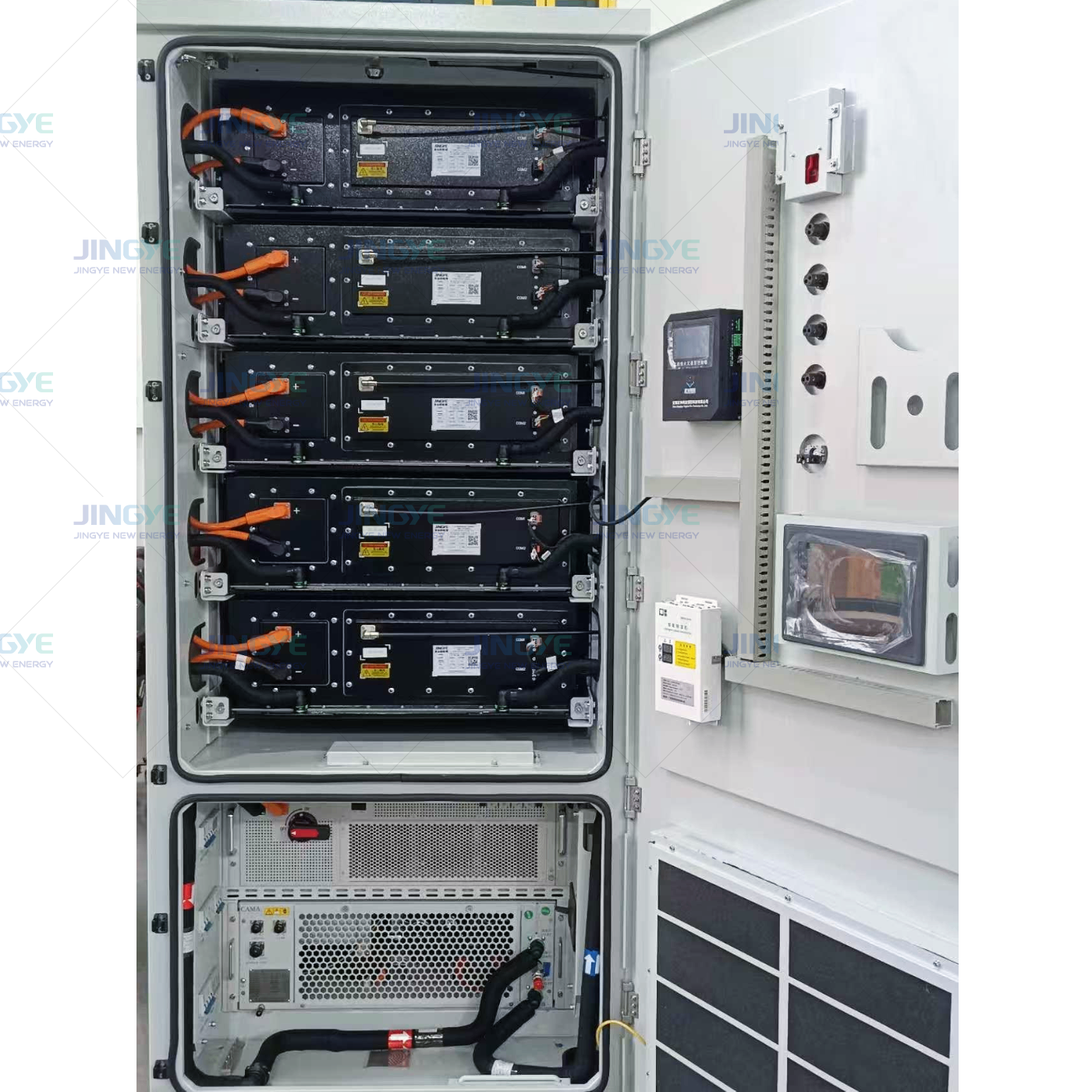
Jingye New Energy designed, financed, built and now operates a 15MW/30.09MWh liquid-cooled energy storage station for Huaxi Special Steel.
Total project investment is approximately 32.5 million yuan. Viewed two ways:
In its first 15 days of grid-connected operation, the station generated over 300,000 yuan in profit.
In Jiangsu, the group built an even larger 50MW/100.32MWh station for another steel operation — same logic, bigger scale.
In August 2026, Jingye New Energy hosted a delegation from Ghana, Burkina Faso, Togo and Francophone Africa to discuss solar-plus-storage and BOO/PPP cooperation. With group steel already in 130+ countries, our energy-storage capability is going global — from products to fully financed projects.
Peak shaving, solar + storage, or build-own-operate — if our systems are trusted to run our own steel mills, they can power yours. Learn more or request a solution at jyrenewables.com.
Hebei Jingye New Energy Technology Co., Ltd. is the energy-storage arm of Jingye Group (Fortune Global 500 #292). It develops, manufactures, sells and operates LFP energy storage systems, CCS integrated busbars, EV chargers and commercial-vehicle batteries.
It is a 15MW/30.09MWh liquid-cooled BESS — six 5.015MWh containers with six 2.5MW integrated PCS & MV skids and a full EMS, running at ~90% system efficiency with two cycles per day. Jingye designed, financed, built and operates it.
ISO 9001, ISO 14001, ISO 45001 and IATF 16949, with products built to GB/T 36276, UN 38.3 and IEC/CE standards, tested in a CNAS-accredited laboratory.
LFP-261kWh and LFP-417kWh C&I storage cabinets, a 5.015MWh liquid-cooled container BESS, commercial DC fast chargers (40–240kW), CCS integrated busbars, and the JY530 commercial-vehicle battery — available via equipment supply, EPC turnkey, or build-own-operate models.
Sep. 28, 2026
C&I Battery Storage Capacity vs Power Rating: What Is the Difference?
Energy Storage Cabinets are increasingly used by commercial and industrial buyers to reduce peak demand, support critical loads, improve solar self-consumption, and provide backup power. However, many purchasing teams compare systems by price or cabinet size before understanding the two specifications that determine performance: battery storage capacity, measured in kilowatt-hours (kWh), and
Sep. 28, 2026
How Commercial Energy Storage Helps Reduce Demand Charges
If your electricity bill is rising because of short, high-power peaks, we can solve the problem in a simple sequence: review 12 months of interval data, identify the tariff’s demand-charge window, size Energy Storage Cabinets for the target peak, and configure an automated energy management system to discharge before the peak is billed. This step-by-step approach helps businesses reduce
Sep. 25, 2026
400V vs 800V EV Charging: Key Differences for Modern Electric Vehicles
Choosing between a 400 V and an 800 V electric vehicle is no longer only an engineering decision. It affects charging time, highway convenience, battery design, purchase price, charging site requirements, operating cost, and long-term reliability. For drivers, fleet managers, charging operators, and vehicle manufacturers comparing a DC Fast EV Charger Manufacturer, the most useful answer is not
Let’s Get Started on Your New Energy Journey.