
EV charging infrastructure for heavy-duty electric trucks must deliver high power without overloading the site. A reliable system combines a megawatt charging system, depot charging, and smart charging load management. It also needs route planning, grid coordination, and safe electric truck charging stations. For many fleets, the correct infrastructure can reduce charging delays, improve vehicle availability, and support a lower operating cost.
Heavy-duty trucks use more energy than passenger cars, travel longer routes, and often operate on fixed schedules. A weak charging plan can cause missed delivery windows, high demand charges, and poor driver productivity. The solution is not simply to install the largest charger. Fleet owners need to match charger power, battery size, parking time, grid capacity, and daily mileage.
1. Start With the Truck Duty Cycle, Not the Charger Rating
The first design question is how the trucks work each day. A regional delivery truck may return to the depot every evening. A long-haul truck may need a fast charge during a short rest period. A refuse truck may charge at night and operate for one shift. Each use case requires a different charging strategy.
Key data to collect before selecting equipment
- Battery capacity in kilowatt-hours
- Daily energy use in kilowatt-hours
- Arrival and departure times
- Average parking time
- Number of trucks charging at the same time
- Available grid power in kilowatts or megawatts
- Required charging level at departure
- Future fleet growth over the next three to five years
For example, a truck with a 600 kWh battery that needs 300 kWh during a depot stop may not need a 1 MW charger. If it has four hours to charge, an average power of about 75 kW may meet the energy target before losses and reserve capacity are included. A truck with only 30 minutes at a public freight stop needs a much higher charging output.
The simple planning formula is:
Required charger power = energy needed divided by available charging time
Allow extra capacity for charging losses, cold weather, battery limits, and unexpected route changes. A design based only on the battery nameplate can lead to underpowered equipment or unnecessary capital cost.
2. Choose the Right Power Level for Each Charging Location
High power DC fast charging is important for heavy-duty vehicles, but the best power level depends on the site. A depot with eight hours of parking may use medium-power DC chargers. A highway truck stop may need a 350 kW charger or a future megawatt charging system. A mixed fleet site may need several power levels in one charging area.
| Charging location | Typical parking time | Useful power range | Main purpose |
|---|---|---|---|
| Overnight fleet depot | 6 to 12 hours | 60 to 180 kW per truck | Low-cost scheduled charging |
| Urban delivery hub | 1 to 4 hours | 120 to 300 kW per truck | Midday opportunity charging |
| Regional logistics yard | 30 to 120 minutes | 240 to 500 kW per truck | Fast turnaround between routes |
| Highway freight charging site | 15 to 45 minutes | 350 kW to 1 MW or more | Long-distance travel and short stops |
Why maximum power is not always the best choice
A 1 MW charger can shorten a charging session, but it can also increase transformer size, installation cost, cooling needs, and utility demand charges. If trucks stay parked overnight, a lower power charger with intelligent scheduling may deliver the same result at a lower total cost.
The charger should also match the truck battery system. Charging performance can be limited by the vehicle battery, battery temperature, state of charge, and vehicle communication system. A high-rated charger does not guarantee that the truck will accept its full rated power during the complete session.
3. Plan Grid Capacity, Power Sharing, and Expansion Together
Grid capacity is one of the most common barriers for commercial EV charging infrastructure. A fleet depot with ten trucks may need much less power when charging is staggered. Without control software, ten 200 kW chargers could create a theoretical 2 MW load. With dynamic power sharing, the same site may operate within a lower approved power limit.
Use a layered power design
- Confirm the utility connection and site voltage.
- Measure the existing building and yard load.
- Set the maximum charging power allowed by the utility.
- Divide available power between active vehicles.
- Prioritize trucks with earlier departure times.
- Reserve capacity for future chargers and new vehicles.
Charging load management can reduce peak demand by delaying flexible sessions. For example, a truck that departs at 7:00 a.m. should receive priority over a truck that departs at 10:00 a.m. The software can lower power when the site load rises and restore power when capacity becomes available.
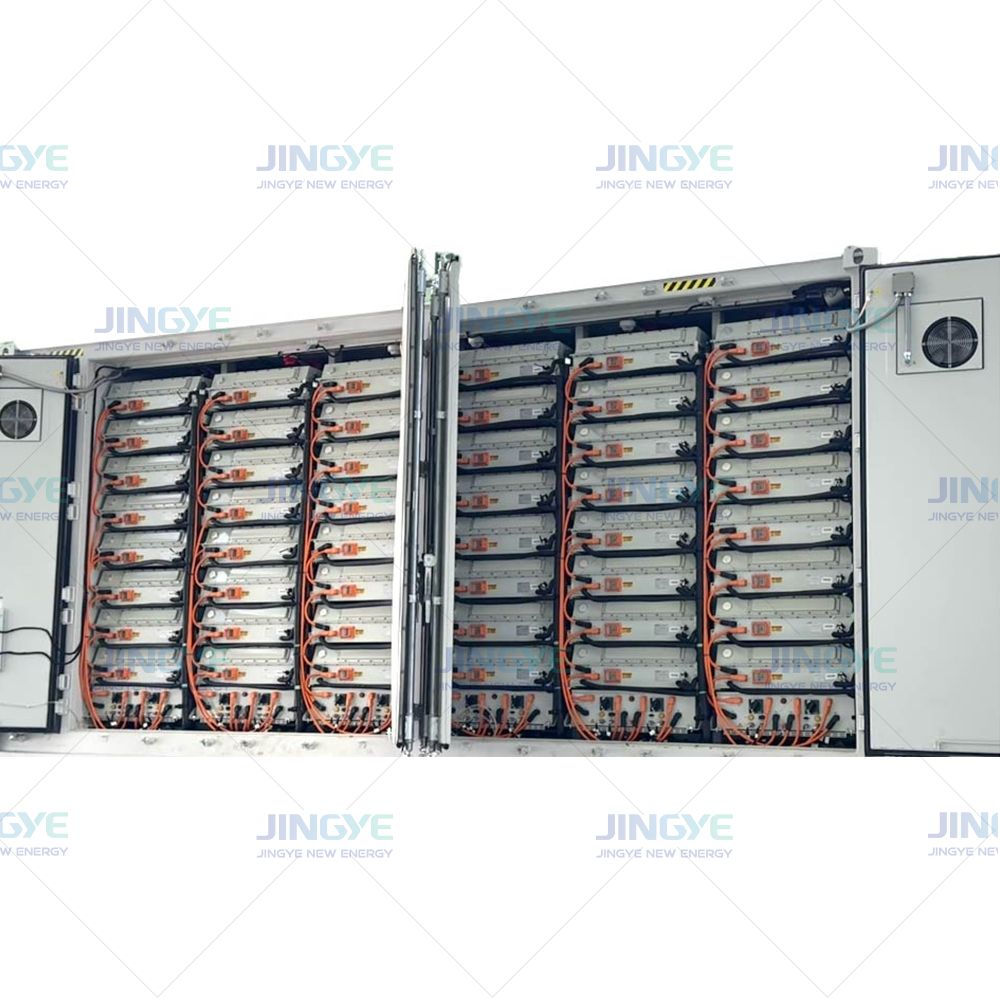
Energy storage can also support a site with a limited grid connection. A battery energy storage system may discharge during the busiest charging period and recharge later. This approach can reduce the need for a larger utility upgrade, but the financial result depends on electricity prices, demand charges, battery cost, and operating hours.
Expandable infrastructure protects the first investment
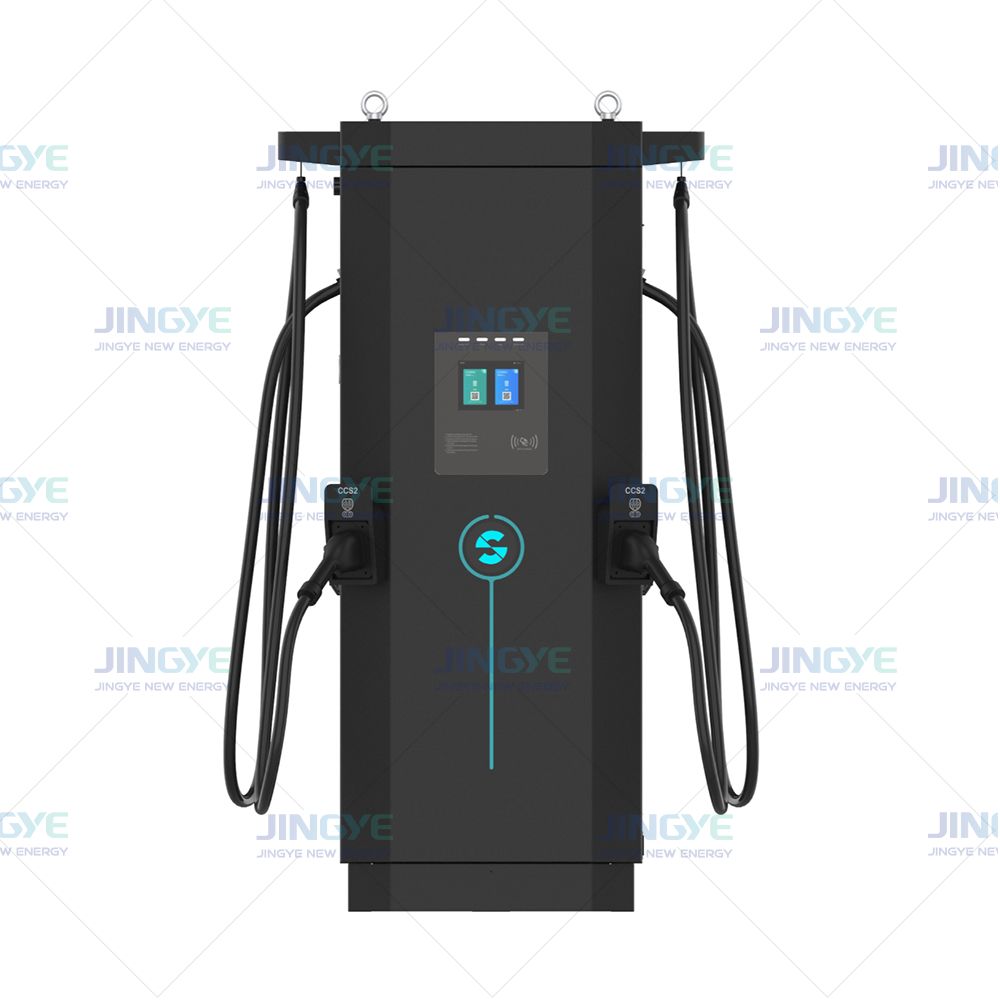
Use spare electrical space, modular power cabinets, open cable routes, and reserved parking positions where possible. A site built for six trucks may need to support twenty trucks later. Modular DC fast charging equipment from Jingye can help fleet operators add capacity in stages instead of rebuilding the entire site.
4. Design for Safety, Weather, and Daily Fleet Operations
Heavy-duty charging sites face more physical stress than passenger car locations. Trucks have larger turning areas, longer wheelbases, and heavier traffic. Charging equipment must be positioned to protect cables, connectors, power cabinets, and drivers. The layout should allow a truck to enter, charge, and leave without complex reversing movements.
Important site design checks
- Provide enough space for the longest vehicle and trailer combination.
- Protect chargers from truck impact with barriers or bollards.
- Keep cables away from driving lanes and standing water.
- Use clear signs for vehicle position and charging steps.
- Provide lighting for night operations.
- Maintain safe access for inspection and service.
- Use equipment suitable for local temperature, dust, rain, and humidity.
Thermal management is especially important at high charging power. DC fast chargers produce heat in power modules, cables, and connectors. Liquid-cooled cables can make high-current handling easier and reduce cable size, but they require additional monitoring and maintenance. The equipment should provide protection against overvoltage, overcurrent, overheating, insulation faults, and communication errors.
Charging standards also affect fleet compatibility. Many commercial vehicles use CCS charging, while newer heavy-duty applications may adopt dedicated high-power systems such as the Megawatt Charging System. Buyers should confirm connector type, voltage range, current range, communication protocol, and local certification before placing an equipment order.
5. Connect Charging Software With Fleet Management
Hardware delivers energy, but software controls when and how that energy is delivered. A fleet charging management system should receive vehicle schedules, charger status, energy prices, and site power limits. It can then create a charging plan that supports route completion with the lowest practical energy cost.
Useful software functions for truck fleets
- Real-time charger and vehicle status
- Remote start, stop, and reset
- Scheduled and delayed charging
- Dynamic power allocation
- User and vehicle identification
- Energy and cost reports
- Fault alerts and maintenance records
- Integration with fleet management systems
Software should also show the reason for a delayed charge. A dispatcher needs to know whether the delay is caused by a full power limit, a connector fault, a vehicle problem, or an unfinished previous session. Clear data helps operators act before a truck misses its departure time.
Sample charging priority rules
- Charge vehicles with the earliest departure time first.
- Give priority to trucks below the required energy level.
- Use lower power for trucks with long parking periods.
- Pause flexible sessions during peak electricity periods.
- Keep a reserve for emergency route changes.
6. Use This Step-by-Step Process for a Truck Charging Project
A structured process reduces design errors and makes supplier comparison easier. The following flow can be used by logistics companies, truck dealers, construction fleets, bus operators, and overseas distributors.
List truck models, battery sizes, routes, mileage, and departure times.
Estimate daily kWh use, reserve energy, and required charging time.
Review grid power, transformer space, cable routes, parking, and local rules.
Choose charger power, connectors, cooling, power sharing, and software.
Install equipment, complete safety checks, and test every vehicle type.
Track uptime, energy cost, faults, and fleet growth before adding capacity.
During commissioning, test real operating conditions rather than only an empty charger. Check charging at different battery levels, reduced grid power, high outdoor temperature, and simultaneous sessions. Confirm that emergency stop functions, alarms, payment or access controls, and remote monitoring work correctly.
7. Compare Charger Suppliers by Total Fleet Value
Purchase price is only one part of the decision. A low-cost charger may become expensive if it has long repair times, limited spare parts, poor software, or no local technical support. Overseas buyers and distributors should assess the complete supplier package before signing a contract.
| Supplier evaluation area | Questions to ask | Why it matters |
|---|---|---|
| Power performance | What power is continuous, and what power is temporary? | Prevents incorrect charging time estimates |
| Compatibility | Which truck models, connectors, and protocols are supported? | Reduces vehicle integration problems |
| Reliability | How are uptime, fault history, and service response measured? | Protects fleet productivity |
| Environmental rating | Can the equipment operate in local heat, cold, dust, and rain? | Supports stable outdoor operation |
| Service support | Are manuals, spare parts, training, and remote support available? | Shortens downtime and simplifies maintenance |
| Expansion | Can more power modules or charging points be added later? | Protects long-term infrastructure value |
Ask for a complete technical file that includes electrical specifications, protection functions, operating temperature, ingress protection, installation requirements, warranty terms, software features, and recommended maintenance. A professional manufacturer should explain both the rated output and the expected real-world performance.
8. Measure the Results After Installation
Fleet charging infrastructure should be managed with clear performance indicators. Measuring the system after installation can reveal whether the original design matches actual operations.
Recommended key performance indicators
- Charger uptime percentage
- Average charging session duration
- Energy delivered per truck per day
- Peak site demand in kilowatts
- Energy cost per kilometer
- Number of incomplete charging sessions
- Average fault response time
- Truck departure success rate
If many trucks finish charging long before departure, the fleet may be able to shift sessions to lower-cost periods. If trucks regularly leave with low battery levels, the site may need more chargers, higher power, better scheduling, or a change in route planning. Data turns charging infrastructure from a fixed asset into an active operating tool.
Frequently Asked Questions
How much power does an electric truck charger need?
Power needs vary by truck battery, route, and parking time. Overnight depot charging may use 60 to 180 kW per truck. Fast regional charging may need 240 to 500 kW. Highway freight sites may use 350 kW to 1 MW or more. The correct value comes from energy required divided by available charging time.
Is a megawatt charging system required for every heavy-duty truck?
No. A megawatt charging system is useful when a truck must receive a large amount of energy during a short stop. Trucks that park for several hours can often use lower power DC charging. Selecting the right system prevents unnecessary grid upgrades and equipment costs.
Can several trucks charge at the same time?
Yes, if the electrical system and control software are designed for it. Dynamic power sharing can divide a limited power supply among several trucks. Priority rules can give more power to vehicles with earlier departure times.
What is the biggest mistake in heavy-duty EV charging design?
The biggest mistake is choosing chargers before studying fleet schedules and grid limits. A technically powerful charger may still fail to meet fleet needs if trucks cannot access it, the site cannot supply enough power, or the software cannot manage simultaneous charging.
Conclusion: Build for Uptime, Not Just Maximum Charging Power
Successful EV charging infrastructure for heavy-duty electric trucks connects vehicle duty cycles, charger power, grid capacity, site safety, and fleet software. The best solution may use a mix of overnight depot charging, high power DC fast charging, dynamic power sharing, and future-ready expansion. Jingye helps overseas fleet operators and distributors evaluate these requirements and select practical DC charging solutions for commercial vehicles.
Before ordering, calculate the energy needed for each route, verify the grid connection, compare total operating cost, and test compatibility with the target truck models. A clear design can reduce charging delays, improve fleet uptime, and create a scalable foundation for the next stage of electric freight transport.