Aug 03, 2026
Steel plants are among the most energy-intensive operations in any economy, running around the clock with enormous and highly variable electricity demand. That makes them one of the most promising — and most challenging — places to deploy battery energy storage. This case study looks at how a real 15MW/30MWh energy storage station was deployed at a special steel plant, what it was designed to do, and the results it delivered.
Steel production consumes vast amounts of electricity, and in many regions industrial users face two cost pressures: high peak-period electricity tariffs, and demand charges based on their maximum power draw. Because steel processes create large, fluctuating loads, plants often pay a premium for both. Reducing these costs without disrupting production is a major opportunity — and battery energy storage is one of the few solutions that can do it.
Jingye New Energy deployed a user-side energy storage power station rated at 15MW/30.09MWh at the Tangshan Huaxi Special Steel plant. The system was designed for two main functions: peak shaving, storing electricity during low-cost off-peak hours and discharging it during expensive peak periods; and load management, smoothing the plant's large demand fluctuations to reduce demand charges and improve power stability. The station uses lithium iron phosphate (LFP) battery technology with intelligent monitoring and multi-level safety protection suitable for a demanding industrial environment.
The results demonstrated the commercial potential of energy storage in heavy industry quickly. Within the first 15 days of grid-connected operation, the Tangshan Huaxi Special Steel energy storage station generated profits of over 300,000 RMB. This rapid return illustrates how energy storage can move from a capital expense to a revenue-and-savings generator in a remarkably short time when applied to high-consumption industrial loads. The project has become a benchmark for integrating heavy industry with new energy.
Several characteristics make steel plants especially well suited to battery storage. Their continuous, high-volume electricity use means a storage system cycles frequently and delivers savings every day, not just occasionally. Their large demand fluctuations create significant demand charges that storage can reduce. And their existing high-capacity grid connections and available land simplify installation. For heavy industry more broadly — steel, chemicals, cement, and similar sectors — these same factors apply.
While cost reduction is the headline benefit, industrial energy storage delivers more. It improves power quality and stability, protecting sensitive processes from fluctuations. It provides a degree of backup capability during grid disturbances. And it supports decarbonization goals by enabling greater use of on-site or grid renewable energy — increasingly important as heavy industry faces pressure to reduce emissions. For many plants, energy storage is becoming part of a broader shift toward smarter, greener operations.
The 15MW/30MWh station is one example within a larger portfolio. Jingye New Energy has also deployed a 50MW/100.32MWh energy storage power station for Jiangsu Jingye Iron and Steel — one of the larger industrial storage deployments of its kind — along with projects at other steel and industrial sites. These larger systems use the same core approach, scaled to the plant's load, typically built from containerized 5MWh liquid-cooled energy storage units for fast deployment and simple maintenance.
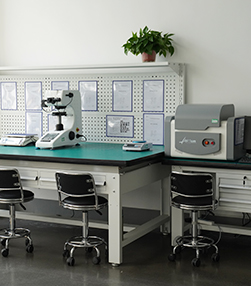
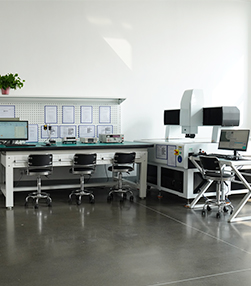
If your facility has high electricity costs, significant demand charges, or large load fluctuations, energy storage may deliver a rapid return — as this case study shows. The right system depends on your load profile, tariff structure, and site conditions. Jingye New Energy provides end-to-end industrial energy storage solutions, from load analysis and system design through manufacturing, installation, and after-sales support, backed by 15GWh annual production capacity and a CNAS-accredited testing laboratory.
Mainly through peak shaving — storing electricity during cheap off-peak hours and using it during expensive peak periods — and through reducing demand charges by smoothing large load fluctuations. Because steel plants use power continuously, the system delivers savings every day.
It depends on electricity tariffs, demand charges, and how heavily the system is used. In this case study, the 15MW/30MWh station generated over 300,000 RMB in profit within its first 15 days of operation, illustrating the fast returns possible for high-consumption industrial loads.
It depends on the plant's load profile and goals. Systems range from tens of MWh (like this 15MW/30MWh station) to over 100MWh for the largest sites. A supplier analyzes your load and tariff structure to recommend a right-sized system.
Yes. The same principles apply to chemicals, cement, manufacturing, and other high-consumption industries with significant demand charges or load fluctuations. Jingye provides comprehensive energy solutions for high-energy-consuming enterprises.
Interested in energy storage for your industrial facility? Jingye New Energy has delivered industrial storage projects from 15MW to 50MW for steel and heavy industry. Contact us with your facility's details for a load analysis and tailored proposal.
Oct. 22, 2026
EV Charger Preventive Maintenance: Key Practices for Long-Term Reliability
EV charger preventive maintenance helps charging operators protect uptime, safety, and revenue over many years. A planned service program is more reliable than waiting for a fault after a vehicle cannot charge. This guide explains DC fast charger maintenance, EV charging station inspection, and charging cable inspection in simple steps.
Oct. 20, 2026
NTPC Khavda 3,300 MWh BESS Tender: How Many Containers You Really Need (2026)
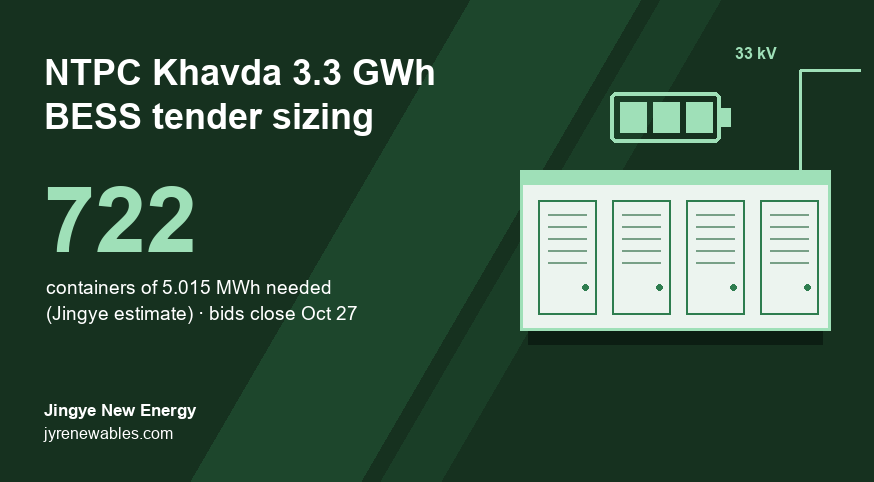
NTPC Green Energy's 1,100 MW / 3,300 MWh Khavda battery tender closes on October 27, 2026. Because capacity is counted as AC energy at the grid point, we estimate it needs about 722 containers of 5.015 MWh, roughly 10% more installed battery than the headline figure.
Oct. 20, 2026
Battery Energy Storage System Architecture: Key Components Explained
A battery energy storage system architecture determines how safely and efficiently a BESS stores, controls, and delivers electricity. The main challenge for overseas buyers is choosing the right structure without creating avoidable cost, safety, or integration problems.
Let’s Get Started on Your New Energy Journey.