Sep 23, 2026
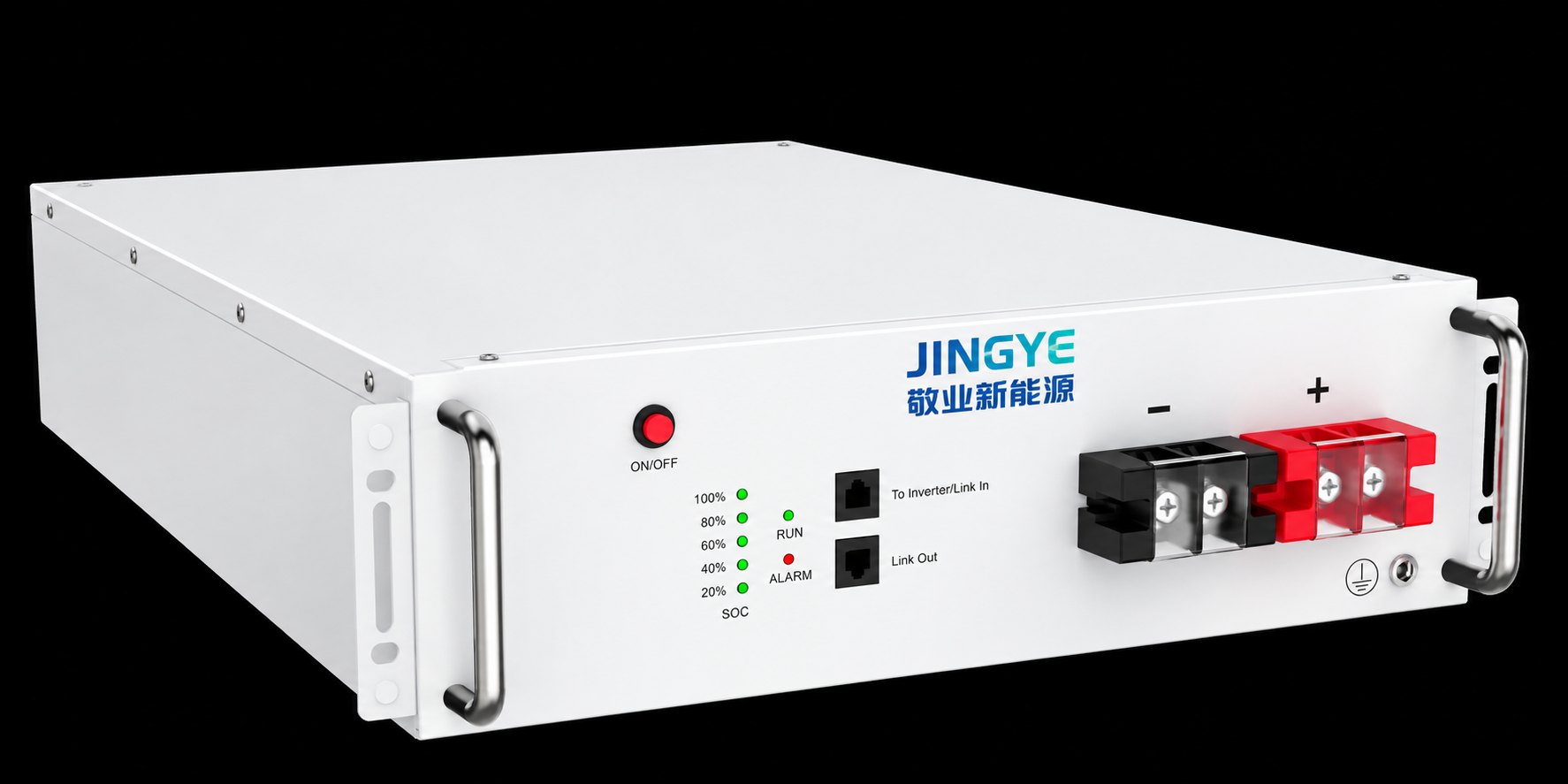
Energy storage cabinet thermal management directly affects battery performance, safety, service life, and operating cost. A battery energy storage system produces heat during charging and discharging, even when it operates within its rated power range. Poor heat dissipation can increase internal resistance and reduce usable capacity.
Temperature uniformity is one of the main factors in lithium-ion battery safety. A battery management system monitors voltage, current, and temperature to protect each battery module. When heat remains trapped inside the cabinet, the state of charge may become less accurate and cell balancing may take longer.
Battery cells operate within a limited temperature range. High ambient temperature can speed up chemical aging, while low temperature can reduce charging efficiency. This is why HVAC control, liquid cooling, and air cooling must match the cabinet size and duty cycle.
The risk is not limited to lost capacity. A large temperature difference between cells can increase voltage variation and create uneven aging. Thermal runaway propagation can also become more difficult to control if the cabinet lacks enough cooling and fire protection capacity.
For this reason, buyers often ask about the best cooling system for a battery energy storage cabinet. The answer depends on battery chemistry, cabinet energy density, installation location, local climate, power rating, and maintenance requirements.
Jingye evaluates these factors through cabinet design reviews, thermal testing, battery management system checks, and site commissioning procedures. The goal is to keep temperature within a controlled range during normal operation and during fault conditions.
Effective energy storage cabinet thermal management keeps battery cells at a stable temperature, limits temperature differences between modules, and removes heat before it reduces battery performance or creates a safety risk. Air cooling is suitable for many small and medium cabinets. Liquid cooling is often more effective for high-energy-density systems because it transfers heat faster and provides better temperature uniformity. A complete design should combine cooling equipment, a battery management system, sensors, ventilation, fire detection, and regular maintenance.
Lithium-ion batteries generate heat from electrical resistance and chemical reactions. The heat level rises when the current increases, when the battery is near full charge, or when the cabinet has poor ventilation.
For a typical lithium iron phosphate battery, the recommended operating range is often about 15 to 35 C, based on the cell and system manufacturer specifications. Charging at temperatures below 0 C may cause lithium plating. Continuous operation above 40 C can accelerate capacity loss and increase cooling demand.
For example, a cabinet with 215 kWh of installed capacity may contain thousands of cells. If one part of the cabinet is 8 C hotter than another part, those cells may age at different rates. The result can include:
Low temperature increases battery resistance. The cabinet may deliver less power even when the state of charge is high. Charging also becomes slower because the battery management system may reduce current to protect the cells.
In cold regions, a heating function may be as important as a cooling function. A practical design can use an electric heater, insulation, and controlled ventilation. The battery management system should prevent charging until the cells reach the approved temperature range.
The average cabinet temperature does not show the full condition of the battery pack. A cabinet with an average temperature of 30 C can still contain one module at 42 C. This is why designers track maximum temperature and temperature difference.
Many system designs set a temperature difference target of less than 5 C between key measurement points during normal operation. The actual limit depends on the battery manufacturer, cooling design, and safety assessment.
Air cooling uses fans, ducts, filters, and heat exchangers to move heat away from the battery modules. It has a simple structure and is easy to service. It is often used in lower-density cabinets and indoor installations.
Air cooling requires careful airflow design. If air enters the cabinet from one side and exits without passing evenly through each module, hot spots may develop. Dust filters must also be checked because blocked filters reduce airflow and increase fan power.
Liquid cooling transfers heat through cold plates or cooling pipes installed near the battery modules. A pump moves coolant through the system. A chiller or heat exchanger removes the heat from the coolant.
Liquid cooling usually provides better temperature uniformity than air cooling. It is useful for a liquid cooled energy storage cabinet for utility scale projects, high-power applications, and compact systems with high energy density.
Some systems use a refrigerant circuit close to the battery modules. This method can provide high cooling capacity in a compact design. It also requires strict control of pressure, leakage, insulation, and service procedures.
Heating equipment protects cells in cold weather. Insulation reduces heat loss and helps the HVAC system reach the target temperature with less energy. The heating system must be controlled by temperature sensors and battery charging limits.
| Item | Air cooling | Liquid cooling |
|---|---|---|
| System structure | Fans, ducts, filters, and air conditioner | Pump, cold plates, coolant lines, and chiller |
| Temperature uniformity | Depends strongly on airflow layout | Usually more uniform across modules |
| Maintenance | Filter and fan maintenance are required | Coolant, pump, valve, and leak checks are required |
| Energy density | Suitable for low and medium density | Suitable for medium and high density |
| Initial cost | Usually lower | Usually higher |
| Typical design concern | Hot spots and blocked airflow | Leaks, pump failure, and coolant compatibility |
Cooling capacity must cover cell heat, cable heat, power conversion losses, fan or pump heat, and heat entering from the outside. A design should include a margin for high ambient temperature and component aging.
As a simple example, a cabinet with a 250 kW charge or discharge rate may generate several kilowatts of heat depending on system efficiency. The final HVAC capacity must come from measured loss data rather than cabinet energy capacity alone.
The control system should define a normal operating range, warning range, and shutdown range. A common engineering target is to keep the battery temperature between 15 and 35 C during normal operation and keep the module temperature difference below 5 C. The battery supplier specifications always take priority.
Temperature sensors should cover the warmest and coolest areas of the cabinet. Sensors may be placed at module terminals, module centers, air inlets, air outlets, coolant supply lines, and coolant return lines.
The HVAC controller should react before temperature reaches a protection limit. The battery management system can reduce power, stop charging, or open contactors when a temperature alarm occurs.
Cooling equipment consumes auxiliary power. This power affects the round-trip efficiency of the complete battery energy storage system. A high-capacity air conditioner may provide strong cooling but reduce system efficiency if it runs continuously.
Outdoor cabinets need protection from rain, dust, salt mist, insects, and direct sunlight. The enclosure rating should match the installation environment. A cabinet installed near the coast needs corrosion control for the enclosure, fasteners, busbars, and cooling system.
| Parameter | Illustrative value | Purpose |
|---|---|---|
| Cabinet energy capacity | 215 kWh | Defines the battery energy volume |
| Battery chemistry | Lithium iron phosphate | Provides a common stationary storage chemistry |
| Cell nominal voltage | About 3.2 V | Supports series and parallel pack design |
| Normal battery temperature target | 15 to 35 C | Supports stable performance |
| Temperature difference target | Less than 5 C | Limits uneven aging |
| Cooling control | Variable speed fan or pump | Reduces unnecessary auxiliary power |
The battery management system, or BMS, is the main control layer between the cells and the energy storage cabinet. It measures cell voltage, module voltage, current, temperature, insulation status, and state of charge.
A BMS can provide the following protection functions:
Thermal runaway can occur when a battery cell produces heat faster than the system can remove it. The cell may release gas, smoke, or flammable material. A safe cabinet design should not depend on cooling alone.
Battery cabinet thermal runaway prevention normally combines:
Testing may include IEC 62619 for industrial lithium secondary batteries, IEC 62477-1 for power electronic safety, UL 9540A for thermal runaway fire propagation evaluation, and NFPA 855 for stationary energy storage installation practices. The required standards depend on the country, project owner, and approval authority.
| Alarm level | Typical system response |
|---|---|
| Temperature warning | Increase cooling output and record the event |
| High temperature alarm | Reduce charge or discharge power and notify the operator |
| Critical temperature alarm | Stop the affected rack or cabinet and open the contactors |
| Gas or smoke detection | Stop operation, isolate the area, and start the approved emergency sequence |
The following flow shows how a well-designed cabinet manages temperature during operation.
Available capacity changes with temperature, current, battery age, and state of charge. A cabinet should report both the estimated state of charge and the usable energy available at the present operating condition.
Operators should compare the measured capacity with the original commissioning value. A large decline may indicate cell aging, poor temperature control, inaccurate current measurement, or an imbalance between modules.
Round-trip efficiency measures the energy delivered from the cabinet compared with the energy used to charge it. The result includes battery losses, power conversion losses, wiring losses, and cooling or heating energy.
For many lithium-ion systems, a complete system may achieve a round-trip efficiency of about 85 to 95 percent under specified test conditions. The actual result depends on power level, temperature, state of charge, and auxiliary equipment operation.
Cycle life is commonly stated at a defined depth of discharge, temperature, charge rate, and end-of-life capacity. A battery rated for 6,000 cycles at 25 C and 80 percent depth of discharge may not deliver the same result at 45 C and 100 percent depth of discharge.
Lower temperature difference, moderate power, and controlled depth of discharge can help reduce stress on the cells. Thermal management is therefore part of battery life management, not only a safety function.
Internal resistance normally increases as cells age. A rise in resistance creates more heat at the same current. The BMS should track resistance trends, cell voltage spread, and module temperature over time.
A maintenance team can set inspection triggers such as:
Quality inspection should begin before the cabinet reaches the project site. A factory acceptance test may include:
| Inspection area | Example test or check | Result to record |
|---|---|---|
| Battery modules | Voltage, capacity, appearance, and insulation | Measured value and pass or fail status |
| Cooling system | Fan or pump operation and temperature control | Flow, pressure, temperature, and alarm status |
| BMS | Sensor accuracy, communication, and protection logic | Alarm response and event record |
| Electrical system | Insulation, grounding, polarity, and torque inspection | Measured resistance and inspection record |
| Enclosure | Door seal, corrosion protection, and enclosure condition | Visual and dimensional inspection |
A thermal performance test should run the cabinet at several power levels. The test team records the hottest point, coldest point, temperature difference, cooling power, ambient temperature, and battery state of charge.
A useful test plan may include 25 percent, 50 percent, 75 percent, and 100 percent rated power. Each condition should continue long enough for the temperature trend to become stable. The test report should identify the sensor location and sampling interval.
Jingye project teams can apply a controlled process that includes design review, thermal simulation, prototype testing, factory acceptance testing, installation inspection, and site performance verification. A documented project plan should define the number of cabinets, test points, alarm limits, acceptance criteria, and required records.
For larger deployments, the quality plan should track cabinet serial numbers, battery module batches, firmware versions, sensor calibration dates, cooling component models, and inspection results. This information helps technicians find the cause of a performance change.
Record rated power, average power, peak power, charge duration, discharge duration, and expected daily cycles. A cabinet used for frequency regulation may need fast response. A solar storage cabinet may need long discharge periods during hot afternoons.
Use the highest and lowest expected ambient temperatures, humidity, altitude, dust level, and solar radiation. Outdoor cabinets in hot climates need more cooling capacity and stronger enclosure protection.
High-density cabinets may benefit from liquid cooling. Systems with limited service resources may prefer a simpler air cooling structure if it meets the thermal limits.
Confirm the required tests and installation rules before selecting the cabinet. The design should consider IEC, UL, NFPA, local electrical codes, and fire authority requirements where applicable.
Include purchase cost, auxiliary energy, filter replacement, coolant service, spare parts, technician time, and expected battery life. A higher initial cooling cost may reduce battery replacement and lost operating revenue.
Energy storage cabinet thermal management is a direct part of battery performance and safety. Stable temperature, low temperature difference, accurate BMS data, and suitable cooling capacity help protect usable energy, cycle life, and round-trip efficiency. Air cooling can serve many standard applications, while liquid cooling is often a stronger choice for high-density and high-power systems.
A reliable energy storage cabinet should be tested from the cell level to the complete system level. It should include clear alarm limits, thermal runaway protection, documented commissioning, and a regular maintenance plan. By combining sound thermal design with measured quality control, Jingye and project operators can build safer and more dependable battery energy storage systems.
Sep. 23, 2026
Energy Storage Cabinet Voltage: Why It Matters for System Design
Selecting the wrong Energy Storage Cabinet Voltage: Why It Matters for System Design is not a minor specification error—it can undermine the safety, efficiency, scalability, and financial performance of an entire battery energy storage system (BESS). A cabinet designed for a nominal 768 VDC battery architecture cannot simply be connected to a power conversion system (PCS) configured for a 1,000
Sep. 23, 2026
Energy Storage Cabinet Thermal Management and Battery Performance
Energy storage cabinet thermal management directly affects battery performance, safety, service life, and operating cost. A battery energy storage system produces heat during charging and discharging, even when it operates within its rated power range. Poor heat dissipation can increase internal resistance and reduce usable capacity.
Sep. 22, 2026
Why EV Charger Efficiency Matters for Commercial Charging Operations
A commercial charging site can lose thousands of dollars each year through inefficiency long before an operator notices a hardware failure. When a DC fast EV charger converts grid electricity into battery power, energy is lost as heat, switching loss, cable loss, cooling demand, and standby consumption. A charger operating at 94% efficiency instead of 97% may appear to differ by only three
Let’s Get Started on Your New Energy Journey.