Aug 03, 2026
Jingye New Energy implements the 'rooftop distributed photovoltaic power generation and energy storage' project, adopting a 'self-generation for self-use' model, striving to set a new benchmark for zero-carbon parks.

The project's total designed capacity is 477.9 kWp, and all generated electricity is used to meet the electricity needs of the factory. The installation took two months, successfully achieving grid-connected power generation. To address the intermittency and fluctuation of photovoltaic power generation and ensure continuous and stable power supply for critical loads in the park, the project is equipped with a 5 MWh energy storage integration system. When photovoltaic generation is high, surplus electricity is stored, and during peak electricity usage periods, the stored power is released, effectively smoothing out the generation and consumption curves.
Jingye New Energy creates an integrated solar and storage solution: through intelligent integration of solar and storage, it combines PV solar, PCS energy storage inverters, 5MWh liquid-cooled battery modules with an intelligent energy management system to build a fully digital and intelligent collaborative new energy ecosystem covering "generation, storage, usage, and management." By integrating distributed power sources primarily based on renewable energy and energy storage system applications, it achieves comprehensive energy-saving objectives. This not only greatly improves the reliability of power supply in the park and reduces production risks caused by grid fluctuations, but also helps the park reduce high-cost electricity purchases during peak electricity price periods, optimizing the energy cost structure. According to estimates, the project is expected to generate 487,458 kWh per year, potentially saving the enterprise 30,000 yuan in electricity costs per month.
This project actively implements the national 'dual carbon' goal, taking a substantial step in exploring and practicing the 'energy storage and photovoltaics' model, and has successfully created a demonstration project for Jingye New Energy.
In the future, Jingye New Energy will continue to focus on green and low-carbon transformation, with safety as the foundation. It will keep deepening its efforts in the full chain of energy storage and new power system construction, energy conversion and storage, terminal electricity use, and efficient energy management, providing one-stop, customized solutions. The company aims to become a leading smart energy system solution provider in the industry offering 'equipment, platform, and service' solutions. Leading the trend of new energy storage and supporting the era of low-carbon energy, we invite you to join us in a green future.
Nov. 05, 2026
All-in-One vs Separate PCS Energy Storage Systems
Energy Storage Cabinets are no longer selected only by battery capacity. Buyers also need to evaluate power conversion, safety controls, thermal management, installation time, maintenance access, expansion options, and long-term operating cost. The central purchasing decision is whether to choose an All-in-One energy storage system or a Separate PCS architecture.
Nov. 05, 2026
AI Data Center Battery Storage: How to Size the BESS in 2026
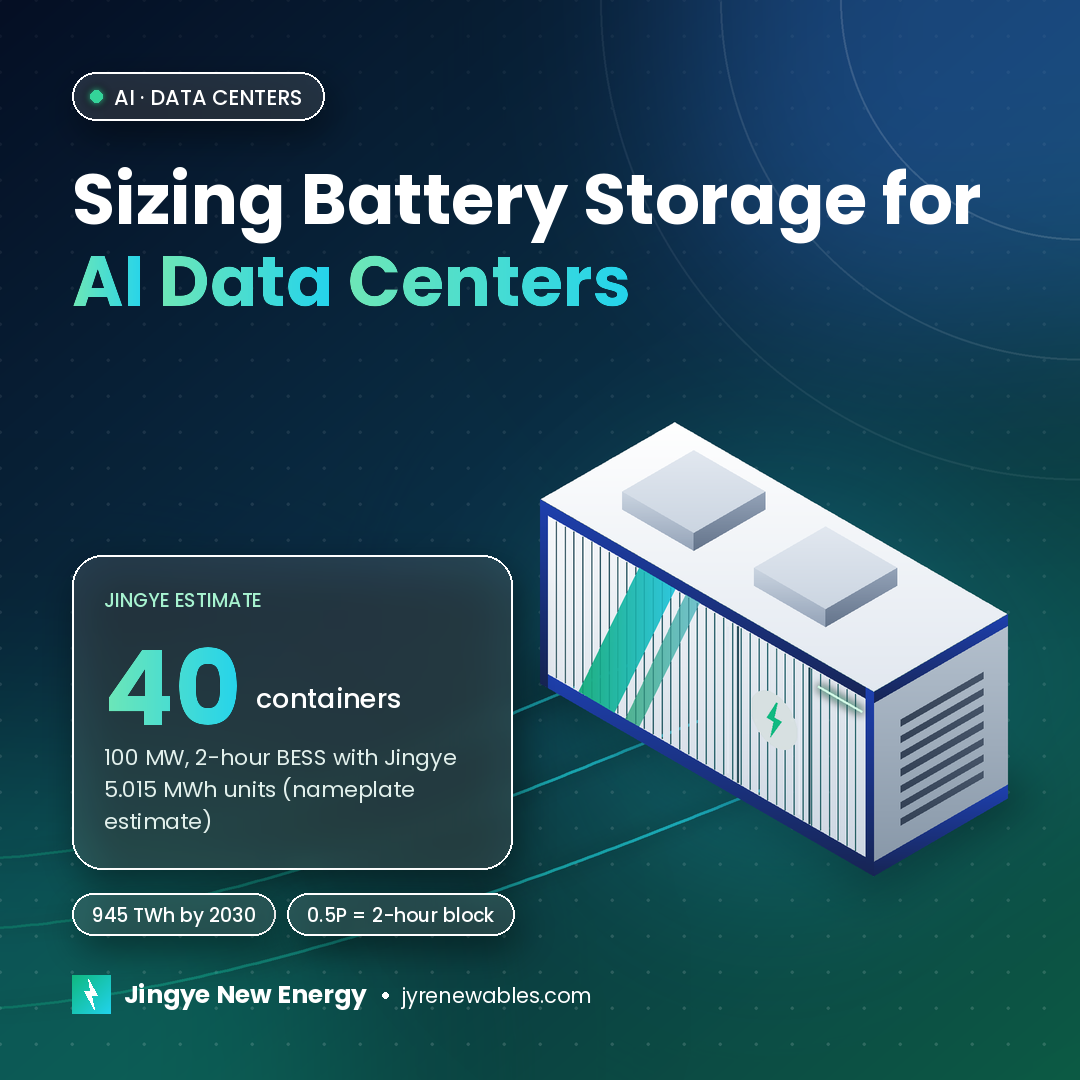
AI data centers use battery storage to smooth GPU load swings, ride through outages and manage grid limits. By our estimate, a 100 MW, 2-hour BESS needs 40 Jingye 5.015 MWh containers, and a 4-hour system needs 80.
Nov. 04, 2026
Brazil Battery Storage Auction LRCAP 2026: How to Size a 4-Hour Bid
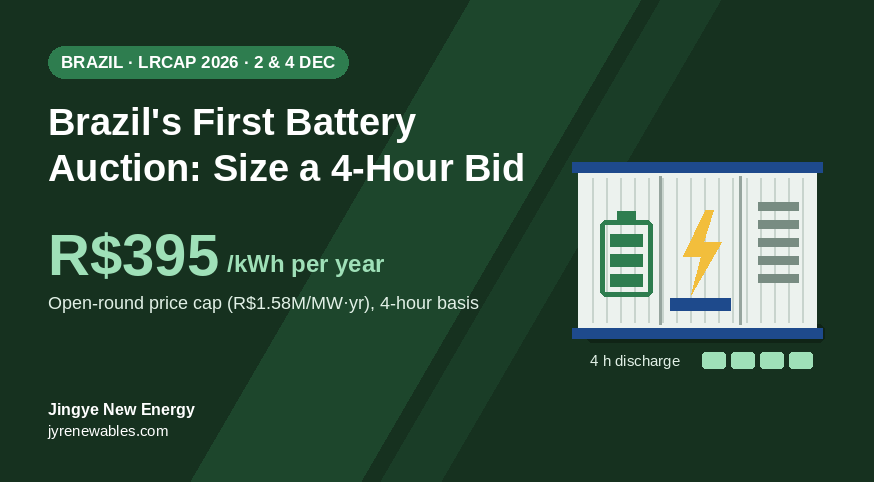
Brazil's first battery capacity auctions on 2 and 4 December 2026 cap prices at R$1.58–1.76 million per MW per year, about R$395–440 per kWh of 4-hour storage. By our estimate, a 100 MW bid needs 80–111 Jingye 5.015 MWh containers.
Let’s Get Started on Your New Energy Journey.