Aug 03, 2026
One of the first questions every business asks about energy storage is simple: how much will it cost? The honest answer is that there is no single price — a commercial energy storage system is quoted based on your capacity, technology, site, and application. But you can understand exactly what drives the cost, which puts you in a much stronger position when comparing supplier quotes. This guide breaks down the main price factors for commercial and industrial (C&I) energy storage systems in 2026.
A commercial energy storage system is not an off-the-shelf product like a laptop. A 100kWh cabinet for a small factory and a multi-megawatt containerized system for a steel plant are completely different in scale, engineering, and installation. Costs are usually expressed per kilowatt-hour (kWh) of capacity, but the final figure depends on the factors below. Understanding them helps you see why two quotes can differ and which one is genuinely better value.
Capacity is the biggest single driver. More stored energy means more battery cells, which is usually the largest part of the cost. However, larger systems often have a lower cost per kWh because fixed costs (enclosure, cooling, controls, installation) are spread across more capacity. This is why a 5MWh container can be more cost-effective per kWh than a small cabinet, even though its total price is far higher. Right-size your system to your actual load — oversizing wastes money, undersizing limits your savings.
Most commercial systems today use lithium iron phosphate (LFP) cells, valued for safety, long cycle life, and stability. Within LFP, cell quality varies — higher-grade cells with longer cycle life (for example, 8,000+ cycles) cost more upfront but deliver a lower lifetime cost because they last longer and degrade more slowly. When comparing quotes, always ask for the cycle life and warranty, not just the price. A cheaper system with half the cycle life is rarely a bargain.
How a system manages heat affects both its price and its long-term performance. Liquid-cooled systems typically cost more than air-cooled ones, but they maintain more uniform cell temperatures, which extends battery life and supports higher efficiency — especially in hot climates or high-cycling applications. For demanding industrial use, the higher upfront cost of liquid cooling often pays back through longer battery life and better performance.
A full system includes far more than batteries: the battery management system (BMS), power conversion system (PCS), energy management system (EMS), thermal management, fire protection, and enclosure. A fully integrated, factory-built system (such as a containerized BESS) costs more as a unit but reduces on-site construction, shortens commissioning time, and lowers installation risk. A cheaper 'batteries only' quote may end up costing more once you add the missing components and integration work.
Installation costs vary with your site. Factors include grid connection distance and capacity, civil works and foundations, electrical infrastructure, permitting, and local labor rates. A site with an existing suitable grid connection is far cheaper to equip than one needing major electrical upgrades. Always clarify what a quote does and does not include — some suppliers quote equipment only, others quote a turnkey installed price.
Systems certified to recognized standards (such as IEC, UN 38.3 for transport, and GB/T 36276 for energy storage batteries) may cost slightly more than uncertified alternatives, but certification protects you — it affects insurability, grid-connection approval, and safety. For any serious commercial project, certified equipment is not optional, and its cost is money well spent.
Custom voltage platforms, communication protocols, or special enclosures add engineering cost. So does the level of after-sales support — warranty length, response times, and maintenance services. A supplier offering strong warranty and support may quote higher but reduce your risk and downtime over the system's life. Factor total cost of ownership, not just the purchase price, into your comparison.
To compare energy storage quotes on equal terms, ask every supplier for the same information: usable capacity in kWh, cell cycle life and warranty, cooling method, what components are included, whether installation is included, and which certifications the system holds. Once these are lined up side by side, the true value of each quote becomes clear — and the cheapest headline number is often not the best deal.
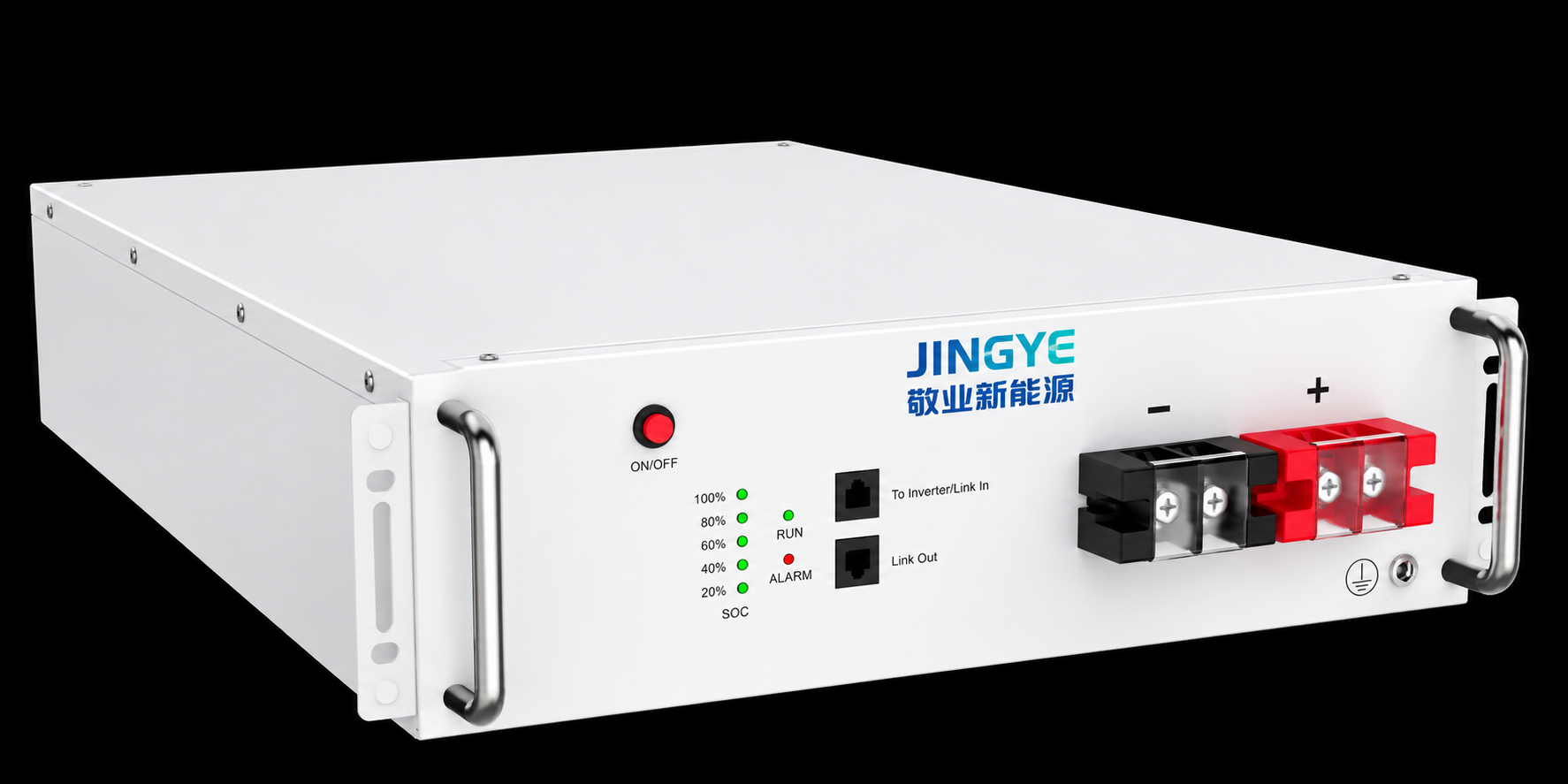
The fastest way to get an accurate price is to share your basic requirements with a manufacturer: your application (peak shaving, backup, solar storage), the capacity or load you need to cover, and your site location. A good supplier will recommend a right-sized configuration and provide a detailed quotation. Jingye New Energy manufactures C&I energy storage cabinets (261kWh and 417kWh) and 5MWh liquid-cooled containerized systems, with OEM/ODM customization and 15GWh annual production capacity — contact us with your requirements for a tailored quote.
Cost is usually expressed per kilowatt-hour (kWh) of storage capacity, though the final quote depends on chemistry, cooling, integration level, installation, and certifications. Larger systems often have a lower cost per kWh because fixed costs are spread across more capacity.
For demanding industrial applications, high-cycling use, or hot climates, liquid cooling often pays back through longer battery life and higher efficiency. For lighter-duty applications, air cooling may be sufficient and more economical.
Ask every supplier for usable capacity, cycle life, warranty, cooling method, included components, whether installation is included, and certifications. Comparing these side by side reveals the true value behind each price.
Share your application, required capacity or load, and site location with a manufacturer. Jingye New Energy provides tailored quotes for C&I cabinets (261kWh, 417kWh) and 5MWh containerized systems with OEM/ODM customization.
Closing call-to-action
Ready to price your energy storage project? Jingye New Energy manufactures commercial and industrial energy storage cabinets and 5MWh liquid-cooled containers with 15GWh annual capacity and full OEM/ODM support. Contact us with your capacity, application, and location for a detailed quotation.
Oct. 23, 2026
Energy Storage Cabinet vs Containerized BESS: Key Differences
When buyers compare Energy Storage Cabinets with containerized battery energy storage systems, they are usually trying to answer a practical question: which format will deliver reliable power, acceptable operating costs, and a safe installation for the intended site? The right choice depends on capacity, available space, cooling conditions, fire protection requirements, maintenance resources, and
Oct. 22, 2026
EV Charger Preventive Maintenance: Key Practices for Long-Term Reliability
EV charger preventive maintenance helps charging operators protect uptime, safety, and revenue over many years. A planned service program is more reliable than waiting for a fault after a vehicle cannot charge. This guide explains DC fast charger maintenance, EV charging station inspection, and charging cable inspection in simple steps.
Oct. 20, 2026
NTPC Khavda 3,300 MWh BESS Tender: How Many Containers You Really Need (2026)
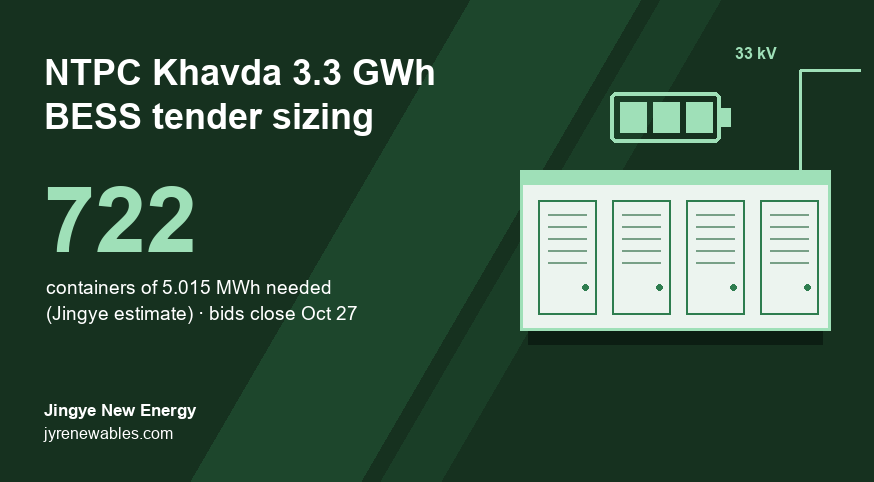
NTPC Green Energy's 1,100 MW / 3,300 MWh Khavda battery tender closes on October 27, 2026. Because capacity is counted as AC energy at the grid point, we estimate it needs about 722 containers of 5.015 MWh, roughly 10% more installed battery than the headline figure.
Let’s Get Started on Your New Energy Journey.