Sep 28, 2026
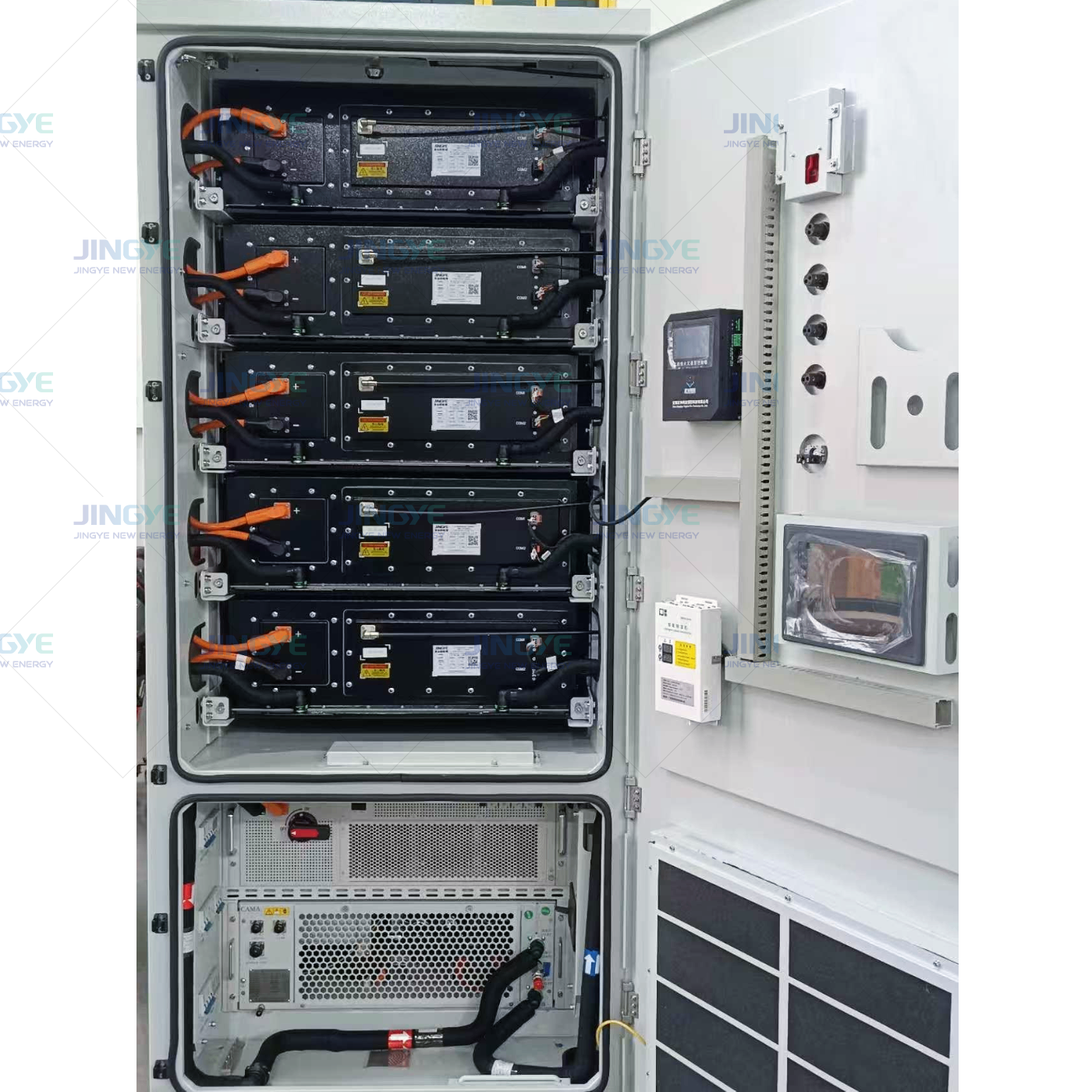
Energy Storage Cabinets are increasingly used by commercial and industrial buyers to reduce peak demand, support critical loads, improve solar self-consumption, and provide backup power. However, many purchasing teams compare systems by price or cabinet size before understanding the two specifications that determine performance: battery storage capacity, measured in kilowatt-hours (kWh), and power rating, measured in kilowatts (kW).
Capacity determines how much energy a battery can store. Power rating determines how quickly the system can deliver or absorb that energy. A system with high capacity but low power may run for a long time but cannot support large equipment. A system with high power but low capacity can handle demanding loads but may discharge quickly.
The most useful buying decision comes from evaluating both specifications together. The following guide focuses on the questions commonly raised in leading search results and by actual C&I purchasing groups: how to size a system, how long it will operate, how stable it will be, what it will cost, and which application is best suited to each configuration.

Battery capacity is the total amount of energy stored in a system. It is expressed in kWh. If a battery has a usable capacity of 100 kWh, it can theoretically provide 100 kW for one hour, 50 kW for two hours, or 25 kW for four hours.
The practical runtime is calculated as follows:
Runtime in hours = Usable capacity in kWh / Load power in kW
For example, a system with 100 kWh of usable capacity supplying a continuous 40 kW load may provide approximately 2.5 hours of operation before accounting for conversion losses, reserve settings, temperature effects, and battery aging.
Power rating is the maximum rate at which the battery can charge or discharge. It is expressed in kW. A 100 kWh battery with a 50 kW inverter can deliver 50 kW at one time, while a 100 kWh battery with a 100 kW inverter can deliver twice as much power for a shorter duration.
Power rating determines whether the system can:
The C-rate describes how quickly a battery is charged or discharged compared with its capacity. A 100 kWh battery discharging at 50 kW has a 0.5C rate. The same battery discharging at 100 kW has a 1C rate.
A higher C-rate can improve short-term power performance, but it may also increase heat generation, cooling requirements, and long-term battery stress. Buyers should therefore evaluate the capacity-to-power ratio rather than choosing the highest available kW rating alone.
Purchasing teams often receive proposals that list nominal capacity but do not clearly identify usable capacity, continuous power, peak power, or system efficiency. These details can produce major differences between two products that appear similar on paper.
| Parameter | What it means | Why it matters | Questions to ask the supplier |
|---|---|---|---|
| Nominal capacity | Total rated battery energy in kWh | Shows the theoretical storage size | What portion is available for daily operation? |
| Usable capacity | Energy available within the permitted state-of-charge range | Determines actual runtime | Is usable capacity specified at the beginning or end of life? |
| Continuous power | Power the system can deliver or absorb continuously | Determines support for sustained loads | Is the rating limited by the inverter, battery cells, or temperature? |
| Peak power | Short-duration maximum output | Supports motor starts and brief load surges | How long can peak power be maintained? |
| Round-trip efficiency | Energy recovered after a complete charge and discharge cycle | Affects electricity savings and operating cost | Is the efficiency measured at the battery or at the AC connection point? |
| Depth of discharge | Percentage of capacity used during each cycle | Influences runtime and battery life | What discharge range is recommended for daily operation? |
| Cycle life | Expected number of cycles before capacity declines to a specified level | Indicates long-term value | At what temperature, C-rate, and depth of discharge was it tested? |
| State of health | Remaining battery performance compared with new condition | Helps estimate aging and replacement timing | How is battery degradation monitored? |
| Response time | Time required to respond to a load or grid signal | Matters for backup and power quality | Does the system switch in milliseconds or seconds? |
| Thermal management | Method used to control battery temperature | Affects safety, efficiency, and service life | Is cooling passive, forced-air, or liquid-based? |
A battery advertised as 215 kWh may not provide 215 kWh to the site. The usable figure may be lower because the battery management system reserves energy at the top and bottom of the state-of-charge range. Conversion losses may further reduce the energy available to the facility.
Buyers should request the following figures separately:
A cabinet may advertise a 150 kW peak output while its continuous output is only 100 kW. This may be acceptable for a short motor-starting event, but it will not support a 150 kW industrial load for an extended period.
For production facilities, the continuous rating is usually more important than the peak rating. For facilities with compressors, pumps, elevators, or refrigeration equipment, both ratings should be checked against starting current and transient load behavior.
Peak shaving systems discharge when the facility approaches a demand threshold. The required power is based on the difference between the facility load and the target demand level.
For example, if a building reaches 500 kW and the desired grid demand limit is 400 kW, the battery needs at least 100 kW of continuous discharge power. If the peak event lasts for two hours, the system needs at least 200 kWh of usable energy before losses and reserve requirements are included.
A suitable peak shaving design should consider:
Solar integration requires the battery to absorb surplus generation when on-site demand is low. A large capacity with insufficient charging power may leave solar energy unused during short production peaks. A high charging power with limited capacity may fill the battery too early in the day.
Buyers should compare the battery charging power with:
Backup applications are usually sized around critical loads rather than the entire facility. A hospital department, data room, cold-storage warehouse, or manufacturing line may require different combinations of power and runtime.
The design process should separate loads into three groups:
The battery power rating must cover the simultaneous demand of the critical loads, including startup surges. Capacity must cover the planned outage duration, emergency reserve, and the time required for the grid or generator to return.
Energy arbitrage charges the battery when electricity prices are low and discharges it during expensive periods. The system must have enough capacity to shift energy across the complete high-price period. It must also have enough power to meet the facility load that the battery is expected to offset.
For this application, buyers should calculate the value of each cycle after accounting for:
Battery life is not determined by the cycle-life number alone. Actual performance depends on depth of discharge, charge and discharge rate, temperature, average state of charge, idle time, and the quality of the battery management system.
In daily commercial operation, battery degradation is generally slower when the system:
A system used for one shallow cycle per day may experience a different aging pattern from a system used for several high-power cycles each day. The warranty should state both the time period and the permitted energy throughput.
Battery temperature influences available capacity, charging speed, efficiency, and degradation. High temperatures can accelerate aging, while low temperatures can reduce temporary output and restrict charging.
When comparing Energy Storage Cabinets, purchasing teams should review:
A cabinet that maintains stable internal temperatures is more likely to deliver predictable output over its service life. Cooling energy should also be included when calculating total system efficiency.
Battery cells store energy, but the power conversion system determines how smoothly that energy reaches the facility. A stable system should regulate voltage, frequency, reactive power, and ramp rate without causing unnecessary disturbances to sensitive equipment.
Actual operating experience should be evaluated through:
High rated capacity is not valuable if the system is frequently unavailable. Buyers should ask for service records, fault history, remote monitoring functions, spare-parts plans, and expected maintenance intervals.
Important availability indicators include:
These systems store a large amount of energy relative to their output power. They are often selected for long-duration backup, solar shifting, and extended energy arbitrage.
Advantages:
Disadvantages:
These systems are designed to deliver substantial power for shorter periods. They are useful where the main problem is a brief demand spike rather than a long outage.
Advantages:
Disadvantages:
A balanced system can deliver approximately one hour of full-rated power. It is often suitable for mixed applications that combine peak shaving, solar shifting, and short backup events.
Advantages:
Disadvantages:
System sizing should begin with interval load data rather than an estimated monthly electricity bill. Fifteen-minute or one-minute data can reveal demand spikes, load duration, overnight consumption, and the actual timing of solar surplus.
The minimum data set should include:
The power gap is the difference between the facility demand and the desired grid or backup level. The energy gap is the total kWh required during the operating period.
For peak shaving:
Required power = Facility peak demand - Target grid demand
Required energy = Required power x Peak duration / System efficiency
For backup:
Required power = Simultaneous critical load plus startup margin
Required energy = Critical load x Backup duration / System efficiency
These calculations should include reserve capacity so that the battery is not fully depleted during normal operation.
The lowest initial price may not produce the lowest lifetime cost. A complete financial comparison should include the battery, inverter, cabinet, installation, electrical upgrades, cooling, software, maintenance, insurance, and eventual module replacement.
Useful financial indicators include:
A proposal should clearly state how much usable capacity and continuous power remain at the end of the warranty period. A system that begins with high performance but lacks an end-of-life guarantee may create uncertainty for long-term planning.
Buyers should confirm:
Higher capacity is generally suitable for:
These buyers should pay special attention to usable kWh, thermal stability, aging performance, and the battery reserve strategy.
Higher power is generally suitable for:
These buyers should focus on continuous kW, peak kW, response time, inverter overload capability, and thermal management.
A balanced configuration is often the safest choice when the facility wants to combine peak shaving, solar self-consumption, and backup power. It may not maximize one individual function, but it can provide more stable value across the operating year.
Commercial and industrial buyers with uncertain load growth should also consider modular Energy Storage Cabinets. A modular design can allow additional battery capacity or power conversion equipment to be added as electricity demand increases, provided that the control system, electrical infrastructure, and site space are planned in advance.
Battery capacity answers the question, "How much energy can the system store?" Power rating answers the question, "How much load can the system support at one time?" Neither specification is sufficient by itself.
A useful comparison should always show:
Facilities focused on long backup duration or solar shifting usually need more capacity. Facilities focused on demand charges, large equipment, or rapid response usually need more power. Facilities with several objectives often benefit from a balanced and modular design.
Jingye helps commercial and industrial users evaluate these tradeoffs through application-based sizing rather than relying on a single headline specification. The right Energy Storage Cabinets should provide the required power today, the required usable capacity over time, and stable performance throughout the expected service life.
Sep. 28, 2026
C&I Battery Storage Capacity vs Power Rating: What Is the Difference?
Energy Storage Cabinets are increasingly used by commercial and industrial buyers to reduce peak demand, support critical loads, improve solar self-consumption, and provide backup power. However, many purchasing teams compare systems by price or cabinet size before understanding the two specifications that determine performance: battery storage capacity, measured in kilowatt-hours (kWh), and
Sep. 28, 2026
How Commercial Energy Storage Helps Reduce Demand Charges
If your electricity bill is rising because of short, high-power peaks, we can solve the problem in a simple sequence: review 12 months of interval data, identify the tariff’s demand-charge window, size Energy Storage Cabinets for the target peak, and configure an automated energy management system to discharge before the peak is billed. This step-by-step approach helps businesses reduce
Sep. 25, 2026
400V vs 800V EV Charging: Key Differences for Modern Electric Vehicles
Choosing between a 400 V and an 800 V electric vehicle is no longer only an engineering decision. It affects charging time, highway convenience, battery design, purchase price, charging site requirements, operating cost, and long-term reliability. For drivers, fleet managers, charging operators, and vehicle manufacturers comparing a DC Fast EV Charger Manufacturer, the most useful answer is not
Let’s Get Started on Your New Energy Journey.