
Commercial buildings face high electricity bills, power interruptions, solar energy waste, and limited grid capacity. Commercial battery storage supports peak shaving, demand charge management, and load shifting in one energy system. The best battery storage project matches the building's load profile, tariff rules, safety needs, and backup power goals.
This guide explains the key applications of battery storage for offices, factories, shopping centers, hotels, hospitals, schools, and other large buildings. It also shows how overseas buyers and distributors can select a safe and scalable energy storage cabinet.
1. Why Commercial Buildings Need Battery Storage
Commercial electricity costs often include two parts: energy charges and demand charges. Energy charges depend on total kilowatt-hours used. Demand charges depend on the highest power demand recorded during a billing period. A short period of high demand can increase the bill for an entire month.
A battery energy storage system stores electricity when prices or building demand are low. It discharges when power prices, demand, or outage risks increase. This allows a building to use electricity more strategically without changing every part of its daily operation.
Common building pain points
1. High peak demand from air conditioning, elevators, pumps, compressors, and production equipment.
2. Solar power is produced at midday, while the building may need more power in the morning or evening.
3. Grid outages can stop business operations, damage equipment, and reduce customer trust.
4. New electrical equipment may require a costly grid capacity upgrade.
5. Electricity prices can change by time of day, season, or market condition.
2. Key Applications of Battery Storage for Commercial Buildings
1. Peak shaving and demand reduction
Peak shaving is one of the most common applications. The battery detects when building demand is approaching a set limit. It then supplies part of the load, reducing the amount of power drawn from the grid.
For example, a commercial building may normally reach a 1,000 kW peak when cooling systems and elevators operate at the same time. A 300 kW battery inverter can support part of this load and help lower the measured grid peak. Actual savings depend on the tariff, battery size, control settings, and operating schedule.
Data point: A battery system that reduces a 1,000 kW peak by 100 kW may lower demand by 10%. The financial result depends on the local demand charge per kW.
2. Solar self-consumption and solar energy storage
Commercial solar panels often produce the most electricity around noon. However, many buildings have higher demand before 9:00 a.m. or after 4:00 p.m. Battery storage captures excess solar power and releases it when the building needs it.
This can increase solar self-consumption and reduce electricity purchased from the grid. It can also reduce the amount of solar energy exported when the local grid offers a low export price.
A solar plus storage system usually includes photovoltaic panels, a hybrid inverter or separate power conversion system, battery modules, an energy management system, and protection equipment.
3. Time-of-use energy arbitrage
Some utilities charge different prices during off-peak, shoulder, and peak periods. The battery charges during a lower-price period and discharges during a higher-price period. This application is called time-of-use energy arbitrage.
The system must consider battery round-trip efficiency, battery degradation, tariff differences, and operating limits. Charging at a low price does not always create savings if the price gap is too small.
Simple rule: Energy price spread should be large enough to cover conversion losses, maintenance, and the value of battery life used in each cycle.
4. Backup power for critical loads
Battery storage can keep selected equipment operating during a grid outage. Critical loads may include servers, security systems, emergency lighting, communication equipment, refrigeration, medical devices, fire control systems, and production controls.
Most commercial systems do not back up the entire building. They use a critical load panel to support the most important equipment. This approach reduces battery size and improves project cost control.
Backup duration depends on battery capacity and load power. A 500 kWh battery supplying a constant 100 kW critical load may provide about five hours before losses and reserve limits are considered. Actual duration is lower when inverter losses and safety reserve are included.
5. Microgrid and island operation
Battery storage can form part of a building microgrid. A microgrid combines local generation, energy storage, loads, and control software. It can operate with the utility grid or disconnect and operate independently.
This is useful for hospitals, data centers, campuses, factories, ports, and remote commercial sites. A microgrid controller manages solar power, generators, batteries, and building loads to maintain stable operation.
6. Electric vehicle charging support
Fast electric vehicle chargers can create sudden power peaks. A battery can charge slowly from the grid and then support high-power vehicle charging when several vehicles arrive at the same time.
This reduces pressure on the building transformer and may avoid a costly capacity expansion. It also allows a commercial site to add more charging stations without using the full grid connection at all times.
7. Power quality and renewable integration
Some battery systems respond quickly to voltage changes, short power interruptions, and unstable renewable generation. With a suitable inverter and control system, storage can help smooth solar output and support sensitive loads.
Battery storage is not a replacement for every power quality device. Site engineers should check whether the project needs voltage regulation, harmonic filtering, uninterruptible power supply functions, or frequency support.
3. Comparison of Commercial Battery Storage Applications
| Application | Main problem | Battery action | Important design data |
|---|---|---|---|
| Peak shaving | High monthly demand | Discharges during demand peaks | Peak kW, demand tariff, discharge power |
| Solar self-consumption | Solar output does not match load | Stores midday solar energy | Solar kW, daily load curve, export price |
| Time-of-use shifting | High peak electricity prices | Charges at low prices and discharges at high prices | Tariff schedule, battery cycles, efficiency |
| Backup power | Grid outages | Powers selected critical loads | Critical kW, backup hours, transfer time |
| EV charging support | Short high-power charging peaks | Supplies extra charging power | Charger kW, vehicle schedule, transformer limit |
| Microgrid operation | Weak or unreliable grid supply | Balances local generation and loads | Island mode, generator size, control strategy |
4. How to Size Battery Storage for a Commercial Building
Battery sizing has two main values: power and energy. Power is measured in kilowatts or megawatts. It shows how much load the system can support at one time. Energy is measured in kilowatt-hours or megawatt-hours. It shows how long the system can operate.
Step 1: Collect building load data
Collect at least 12 months of electricity bills when possible. Also request 15-minute or 30-minute interval data. Review the maximum demand, daily load curve, seasonal changes, operating hours, and outage history.
Step 2: Define the main financial goal
Decide whether the project focuses on demand reduction, solar use, backup power, EV charging, or several applications. One system can serve multiple purposes, but the control strategy must give priority to the most valuable function.
Step 3: Calculate power and energy requirements
For peak shaving, estimate the power gap between the desired grid limit and the building load. For backup, multiply critical load power by required hours. Add suitable reserve capacity for efficiency loss, battery aging, temperature, and emergency operation.
Example: A 200 kW critical load requiring four hours of backup needs at least 800 kWh of usable energy. The installed battery may need more than 800 kWh because usable capacity is affected by reserve settings, efficiency, and battery aging.
Step-by-step project flow
1. Utility bill and interval data collection
2. Building load and tariff analysis
3. Application priority and backup load selection
4. Battery power and energy calculation
5. Electrical, fire, and site feasibility review
6. System quotation and financial model
7. Factory acceptance testing
8. Installation, commissioning, and operator training
9. Performance monitoring and maintenance
5. What to Check When Buying an Energy Storage Cabinet
Overseas buyers and distributors should compare the complete system, not only the battery cell price. A commercial energy storage cabinet includes battery modules, a battery management system, power conversion equipment, thermal management, fire protection, disconnect devices, monitoring, and a cabinet enclosure.
| Selection item | Questions to ask the supplier |
|---|---|
| Battery chemistry | Is the system based on lithium iron phosphate cells? What is the safety and cycle life data? |
| Usable capacity | Is the quoted capacity nominal or usable? What reserve and depth of discharge limits apply? |
| Inverter power | Can the power conversion system meet peak shaving, backup, and motor starting needs? |
| Safety design | Are smoke detection, thermal monitoring, fire suppression, ventilation, and emergency shutdown included? |
| Communication | Does the system support remote monitoring, alarms, data export, and common industrial communication protocols? |
| Environmental rating | Can the cabinet work in the local temperature, humidity, dust, and outdoor conditions? |
| Service support | Are spare parts, training, warranty terms, and remote technical support available? |
Safety and compliance are core requirements
Commercial battery systems should include cell-level monitoring, module protection, temperature sensors, circuit breakers, insulation checks, and emergency stop functions. The cabinet should be designed for safe maintenance and controlled access.
Local rules may require specific fire tests, electrical certifications, grid connection documents, and installation approvals. The buyer should confirm the target country's requirements before placing an order.
6. Financial Benefits and Payback Factors
The financial value of battery storage usually comes from several services. These may include demand charge savings, time-of-use savings, solar self-consumption, avoided transformer upgrades, backup value, and EV charging revenue.
Payback cannot be calculated from battery capacity alone. It depends on the local tariff, annual cycles, system price, financing, installation cost, maintenance, battery replacement risk, and available incentives.
Basic evaluation formula: Annual battery value equals demand savings plus energy savings plus backup or operational value, minus annual operating costs.
Buyers should request a performance model with clear assumptions. The model should show battery degradation, round-trip efficiency, available capacity, operating temperature, and expected savings for each month.
7. Jingye Commercial Energy Storage Cabinets
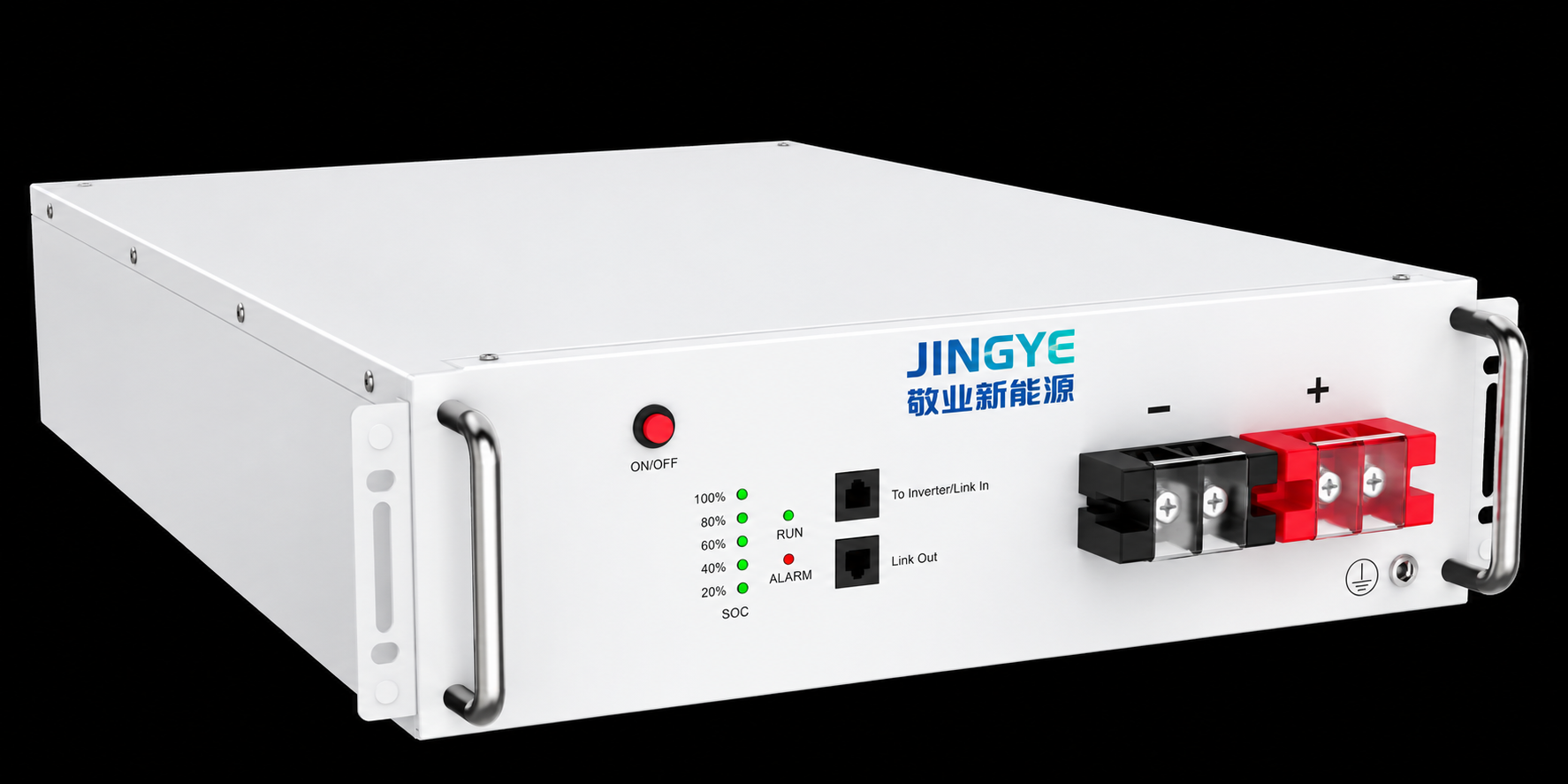
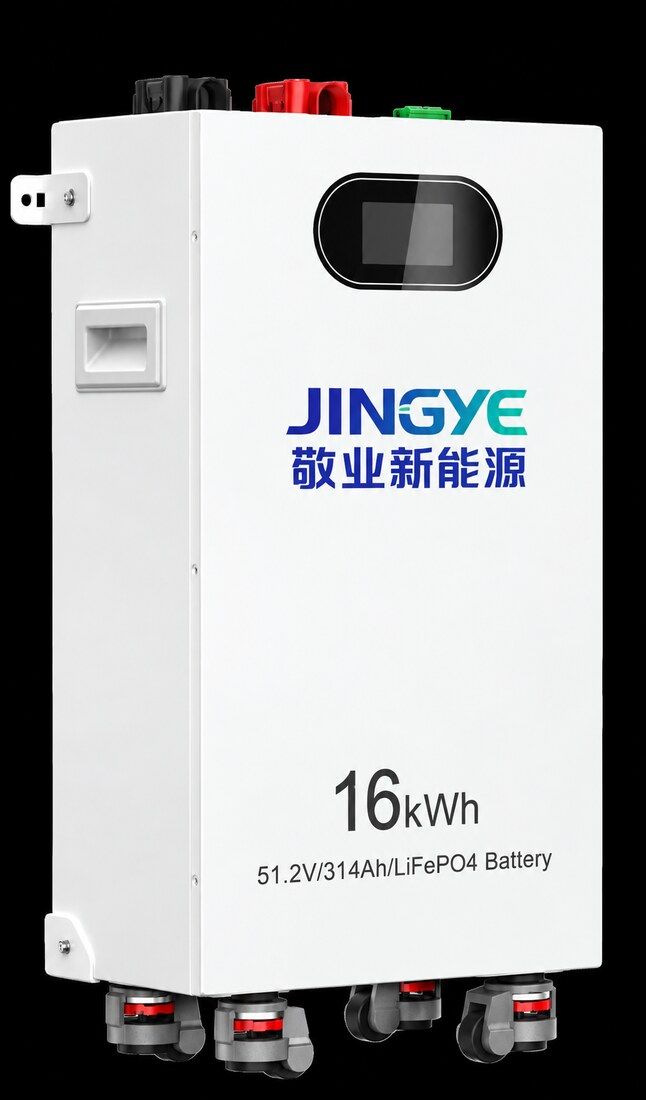
Jingye provides commercial energy storage cabinet solutions for applications such as peak shaving, solar self-consumption, backup power, microgrids, and EV charging support. A cabinet-based design can simplify transport, installation, system expansion, and project management.
For distributors, a practical product line should offer clear power and capacity options, simple remote monitoring, strong safety protection, and flexible integration with solar inverters and building energy management systems. Local service training and documentation are also important for long-term customer support.
Every project should be configured according to the building load, grid connection, climate, local code, and business target. Jingye can work with buyers to review technical requirements before final system selection.
8. Frequently Asked Questions
How long does a commercial battery last?
Battery life depends on chemistry, temperature, depth of discharge, charge rate, and annual cycles. A system with controlled operating conditions can provide many years of service, but the buyer should review the supplier's capacity warranty and end-of-life definition.
Can battery storage reduce the whole electricity bill?
It can reduce some energy and demand costs, but it does not remove all electricity charges. Savings depend on tariff rules and correct system control. A professional load and tariff study is needed before investment.
What is the best battery size for an office building?
There is no single best size. An office with a large cooling load may need high discharge power for peak shaving. An office needing overnight backup may need more energy capacity. Interval load data provides the correct starting point.
Is lithium iron phosphate suitable for commercial buildings?
Lithium iron phosphate is widely used in stationary energy storage because it offers good thermal stability, long cycle life, and strong safety performance when supported by proper system protection. Final selection should follow local regulations and project conditions.
Should a building use a generator and battery together?
In many critical facilities, a battery and generator can work together. The battery can provide fast backup power, while the generator supports longer outages. The energy management system must coordinate both sources safely.
Conclusion: Match the Battery to the Building Load
Battery storage for commercial buildings is not only a backup product. It is a flexible energy asset that can reduce peak demand, store solar power, shift electricity use, support EV charging, and improve outage resilience.
The strongest project begins with interval data, tariff analysis, critical load planning, and a clear return target. By selecting the correct power rating, usable capacity, safety package, and control system, building owners and distributors can create a reliable solution with measurable value. Jingye helps commercial buyers turn these requirements into a practical energy storage cabinet project.