Oct 19, 2026
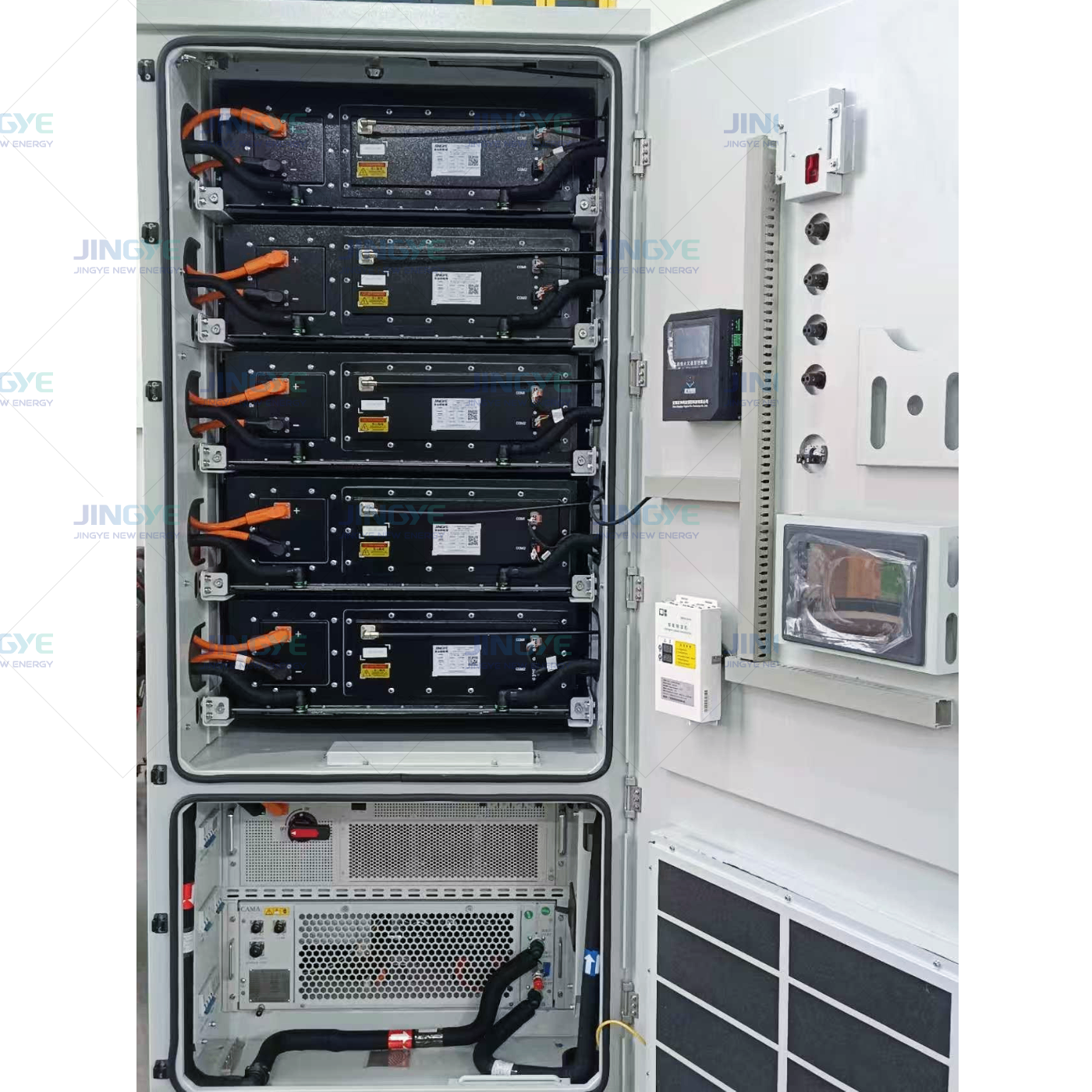
Battery capacity fade in commercial energy storage systems reduces the amount of energy a site can store and deliver. This battery degradation can increase demand charges, reduce backup time, and change the return on investment.
Most commercial systems use lithium iron phosphate batteries because they offer strong cycle life and thermal stability. However, a battery management system must still control state of charge, current, and temperature.
Operators also need to monitor depth of discharge, round-trip efficiency, and state of health. These values show whether an energy storage cabinet is operating within its design limits.
Capacity fade does not always happen at the same rate. A battery may lose capacity faster during hot weather, frequent full cycles, or long periods at a high charge level. The key question is how to measure this loss and slow it down.
Battery capacity fade is the gradual loss of usable battery energy caused by chemical aging, calendar aging, high temperature, high current, and repeated charge and discharge cycles. In a commercial energy storage system, operators can reduce capacity fade by keeping the battery within its approved temperature range, limiting extreme state of charge levels, using balanced charging, and reviewing state of health data. A well-managed lithium iron phosphate system may deliver about 6,000 or more equivalent full cycles before reaching 80 percent of its initial capacity, but the actual result depends on cell quality, operating conditions, warranty terms, and system design.
Rated capacity is the energy a battery can store when new under defined test conditions. Usable capacity is the energy available to the customer after limits for safety, reserve power, inverter operation, and minimum state of charge are applied.
For example, a cabinet with a 215 kWh nameplate rating may not deliver 215 kWh to the building. If the operating window is 90 percent and the power conversion system has 96 percent efficiency, the delivered energy is lower.
| Item | Example value | Meaning |
|---|---|---|
| Nameplate battery capacity | 215 kWh | Total rated energy of the battery modules |
| Usable state of charge window | 90 percent | Energy range allowed by the control system |
| Available DC energy | 193.5 kWh | 215 kWh multiplied by 90 percent |
| Power conversion efficiency | 96 percent | Approximate energy available after inverter losses |
| Approximate AC output | 185.8 kWh | Estimated output before other site losses |
The basic calculation is:
Capacity fade percentage = (Initial capacity - Measured capacity) / Initial capacity x 100
If a new cabinet stores 200 kWh and later stores 180 kWh under the same test conditions, the capacity fade is 10 percent. The remaining state of health is 90 percent.
Calendar aging occurs even when the cabinet is not cycling. Time, temperature, and average state of charge affect the rate. A battery stored at 100 percent state of charge for long periods usually ages faster than one stored near the middle of its operating range.
Cycle aging is linked to charge and discharge activity. One equivalent full cycle means the battery has processed energy equal to 100 percent of its rated capacity. Two 50 percent cycles equal approximately one equivalent full cycle.
A battery used for peak shaving may complete one equivalent full cycle each day. A battery used for frequency regulation may process more energy because it moves up and down many times during the day.
Heat speeds up chemical reactions inside battery cells. Many lithium battery systems are designed to operate near 15 to 35 degrees C for best performance. Operation outside the approved range can reduce available power and increase long-term battery degradation.
Cooling equipment must remove heat from cells, busbars, power conversion equipment, and control electronics. A temperature difference of more than 3 to 5 degrees C between modules may indicate airflow problems, sensor errors, or uneven electrical resistance.
High current creates heat and mechanical stress inside the cells. A 1C discharge rate means the battery could theoretically discharge its full rated capacity in one hour. A 0.5C rate takes about two hours.
Commercial energy storage systems often use lower rates for long-duration operation. The correct rate depends on the cell model, cabinet design, inverter rating, cooling system, and warranty conditions.
Frequent operation near 0 percent or 100 percent state of charge can increase stress. A smaller depth of discharge usually supports longer cycle life. For example, a system using a 70 percent operating window may experience less stress than one using a 95 percent window.
Battery modules contain many cells. Small differences in resistance and capacity grow over time. When one cell reaches a voltage limit before the others, the battery management system may stop charging or discharging early. The result is lower usable capacity even if the average cell condition remains acceptable.
| Measurement | Why it matters | Typical review point |
|---|---|---|
| State of health | Shows estimated remaining capacity | Compare with measured capacity and warranty limits |
| Cell voltage spread | Shows cell imbalance | Investigate repeated high spread during charge |
| Temperature spread | Shows cooling or resistance problems | Review differences above the site limit |
| Round-trip efficiency | Shows energy lost during a full cycle | Compare with the commissioning result |
| Equivalent full cycles | Shows cumulative battery use | Compare with the cell and system warranty |
Capacity testing is separate from safety certification. Commercial systems may be evaluated under standards and procedures such as IEC 62933, UL 9540, UL 9540A, and NFPA 855, depending on the project location and system type.
These standards and evaluations address system safety, fire behavior, installation, and testing. They do not guarantee a fixed capacity fade rate. The project owner should also request the battery manufacturer's cycle-life test conditions, retention definition, temperature range, and end-of-life threshold.
Many lithium iron phosphate battery cells are marketed with a cycle life of 6,000 cycles or more to 80 percent capacity. This figure is not a universal promise. It may be measured at a controlled temperature, a defined charge rate, a defined discharge rate, and a specific depth of discharge.
A commercial cabinet may face different conditions. It may operate in a hot outdoor enclosure, cycle twice per day, provide grid services, or remain at a high state of charge during low demand periods.
| Application | Typical operating pattern | Main capacity fade risk |
|---|---|---|
| Peak shaving | One controlled cycle per day | Deep discharge and high afternoon temperature |
| Solar energy shifting | Charge in daylight and discharge in the evening | Daily cycling and high state of charge |
| Backup power | Long standby periods with occasional discharge | Calendar aging and prolonged high state of charge |
| Frequency regulation | Many shallow charge and discharge movements | High cumulative energy throughput |
Assume a 1 MWh system loses 2 percent of its usable capacity each year for the first five years. The estimated capacity after five years would be about 904 kWh if the loss is compounded annually. Real systems may show a different pattern because capacity fade is not always linear.
A capacity warranty may specify a minimum retention such as 70 or 80 percent after a set number of years or cycles. Always review whether the warranty uses DC capacity, AC delivered energy, energy throughput, or state of health.
Air cooling can suit smaller systems and moderate climates. Liquid cooling can provide more even temperature control in high-power or high-density cabinets. The correct design depends on heat load, ambient temperature, cabinet layout, service access, and fire protection requirements.
The battery management system should monitor each cell or cell group. It should record voltage, current, temperature, state of charge, state of health, and alarms. A quality system should also log events with time stamps so operators can connect a capacity change with an operating event.
A maintenance plan should include visual inspection, torque checks, sensor checks, firmware review, cooling inspection, insulation checks, and alarm testing. The inspection interval may be monthly, quarterly, or annual depending on the site risk and manufacturer instructions.
Jingye can support a cabinet project by aligning battery modules, thermal management, control logic, quality inspection, and commissioning data into one operating plan. This approach helps the owner compare field performance with the original design.
| Inspection area | Example check | Purpose |
|---|---|---|
| Battery cells | Capacity, open-circuit voltage, internal resistance | Reduce variation between cells |
| Modules | Voltage balance and insulation resistance | Confirm safe electrical assembly |
| Cabinet wiring | Polarity, torque, labeling, and continuity | Prevent installation and connection faults |
| Cooling system | Fan or pump operation and temperature response | Confirm heat removal performance |
| Battery management system | Alarm, shutdown, balancing, and communication tests | Confirm control and protection functions |
| System performance | Charge, discharge, power, and efficiency tests | Record the commissioning baseline |
Project owners should define acceptance criteria before delivery. The criteria may include measured usable capacity, maximum cell voltage difference, maximum temperature difference, response time, communication accuracy, noise level, and round-trip efficiency.
For example, a project may require a 100 percent power command response within a defined number of seconds, a cell voltage spread below a specified millivolt limit, and a commissioning capacity result within 3 percent of the approved design value. The exact limits must match the battery supplier's test method.
Capacity alone should not decide replacement. Operators should also review power capability, internal resistance, safety alarms, insulation condition, cooling performance, and maintenance cost.
A cabinet may still have useful value at 80 percent capacity. It may support a less demanding application, such as backup power, if the safety system and warranty allow the change.
Battery capacity fade in commercial energy storage systems is a measurable process, not an unexpected failure. Calendar aging, cycle aging, temperature, current, depth of discharge, and cell imbalance all affect usable energy.
Operators can slow battery degradation by using suitable state of charge limits, stable thermal management, balanced charging, and regular data reviews. Factory inspection and commissioning tests create a reliable performance baseline. With accurate monitoring and proper maintenance, an energy storage cabinet can provide predictable peak shaving, solar shifting, grid services, and backup power throughout its planned service life.
Oct. 20, 2026
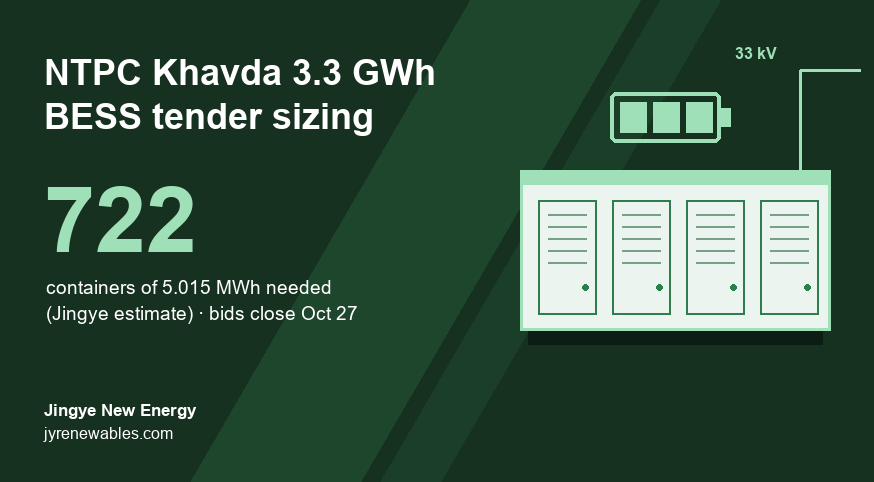
NTPC Khavda 3,300 MWh BESS Tender: How Many Containers You Really Need (2026)
NTPC Green Energy's 1,100 MW / 3,300 MWh Khavda battery tender closes on October 27, 2026. Because capacity is counted as AC energy at the grid point, we estimate it needs about 722 containers of 5.015 MWh, roughly 10% more installed battery than the headline figure.
Oct. 20, 2026
Battery Energy Storage System Architecture: Key Components Explained
A battery energy storage system architecture determines how safely and efficiently a BESS stores, controls, and delivers electricity. The main challenge for overseas buyers is choosing the right structure without creating avoidable cost, safety, or integration problems.
Oct. 19, 2026
Battery Capacity Fade in Commercial Energy Storage Systems
Battery capacity fade in commercial energy storage systems reduces the amount of energy a site can store and deliver. This battery degradation can increase demand charges, reduce backup time, and change the return on investment.
Let’s Get Started on Your New Energy Journey.